BLOG

How to Choose a Plastic Injection Machine in 2026?

Choosing a plastic injection machine in 2026 requires more than comparing clamping force and purchase prices. The right choice depends on your products, materials, production volume, mold design, and factory conditions. A compact machine may suit thin-wall packaging, while a larger hydraulic model may handle demanding automotive components. The details matter.

This guide examines the practical decisions behind a reliable investment. It explains how electric, hydraulic, and hybrid systems affect energy use, cycle stability, maintenance, and operating costs. It also considers injection speed, shot size, screw design, control systems, automation, safety features, and after-sales support. A machine that looks affordable may become expensive when downtime, spare parts, and inefficient heating are included. Ask hard questions.

Real production experience shows that specifications alone can mislead. A machine rated for a certain shot size may perform differently with recycled resin, glass-filled polymers, or complex molds. Supplier demonstrations should use your actual material and representative tooling whenever possible. Record cycle time, melt consistency, reject rates, noise, and operator feedback. Small observations often reveal major risks.

There is no universal best plastic injection machine. Even experienced buyers can underestimate installation requirements or future product changes. I have seen attractive quotations hide limitations in service coverage and software flexibility. That deserves reflection. This article offers a structured way to compare machines, verify supplier claims, estimate total ownership costs, and select equipment that supports safe, efficient, and compliant production in 2026.

How to Choose a Plastic Injection Machine in 2026?

Machine Type, Materials, and Product Requirements

How to Choose a Plastic Injection Machine in 2026?

Machine type should match the product, material, and production rhythm. Electric machines offer clean operation, repeatable movement, and accurate dosing. They suit medical parts, electronic housings, and products with tight tolerances. Hydraulic machines remain practical for large parts and demanding clamping loads. Hybrid machines can balance energy use and force. Do not choose by tonnage alone. Check mold dimensions, tie-bar spacing, opening stroke, and maximum injection pressure.

Material behavior matters just as much. Polypropylene flows easily, while engineering plastics may need higher pressure and controlled barrel temperatures. Moisture-sensitive materials require proper drying before molding. A damp resin can create bubbles, silver streaks, or weak weld lines. Confirm the required screw design, wear resistance, and shot capacity. The ideal shot should not sit near the machine’s maximum capacity. Leave a sensible processing margin.

Product requirements should guide every comparison. A thin-wall container may need fast injection and precise pressure control. A thick cover may require slower filling and careful cooling. Estimate cycle time from filling, packing, cooling, and mold movement. Energy monitoring is useful, but the electricity display is not the whole story. Maintenance access, operator training, spare parts, and safety systems affect real costs. A machine can look efficient on paper and disappoint on the factory floor. Ask for sample trials using your mold and resin. Measure weight variation, dimensions, surface quality, and cycle stability. Small trials often expose large assumptions.

How to Choose a Plastic Injection Machine in 2026?

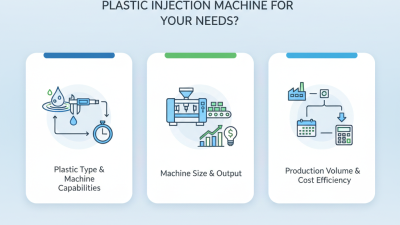
Machine selection depends on product size, projected area, wall thickness, material viscosity, and required production speed. The chart below shows indicative clamp-force ranges for common product requirements.

How to use this chart: Estimate the product’s projected area and material behavior first, then select a machine with sufficient clamp force and shot capacity. High-flow materials and thin-wall products generally require faster injection speeds, while glass-fiber-filled materials may require greater wear resistance in the barrel and screw. Actual machine sizing should be verified through mold trials and process calculations.

Clamping Force and Injection Capacity Calculations

How to Choose a Plastic Injection Machine in 2026?

Clamping force prevents the mold from opening during injection. Estimate the projected area of every cavity, runner, and gate, then multiply it by the material’s required cavity pressure. A practical formula is: clamping force = projected area × pressure × safety factor. Use a safety factor of 10–20% for normal production. For example, 80 square inches at 3 tons per square inch requires about 240 tons. Add a reasonable margin, not an exaggerated one. Too much force can increase mold wear and energy use.

Injection capacity must match the complete shot, not only the visible part. Add the part weight, runner weight, and a small process cushion. The selected machine should normally use around 30–80% of its rated shot capacity. Check whether the rating is based on the actual plastic density. Different materials can produce different shot weights on the same machine. Also verify injection rate, because a large enough shot may still fill too slowly. This is where calculations can mislead. Real trials matter.

Tips: Measure the mold’s projected area from the closing direction. Confirm pressure assumptions with material data and experienced technicians. Leave space for process changes, but question every extra margin. Record short-shot tests, cushion readings, and cycle stability before final selection. A machine that looks adequate on paper may struggle after temperature, mold wear, or recycled content changes.

Control Systems, Precision, and Production Speed

How to Choose a Plastic Injection Machine in 2026?

Control Systems, Precision, and Production Speed

A modern injection machine should turn process data into stable, repeatable movements. Look for a closed-loop control system that monitors pressure, screw position, temperature, and injection speed. These measurements help operators detect drift before defects spread across a production batch. Clear screens matter too. An operator should adjust a speed profile without searching through confusing menus. Remote data access can support maintenance, but local controls must remain practical during a mold change.

Precision depends on more than a machine’s advertised repeatability. Check how accurately it holds injection pressure, cushion, and mold position during real production. Ask for test results using your material and mold, not only standard laboratory conditions. In my machine trials, small temperature changes sometimes affected part weight more than expected. That detail is easy to overlook. A reliable machine should record trends and provide alarms with useful limits. Excessive alarms create noise, not control.

Production speed requires careful balance. Faster injection can shorten filling time, yet it may increase flash, trapped air, or shear-related defects. Review the complete cycle: injection, packing, cooling, mold movement, and part removal. Compare cycle data from actual sample runs. A machine with fast acceleration may still lose time through unstable cooling or slow mold opening. Select enough clamping force for the mold, but avoid buying capacity that remains unused. I would also leave room for future materials and tooling changes, because production plans rarely stay perfect.

Energy Use, Automation, and Factory Compatibility

How to Choose a Plastic Injection Machine in 2026?

Energy Use, Automation, and Factory Compatibility

Choosing a plastic injection machine in 2026 requires more than comparing clamping force. Energy use, automation, and factory compatibility shape daily production costs. Measure your current cycle, material, and peak electrical load before contacting suppliers. A machine that looks efficient may waste power during long idle periods. Ask for measured consumption at your real shot size, not only laboratory ratings. Small details matter.

Servo-driven systems can reduce unnecessary hydraulic movement, especially during pauses and slower cycles. Yet efficiency depends on settings, maintenance, and operator habits. Check whether the controller records energy per cycle. This data helps identify drift, leaks, and oversized components. Automation should remove repetitive handling without making the line fragile. Consider automatic part removal, mold protection, process alarms, and remote diagnostics. Keep manual access practical. A technician still needs to inspect the mold, clear faults, or adjust sensors safely.

Factory compatibility is often underestimated. Confirm floor loading, machine height, door width, ventilation, cooling capacity, and electrical supply. Leave service space around the machine. Crowded layouts create expensive delays. Connect the machine to existing robots and production software only after checking communication standards. In my experience, a capable machine can underperform when the chiller is undersized or training is rushed. Plan installation with operators and maintenance staff, not only managers. Then test several real production cycles before approving the setup. Some assumptions will fail. That is useful evidence, not embarrassment.

Cost, Maintenance, Safety, and Supplier Evaluation

How to Choose a Plastic Injection Machine in 2026?

Cost, Maintenance, Safety, and Supplier Evaluation

The purchase price is only the visible part of machine cost. Compare energy use, mold-change time, spare parts, training, and expected downtime. A machine consuming less power may cost more initially, yet repay the difference through daily production. Ask for verified cycle data, not attractive estimates. Include installation, software updates, and commissioning in the budget. Small omissions become expensive later.

Maintenance should be simple enough for technicians to perform correctly. Check access to filters, lubrication points, heaters, sensors, and electrical cabinets. Review the recommended service schedule and average spare-part delivery time. Safety needs equal attention. Look for guarded moving areas, reliable emergency stops, clear warning labels, and safe pressure-release procedures. Operators should reach controls without entering hazardous zones. I have seen maintenance plans fail because they depended on one experienced worker. That is a weakness, not a strategy.

Tips: Request a live demonstration using a comparable mold and material. Measure cycle stability, noise, temperature control, and recovery time. Ask the supplier for references from similar production environments. Check technician training, warranty limits, remote support, and local service capacity. Put every promise in writing. A low quote can hide weak support. Supplier evaluation is not paperwork; it is risk control. Sometimes, the cheapest machine is the costliest decision.

How to Choose a Plastic Injection Machine in 2026? - Cost, Maintenance, Safety, and Supplier Evaluation

The figures below are practical planning ranges for new machines in 2026. Actual performance and pricing depend on machine configuration, region, options, mold requirements, delivery terms, and local installation costs.

Evaluation Dimension Small Hydraulic Machine Servo-Hydraulic Machine All-Electric Machine Hybrid or Two-Platen Machine Selection Guidance
Typical Clamping Force 50–180 tonnes 100–600 tonnes 30–500 tonnes 400–3,000+ tonnes Choose the lowest force that safely prevents mold opening. Calculate required force from projected part area, cavity pressure, and a suitable safety margin.
Common Application Simple household parts, general-purpose components, small technical parts Automotive components, packaging, appliances, and general industrial parts Medical parts, electronic components, precision parts, and clean production Large automotive, appliance, infrastructure, and multi-cavity products Match the machine to material, part size, dimensional tolerance, mold layout, annual volume, and required automation.
Indicative New-Machine Cost Approximately US$25,000–US$90,000 Approximately US$45,000–US$250,000 Approximately US$70,000–US$350,000 Approximately US$180,000–US$1,000,000+ Compare total cost of ownership rather than purchase price alone. Include mold changes, installation, utilities, spare parts, training, and downtime.
Energy Consumption Generally the highest of the four options because the hydraulic pump may run continuously Typically lower than a conventional hydraulic machine because pump output follows demand Typically the lowest for suitable production cycles because servo motors operate only when motion is required Varies by configuration; modern servo-driven systems can provide good energy efficiency at large sizes Request measured energy data in kWh per hour or kWh per kilogram using a comparable mold, material, cycle time, and utilization level.
Repeatability and Precision Good for standard applications; performance can be affected by oil temperature and valve condition Good to very good, with improved control over pressure, speed, and holding stages Very good for repeatable position, speed, pressure, and injection-volume control Good to very good; depends on control architecture, platen rigidity, and mold support For tight tolerances, verify actual process capability using sample parts and documented measurement results, not only brochure specifications.
Noise and Working Environment Usually the noisiest option, particularly when the hydraulic pump runs continuously Quieter than conventional hydraulic equipment in many operating conditions Generally the quietest option, although auxiliary equipment still contributes noise Depends on the hydraulic and servo systems used Check workplace noise requirements, guarding, ventilation, heat load, and the location of the machine room.
Routine Maintenance Hydraulic oil and filter checks, leak inspection, lubrication, hose inspection, and cooling-system cleaning Hydraulic oil and filter checks, servo-pump inspection, lubrication, and leak inspection Lubrication, electrical cabinet cleaning, cooling-fan inspection, encoder checks, and cable inspection Lubrication, tie-bar or platen checks, hydraulic or servo-system maintenance, and alignment checks Obtain a written preventive-maintenance schedule showing daily, weekly, monthly, and annual tasks.
Typical Maintenance Interval Daily visual checks; lubrication and filter checks according to operating hours; hydraulic oil commonly tested periodically Daily visual checks; scheduled oil, filter, lubrication, and servo-system inspections Daily visual checks; lubrication and electrical inspections according to operating hours and environment Daily visual checks; periodic alignment, lubrication, hydraulic, and structural inspections Use the supplier’s service manual and adjust intervals for dust, resin contamination, high temperature, and continuous operation.
Safety Essentials Interlocked guards, emergency stops, safety relays, mold-area protection, and guarded hydraulic hazards Interlocked guards, emergency stops, safety circuits, pressure protection, and safe access during setup Interlocked guards, emergency stops, electrical isolation, servo-motion protection, and safe mold access Interlocked guards, emergency stops, safe access around large platens, and robust lockout procedures Confirm conformity with applicable local regulations and recognized machinery-safety standards. Require documented risk assessment and validation testing.
Operator Protection Prevent mold closing when the gate is open; provide safe purging procedures and guarding against hot material Include dual-channel safety devices where required and prevent unexpected platen or screw movement Protect against unexpected electric-axis movement, hot surfaces, stored energy, and automatic restart Control access to large mold areas and provide safe procedures for mold installation and maintenance Safety devices should be difficult to bypass, easy to test, clearly labeled, and supported by operator training.
Automation Compatibility Robot, conveyor, mold-temperature controller, dryer, and material-loader integration is usually available Strong compatibility with robots, sensors, process monitoring, and centralized production systems Excellent suitability for high-repeatability automation and closed-loop process monitoring Suitable for large-part robots, mold handling, conveyors, and centralized factory automation Confirm communication protocols, signal lists, robot interface standards, cycle synchronization, and data-export capability.
Controls and Process Data Basic to advanced depending on configuration; check recipe storage and alarm history Usually supports detailed pressure, speed, position, and temperature monitoring Often provides extensive real-time monitoring, trend data, alarms, and recipe management Should provide stable control of large molds and sufficient data for process validation Ask for demonstration of recipe backup, user permissions, alarm records, traceability, and data export.
Installation Requirements Three-phase power, cooling water or air, compressed air where needed, stable floor, and adequate ventilation Three-phase power, cooling system, compressed air where needed, stable floor, and hydraulic-service access Three-phase power, grounding, cooling for the electrical cabinet, stable floor, and controlled temperature where necessary Higher floor-load capacity, lifting access, larger electrical service, cooling capacity, and greater installation clearance Request a complete utility sheet before purchase. Verify transformer capacity, floor loading, door dimensions, and crane requirements.
Spare-Parts Exposure Hydraulic seals, filters, hoses, valves, pumps, heaters, thermocouples, and sensors Hydraulic components, servo-pump parts, sensors, heaters, filters, and control electronics Servo drives, encoders, motors, control boards, heaters, sensors, and lubrication components Large hydraulic or servo components, tie-bar and platen-related parts, sensors, and control electronics Ask for a recommended two-year spare-parts list, prices, lead times, interchangeability, and local stocking arrangements.
Expected Serviceability Generally familiar to maintenance teams; hydraulic troubleshooting may require skilled technicians Requires both hydraulic and electronic diagnostic capability Requires electrical, motion-control, and software troubleshooting skills Requires experienced technicians because of machine size, structural systems, and complex installation Evaluate technician availability, remote diagnostic capability, service response time, and training content.
Supplier Documentation Operation manual, electrical drawings, hydraulic diagrams, parts list, maintenance schedule, and safety information All standard documentation plus servo and control-system information All standard documentation plus software backup, parameter list, and drive documentation All standard documentation plus foundation drawings, lifting plans, installation procedures, and alignment data
Supplier Evaluation Criteria Relevant application experience Verified reference installations Factory acceptance testing Documented safety validation Parts availability Service response commitment Training and commissioning scope Warranty terms Total cost of ownership
Recommended Factory Acceptance Tests Verify dry-cycle operation, mold protection, emergency stops, guard interlocks, injection repeatability, pressure holding, temperature control, alarm handling, energy measurement, automatic mode, and sample-part quality. Record test conditions, acceptance limits, deviations, corrective actions, and final sign-off before shipment.
Best-Fit Decision Suitable when acquisition cost is the priority and the application is not highly sensitive to energy use or ultra-high repeatability Suitable for a balanced combination of purchase cost, energy efficiency, flexibility, and industrial durability Suitable when precision, clean operation, low noise, energy efficiency, and repeatable automation justify the higher investment Suitable for large parts, high clamping-force requirements, large molds, and production layouts needing improved mold access
Key Warning Signs Unclear oil specifications, missing hydraulic drawings, weak guarding, or no local service plan Unverified energy claims, incomplete servo documentation, or unclear software support Limited access to drive parts, undocumented parameter backups, or no qualified electrical support Insufficient floor-load information, incomplete foundation drawings, or inadequate commissioning resources Avoid suppliers that cannot provide traceable specifications, safety evidence, test records, and after-sales commitments.
Planning note: Cost ranges are indicative budgeting values, not quotations. Before final selection, compare at least three technically equivalent proposals and calculate the expected five-year total cost of ownership, including energy, maintenance, labor, spare parts, downtime, installation, and end-of-life value.
Go to Top