How to Choose the Right Plastic Injection Machine for Your Needs?
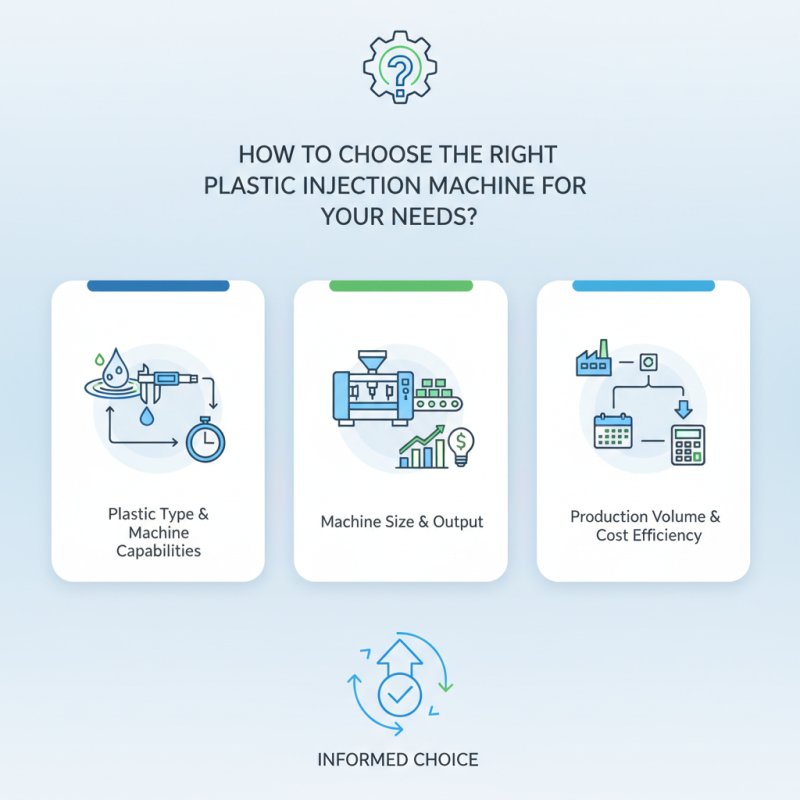
Choosing the right plastic injection machine is crucial for any manufacturing operation. This decision impacts production efficiency, cost, and product quality. With numerous options on the market, identifying the right fit can be overwhelming.
Consider the type of plastic you will use. Different machines handle various materials differently. Some are designed for high precision, while others excel in speed. It's essential to match the machine's capabilities with your specific needs.
Additionally, think about the machine's size and output. A larger machine may increase productivity but can also lead to higher energy costs. Reflect on your production volume and workflow. Make an informed choice, and remember that even minor miscalculations can affect your bottom line.
Understanding the Basics of Plastic Injection Molding Machines
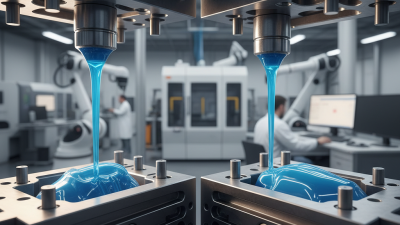
Understanding the basics of plastic injection molding machines is essential for making the right choice. These machines are central to producing various plastic parts. They work by melting plastic pellets and injecting the material into a mold. Understanding how these machines function helps in determining their suitability for your specific needs.
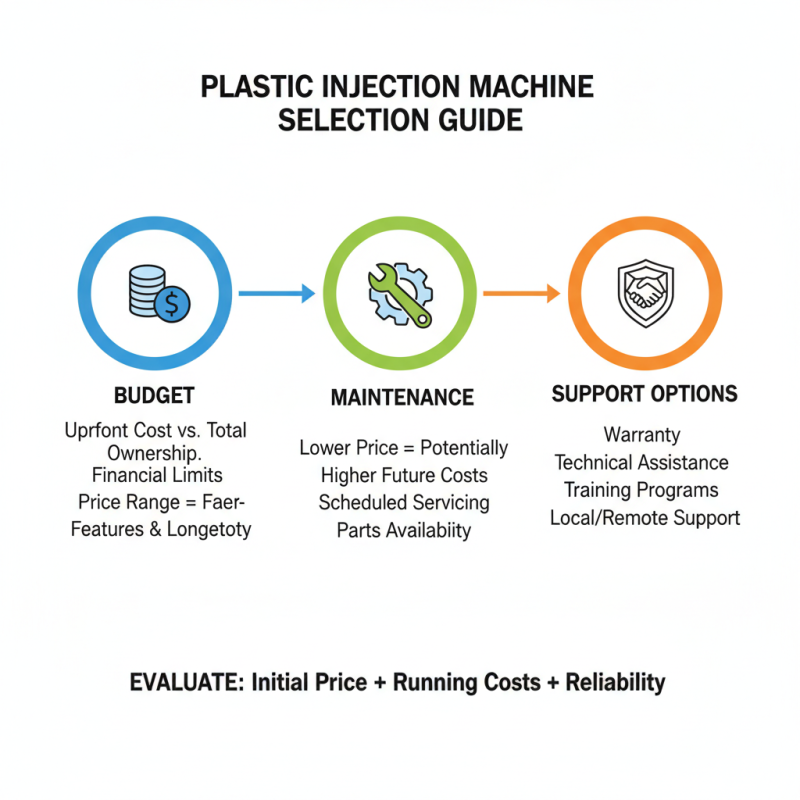
Injection machines vary in size, capacity, and technology. A smaller machine may suffice for low-volume production. However, a larger machine is often needed for more extensive projects. Features like energy efficiency and automation can significantly impact production speed and cost. It's important to consider maintenance needs and repair options, as these can influence long-term reliability and performance.
While choosing a machine, reflect on whether you need a hydraulic, electric, or hybrid model. Each has its advantages and drawbacks. Hydraulics offer power but require more maintenance. Electric models are cleaner and quieter but can be pricier. Balancing these factors with your project requirements can be challenging yet crucial for making an informed decision.
Evaluating Your Production Needs and Volume Requirements
When selecting a plastic injection machine, understanding your production needs and volume requirements is crucial. The first step involves analyzing your current and projected output. Industry reports suggest that approximately 45% of manufacturers underestimate their capacity needs. This can lead to costly downtime or overproduction, resulting in wasted resources.
Consider your product's complexity and size. Different applications require different machine specifications. For instance, larger parts may necessitate machines with higher tonnage. A study from the Plastic Industry Association indicates that 34% of manufacturers have faced challenges meeting demand due to inappropriate machine capacity. This points to the need for thorough evaluations before making a purchase.
Also, keep in mind your operational flexibility. If your production needs fluctuate, a machine with adjustable settings can provide significant advantages. Data reveals that companies with versatile equipment can respond to market shifts up to 30% faster than those stuck with rigid setups. Reflecting on these aspects is vital, as misaligned specifications can hinder profitability and growth.
Identifying Key Features and Specifications in Injection Machines
Choosing the right plastic injection machine involves understanding its key features and specifications. The machine’s clamping force is crucial. It holds the mold tightly during injection. A suitable force prevents defects like flashing. Analyze your product’s size and complexity. Smaller parts typically require less force. Larger or more intricate designs need a stronger clamping system.
The shot size is another essential specification. It determines how much material the machine can inject per cycle. Assess your production volume carefully. Machines with varying shot sizes may offer flexibility for different projects. Consider cycle time as well. Shorter cycles can increase efficiency but might affect part quality. Balancing speed and quality is vital for a successful production run.
Control systems also play a significant role in machine operation. Advanced systems enable more precise settings. This precision can reduce waste and improve overall efficiency. However, overly complex interfaces may lead to user errors. Operators should feel comfortable with the technology. Exploring these features helps to avoid mismatches with production needs. Investing time in this analysis is worthwhile in the long run.
How to Choose the Right Plastic Injection Machine for Your Needs?
| Feature |
Description |
Specification |
| Clamp Force |
The force applied by the clamping unit to hold the mold closed during injection. |
50 to 5000 tons |
| Injection Volume |
The maximum volume of material that can be injected per cycle. |
10 to 10000 cm³ |
| Injection Rate |
The speed at which the material is injected into the mold. |
0.5 to 300 g/s |
| Cycle Time |
The total time taken for one complete injection cycle. |
5 to 60 seconds |
| Mold Size |
The dimensions that the machine can accommodate for the mold. |
300 x 300 mm to 2000 x 2000 mm |
| Energy Efficiency |
The overall energy consumption and efficiency rating of the machine. |
40% to 70% lower energy consumption than standard machines |
Comparing Different Types of Injection Machines Available
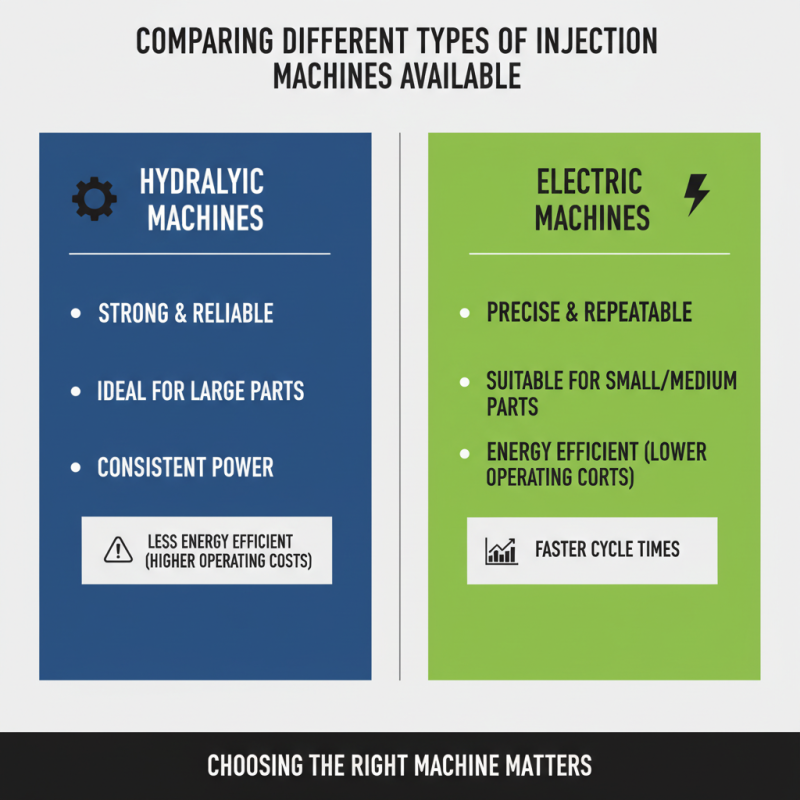
When comparing different types of injection machines, understanding their unique features is crucial. Hydraulic machines are strong and reliable. They are often used for large parts. Their power provides consistent performance. However, they can be less energy-efficient. This may increase operating costs over time.
Electric machines offer precision and energy savings. They are suitable for smaller, complex parts. Their quiet operation is a major advantage. But, the initial investment may be higher. Users must weigh these costs against long-term savings.
Hybrid injection machines combine features of both types. They provide the strength of hydraulic systems with the efficiency of electric ones. This versatility can be beneficial in varied production environments. Still, potential buyers must consider maintenance requirements. Each machine type has its pros and cons. Identifying specific needs is essential for the right choice.