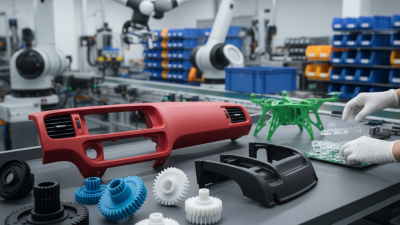

Who makes the best plastic parts in China? There is no single answer. The right supplier depends on the part, production volume, material, tolerances, and support required after delivery. A factory that excels at high-volume injection molding may not suit a low-volume, tight-tolerance prototype.
A sound comparison starts with evidence, not polished sales photos. Ask for samples made with the proposed resin and process. Inspect gate marks, flash, color consistency, dimensions, and packaging. A caliper helps. Request details on tooling ownership, inspection methods, traceability, lead times, and how defects are handled. Good suppliers can explain their process clearly and share relevant quality records while respecting confidentiality. Certifications can help, but they do not prove that every batch will meet your specification. Look closely. The small details matter.
China has manufacturers ranging from specialized workshops to large integrated plants. Shortlisting them means matching capabilities to your drawings and forecast, then checking communication and production controls. A capable supplier should flag unclear dimensions or unrealistic tolerances before tooling begins. That may slow a quotation, but it can prevent expensive rework later.
There is no magic ranking. Even an experienced manufacturer can be the wrong choice if its equipment, material sourcing, or quality system does not fit your project. This guide explores practical ways to compare plastic parts suppliers in China, verify their claims, and make decisions based on measurable performance rather than assumptions. Any shortlist should remain provisional until samples and a pilot run confirm the fit.
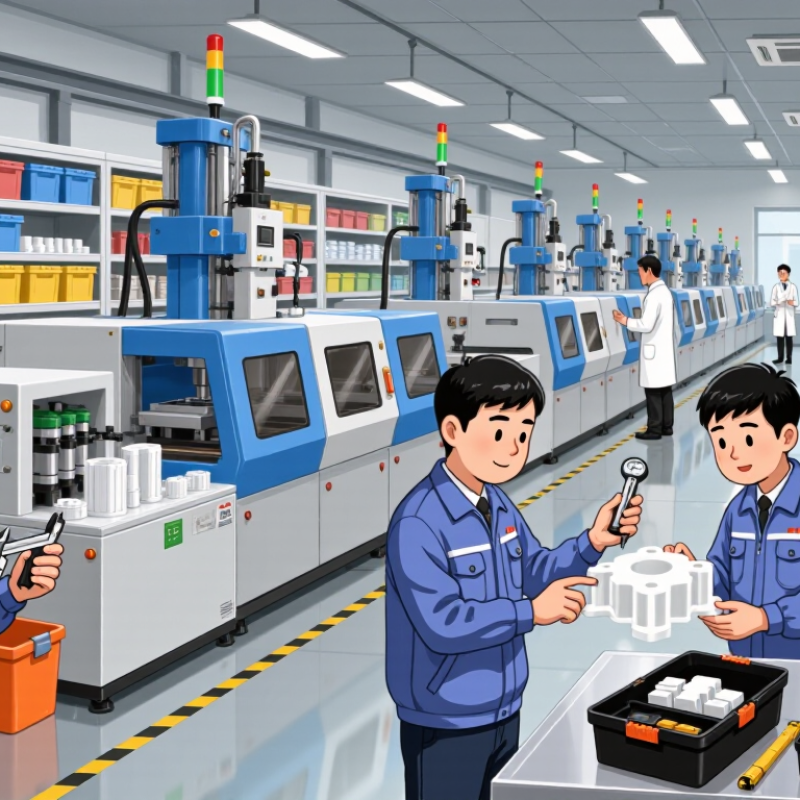
China’s plastic-parts suppliers are not one uniform group; their equipment and process expertise differ. Injection-molding factories make housings, clips, and appliance components in repeatable volumes. They can adjust gate position, cooling, and wall thickness, but a mold adds upfront cost. For a small run, that cost can feel steep.
Blow-molding specialists produce hollow containers and ducts, while extrusion manufacturers form continuous profiles, tubing, and sheets. Thermoforming shops heat plastic sheet to shape trays, covers, or interior panels. Tooling may be simpler for some designs, though detail and dimensional consistency can vary. Details vary. Ask to inspect a cut edge, not only a polished sample.
Some suppliers focus on CNC machining or rapid prototyping, which helps check fit before production tooling begins. Others combine design support, mold-making, and molding under one roof. Fewer handoffs can help, but do not guarantee better quality. Request material specifications, tolerance data, inspection records, and a sample made with the intended process. The right process depends on part shape, production volume, finish, and acceptable variation. A low quote can hide compromises in material choice or inspection frequency.
Choosing a capable Chinese plastic-parts manufacturer begins with matching the process to the part’s shape, material, and order volume. Injection molding suits repeatable parts with fine features, such as clips or housings, but requires carefully designed tooling. A thin wall can cool unevenly and warp. Small details matter. For long, constant profiles, extrusion is often more appropriate; thermoforming can suit shallow trays and panels, while blow molding forms hollow containers. Each process leaves different constraints on thickness, finish, and design changes.
The OECD’s Global Plastics Outlook (2022) estimates that global plastics production reached 460 million tonnes in 2019. That scale makes process efficiency important, but it does not prove that any individual factory delivers consistent parts. Ask how dimensions are checked, how material batches are tracked, and whether samples are tested under real production conditions. A glossy prototype can hide sink marks or weak weld lines. Tooling is unforgiving. Still, process charts cannot replace a production trial; that limitation is easy to overlook. Compare the part’s critical measurements with the drawing, inspect first-off samples, and confirm that the chosen process can hold tolerances across repeated runs.
The best process depends on part design, material, and production volume. These broad, indicative annual-output bands show where common processes are often used; actual capacity varies by part and equipment.
The logarithmic scale makes low- and high-volume processes easier to compare. Use these ranges as a starting point, not as guaranteed production limits.
A high-quality plastic part starts with a clear job description. Will it face repeated pressure, sunlight, heat, or cleaning? Each condition affects the resin, wall thickness, and shape. A housing that looks smooth on a desk may crack after repeated drops. Small details matter. Sharp internal corners can concentrate stress, while uneven walls may cause warping as the part cools.
Mold design and production control shape the final result. A well-made mold supports consistent dimensions and cleaner surfaces, but even a good mold needs careful setup. Operators must monitor temperature, injection pressure, and cooling time. Heat changes everything. For practical checks, measure key dimensions with calibrated tools, inspect for sink marks or flash, and test parts under realistic use. One sample is not enough; variation across a production run matters.
Material choice should match the actual use, not just a low unit price. Ask for resin specifications, sample records, and documented inspection results. A capable manufacturer can explain trade-offs plainly and flag risks before tooling is finalized. That conversation may reveal gaps in the original design, which is useful, though sometimes inconvenient. Quality is not perfectly predictable: material batches and process drift can still create variation. Reliable suppliers track these changes and respond with evidence, not vague assurances.
There is no single manufacturer that is best for every plastic part. Quality depends on the application, material, tooling, process control, inspection, and agreed acceptance criteria. Use this table to compare suppliers using documented evidence rather than claims.
| Quality dimension | What determines quality | Useful evidence or checks | How to assess it |
|---|---|---|---|
| Material selection and traceability | Resin grade, additives, recycled content, drying, and suitability for the part’s load, temperature, chemicals, and regulatory requirements. | Approved material specification, supplier certificate or test report, resin lot records, and documented controls for regrind or substitutions. | Confirm the exact grade and permitted recycled content in writing; check that incoming material lots can be traced to production batches. |
| Tool and mould design | Part geometry, draft, wall thickness, gate and runner design, venting, cooling, steel condition, and tool maintenance. | Design-for-manufacturing review, mould-flow analysis where appropriate, tool drawings, trial records, and preventive-maintenance logs. | Review sample parts for sink, warpage, flash, short shots, and visible gate or ejector marks; confirm who owns and maintains the tool. |
| Process control and repeatability | Stable control of melt and mould temperatures, injection speed and pressure, holding conditions, cooling time, and material drying. | Approved process window, setup sheets, machine and material records, first-article results, and documented change control. | Ask for production-run data, not only hand-picked samples. Verify that parameter changes are reviewed and recorded. |
| Dimensional accuracy | Part size, resin shrinkage, tool design, process variation, measurement method, and the tolerances required by the part’s function. | Dimensioned drawings, a measurement plan, calibrated instruments, first-article inspection, and capability data for critical dimensions. | Set tolerances on the drawing and agree how they will be measured. ISO 20457 provides a framework for tolerances and acceptance conditions for moulded plastic parts; requirements should be agreed for each part. |
| Mechanical and functional performance | Resin grade, part geometry, weld lines, orientation, processing conditions, and the loads or environmental conditions in service. | Part-specific performance tests and agreed acceptance limits. ISO 527 is commonly used for tensile properties; other tests depend on the required function. | Test the finished part under representative conditions where practical; resin datasheet values alone do not establish finished-part performance. |
| Appearance and workmanship | Surface finish, color consistency, flash, flow marks, burns, contamination, weld lines, and part-to-part visual variation. | Approved reference samples, written defect definitions, agreed viewing conditions, and inspection records. | Define which cosmetic areas are critical and specify acceptable defect size and location; avoid relying on subjective terms such as “good appearance.” |
| Inspection and measurement system | Inspection frequency, sampling plan, measurement equipment, inspector training, and handling of nonconforming parts. | Inspection reports, calibration records, defect logs, corrective-action records, and a sampling plan agreed before production. | ISO 2859-1 describes attribute-sampling plans indexed by acceptance quality limit (AQL). Agree the plan and AQL for the order; an AQL is a sampling-plan parameter, not a promise that every lot has that defect rate. |
| Quality management and delivery consistency | Documented procedures, trained staff, supplier controls, corrective actions, production planning, and communication of changes. | Current quality-system certification if relevant, audit findings, on-time delivery records, corrective-action evidence, and batch traceability. | Treat certification as evidence of a management system, not proof that a particular part meets its specification. Verify part-level inspection and production controls. |
Note: Acceptance limits, sampling levels, and test methods should be defined for the specific part and its intended use. No single tolerance, certification, or inspection result is appropriate for every plastic component.
China’s scale makes supplier selection more important than supplier rankings. Plastics Europe’s Plastics—the Fast Facts 2024 estimates that China produced 23.9% of global plastics in 2023. That figure shows manufacturing scale, not consistent quality. Ask how a supplier controls resin batches, drying, molding conditions, and tool wear. Request a first-article inspection report against your drawing, including critical dimensions and measured tolerances. Small details matter: a gate mark or uneven wall thickness can affect assembly.
Check the actual production process, not just the sales presentation. Review material certificates, inspection records, mold-maintenance logs, and the plan for handling nonconforming parts. ISO’s 2022 Survey recorded 393,008 ISO 9001 certificates in China across industries; certification signals a quality-management system, but does not guarantee a particular part’s performance. Run a trial using your production mold and agreed resin. Compare samples from different cavities and ask for process-capability data where dimensions are critical. A neat factory tour can still miss a weak inspection routine.
Tips: Send a detailed drawing, resin specification, annual volume, and acceptance criteria before requesting a quote. Ask for dated sample reports and traceability from resin lot to finished parts. Keep one concern open: a supplier’s best sample may not represent a full production run.
China’s plastic parts manufacturers serve automotive, appliance, electronics, construction, agricultural, and medical industries. Each sector needs different materials, tolerances, and production checks. Automotive suppliers may require heat-resistant clips or durable interior housings. Appliance makers often need molded panels that fit tightly around switches and displays.
A sample can look convincing. Stable production takes more work.
Electronics manufacturers may request small enclosures with precise openings for ports and buttons. Construction suppliers often need fittings that handle outdoor exposure and repeated use. Agricultural equipment makers may need sturdy housings for tools exposed to dust, moisture, and impact. Medical components call for careful material selection, controlled processes, and clear documentation. Requirements vary by part and application.
The right supplier depends on the job, not just the factory’s equipment list. Ask how it handles mold design, material checks, dimensional inspection, and production changes. Request relevant samples and inspection records, then confirm that the quoted process matches your intended volume. A polished sample does not prove consistent output.
Still, even a detailed checklist can miss a problem. Details matter.
All products and services provided by Innovative Plastic Molders, Inc. will meet or exceed our customer's perceived requirements and expectations. We will listen and respond to what our customers are telling us in a timely and forthright manner.

ISO 9001:2015 CERTIFIED
© Copyright 2009 – Innovative Plastic Molders, Inc.
Website by Central 8 Marketing
10451 Dog Leg Road Ste 200
Vandalia, OH 45377
Phone: 937.898.3775
Fax: 937.535.0640
Email: sale@endtheplastic.com