
China Top Plastic Molding Manufacturers for Global Buyers?
Choosing among China’s top plastic molding manufacturers requires more than comparing factory photos and hourly quotations. Global buyers need evidence of process control, material traceability, mold maintenance, and consistent production capacity. A polished website proves little. The real test appears in sample parts, inspection records, and honest communication when a design needs revision.
Injection molding expert Dr. John Beaumont has described the mold as “the heart of the injection molding process.” That principle remains practical today. A capable supplier should explain gate locations, cooling channels, shrinkage allowances, ejection marks, and tolerances before production begins. Buyers should also verify whether the manufacturer manages tooling internally or sends it elsewhere. This detail can affect lead times and accountability.
Experience matters.
A strong molding plastic partner will usually provide dimensional reports, material certificates, trial-shot feedback, and clear corrective-action plans. It should understand the difference between cosmetic surfaces and functional tolerances. It should also discuss resin selection, recycled content, and long-term part performance without making unsupported promises. Factory audits, video inspections, and independent testing can strengthen confidence, especially for overseas projects.
Still, no supplier is perfect. Even experienced teams may underestimate warpage, overlook packaging damage, or communicate poorly across time zones. That weakness deserves attention, not concealment. This guide examines leading Chinese manufacturers through practical criteria: engineering capability, quality systems, tooling expertise, communication, scalability, and total project risk. The goal is not to name the cheapest factory. It is to identify a dependable partner that can turn a digital design into stable, repeatable parts.
What Plastic Molding Manufacturers in China Provide
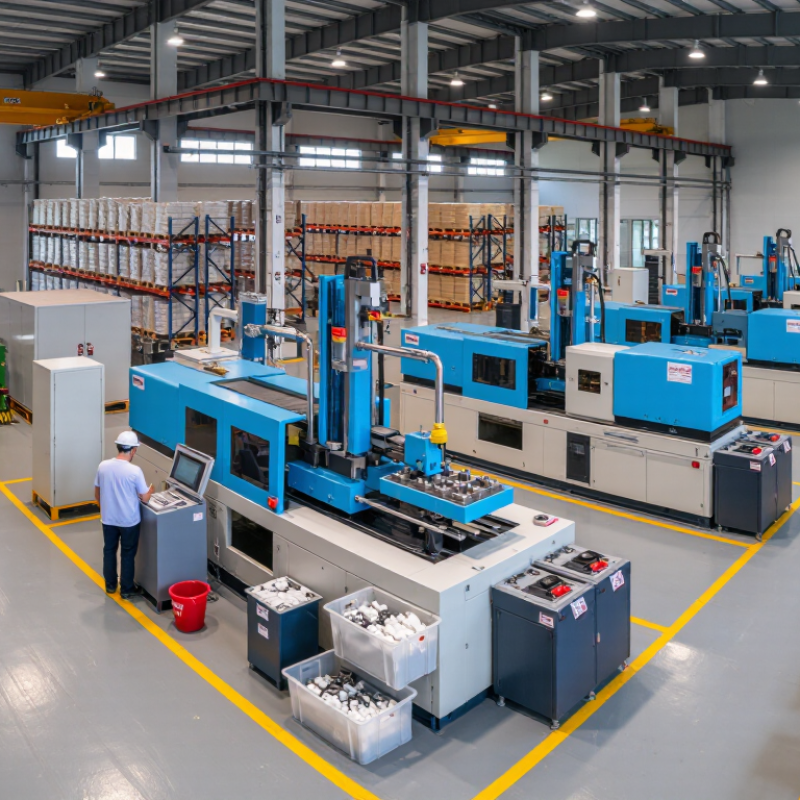
Chinese plastic molding manufacturers provide more than molded parts. Many offer product design support, mold flow analysis, tooling, injection molding, assembly, and export packaging. This integrated service can reduce communication gaps between overseas buyers and production teams. Grand View Research valued the global injection molded plastics market at approximately USD 194.6 billion in 2023. Demand remains strong across medical equipment, electronics, automotive components, and household products.
A capable supplier should explain resin selection clearly. Common options include ABS, PP, PC, nylon, and engineering blends. Buyers can request material certificates, dimensional reports, first-article samples, and process records. On a factory visit, practical details matter: clean resin storage, labeled molds, calibrated gauges, and stable temperature control. These signs reveal more than polished sales presentations. ISO 9001-based quality systems are common, but certification alone cannot guarantee consistent production.
China’s scale also supports rapid tooling and competitive unit pricing. PlasticsEurope reported that China produced about one-third of global plastics in 2023. However, low pricing can hide thin mold steel, weak inspection, or unclear change control. I have found that careful buyers should compare total cost, not only quotation price. Ask about mold ownership, maintenance cycles, tolerances, traceability, and rejected-part handling. Some suppliers communicate well during sampling but respond slowly after approval. That risk deserves attention. Supplier audits, signed specifications, and staged inspections create stronger protection for international projects.
| Capability or Service Dimension | Typical Offering from Chinese Plastic Molding Manufacturers | What Global Buyers Should Confirm |
|---|---|---|
| Molding Processes | Injection molding for thermoplastics, insert molding, overmolding, two-shot molding, compression molding, blow molding, and rotational molding are commonly available through specialized suppliers. | Select a supplier with equipment and process experience that match the part geometry, annual volume, resin type, and required surface finish. |
| Material Selection | Common materials include PP, ABS, PC, PC/ABS, PA, POM, PMMA, PBT, TPE, TPU, PPS, and other engineering or flame-retardant grades. | Confirm the exact resin grade, additive package, color standard, safety requirements, recycled-content percentage, and material traceability. |
| Tooling and Mold Design | Services may include DFM review, mold-flow analysis, 3D mold design, prototype tooling, production molds, hot-runner systems, cooling-channel design, and mold maintenance. | Request the mold layout, expected cycle life, maintenance plan, spare-part policy, ownership terms, and approval process before steel is cut. |
| Prototype Support | Prototype options can include CNC machining, 3D printing, soft tooling, silicone molding, and low-volume injection molding before mass production. | Use prototypes to validate assembly, dimensions, material behavior, appearance, and functional performance before committing to production tooling. |
| Production Volume | Manufacturers commonly support development quantities, pilot runs, small batches, and high-volume production. Suitable order quantities vary by part size, machine capacity, and tooling investment. | Compare minimum order quantities, machine availability, monthly capacity, planned production batches, and contingency capacity for demand increases. |
| Dimensional Capability | Injection-molded parts can often achieve general tolerances around ±0.10 mm to ±0.30 mm, while tighter tolerances may be possible for selected features with suitable materials, tooling, and process control. | Define critical dimensions, datum references, measurement methods, temperature conditions, and acceptance limits on the approved drawing. |
| Surface Finishing | Available finishes may include polished surfaces, texture patterns, EDM finishes, bead blasting, laser marking, pad printing, painting, plating, and decorative film application. | Specify the approved texture reference, gloss level, color tolerance, visible-surface criteria, marking position, and sample approval procedure. |
| Secondary Operations | Additional services can include trimming, drilling, tapping, ultrasonic welding, heat staking, assembly, adhesive bonding, labeling, and custom packaging. | Confirm process sequence, fixture design, inspection points, operator controls, assembly tolerances, and packaging protection for international shipping. |
| Quality Management | Established suppliers may operate documented quality systems with incoming-material inspection, first-article inspection, in-process checks, final inspection, and corrective-action procedures. | Ask for current certification copies, inspection plans, control plans, gauge calibration records, nonconformance procedures, and sample inspection reports. |
| Testing and Validation | Testing may cover dimensions, appearance, hardness, impact resistance, tensile behavior, color, flame performance, environmental aging, leak testing, and functional fit. | Agree on test standards, laboratory responsibility, sample quantities, test frequency, reporting format, and acceptance criteria before production approval. |
| Regulatory Documentation | Depending on the application, suppliers may provide material certificates, declarations of conformity, safety data sheets, RoHS-related documentation, REACH-related information, and food-contact support documents. | Check whether documents apply to the exact resin grade, colorant, additive, production site, and destination-market requirements. |
| Tooling Lead Time | A simple prototype or production mold may take several weeks, while complex multi-cavity, hot-runner, large-format, or high-precision molds generally require additional design, machining, and validation time. | Request a milestone schedule covering design approval, mold fabrication, trial shots, sample revision, dimensional approval, and production release. |
| Production Lead Time | After tooling and material approval, production timing depends on order quantity, part complexity, machine loading, secondary operations, inspection requirements, and packaging configuration. | Confirm the lead time from purchase-order acceptance, not only the molding cycle time, and include approval and logistics buffers in the schedule. |
| Export and Logistics Support | Export-oriented suppliers may support commercial invoices, packing lists, shipping marks, carton specifications, palletization, freight coordination, and delivery terms such as EXW, FOB, CIF, or DDP. | Clarify the named export entity, shipping responsibility, customs documentation, insurance coverage, packaging test requirements, and total landed cost. |
| Cost Structure | Quotations commonly separate tooling cost, unit molding price, resin cost, secondary processing, inspection, packaging, freight, and applicable taxes or duties. | Compare complete cost-of-ownership estimates rather than unit price alone, including mold amortization, revisions, logistics, quality controls, and warranty exposure. |
| Communication and Engineering Support | Many export-focused manufacturers provide English-language project communication, drawing review, design feedback, sample reports, production updates, and corrective-action responses. | Evaluate response speed, technical clarity, engineering accountability, change-control discipline, and the availability of a dedicated project contact. |
| Sustainability Options | Potential options include recycled resins, bio-based materials, lightweighting, material reduction, energy-efficient molding equipment, recyclable packaging, and production scrap separation. | Request verified recycled-content data, material-performance comparisons, waste-handling records, and evidence supporting environmental claims. |
| Recommended Supplier Evaluation | A practical evaluation normally combines technical capability, sample quality, process controls, tooling ownership, production capacity, communication, delivery reliability, and financial transparency. | Use a documented supplier scorecard and approve the supplier only after reviewing samples, inspection data, references or audits, commercial terms, and a clear quality agreement. |
Related Posts
-
China Top 10 Plastic Molding Manufacturers 2026
-

How to Choose the Right Molding Plastic for Your Next Project
-
Top 10 Plastic Injection Companies for Global Buyers?
-
2026 How to Source Custom Injection Molded Parts?
-
Top 10 Benefits of Using a Plastic Injection Molding Machine for Your Business?
-
Top Benefits of Custom Plastic Injection Molding for Your Business Needs
Our Promise to You

Contact IPM
Phone: 937.898.3775
Fax: 937.535.0640
Email: sale@endtheplastic.com