
Top Custom Plastic Injection Molding Manufacturers
Choosing among the top custom plastic injection molding manufacturers requires more than comparing prices. It requires evidence.
The global market is expanding, but published estimates differ. Grand View Research valued the injection molded plastics market at approximately USD 387 billion in 2023. MarketsandMarkets reported a lower figure because it used a narrower market definition. These differences matter. They show why buyers should examine report scope before trusting any ranking.
Custom plastic injection molding supports medical devices, automotive interiors, electronics housings, and industrial components. A capable manufacturer should demonstrate repeatable tolerances, documented process controls, and material traceability. It should also explain mold ownership, maintenance schedules, and expected tool life. A polished website is not enough.
Production details reveal more. Look for automated resin drying, in-process dimensional checks, clean assembly areas, and clearly labeled inspection records. Ask whether the supplier can provide first-article reports and capability studies. ISO 9001 certification supports quality management, while IATF 16949 may be relevant for automotive programs. These credentials do not guarantee perfect results. They provide a stronger basis for evaluation.
The Plastics Industry Association continues to identify plastics manufacturing as a major contributor to the United States economy. However, regional labor costs, energy prices, logistics, and regulatory requirements can change the final value significantly. The cheapest quotation may create expensive revisions later.
This guide evaluates leading suppliers through practical criteria: engineering experience, tooling capability, quality evidence, production scale, communication, and delivery reliability. No manufacturer is ideal for every project. That limitation deserves attention. A supplier producing millions of simple parts may not suit a tightly toleranced medical enclosure. Conversely, a specialized partner may offer better control, even with higher initial pricing.
Define Custom Injection Molding and Its 15–5,000-Ton Press Capacity
Custom injection molding is a manufacturing process for producing plastic parts from an engineered mold. The mold shapes heated plastic under controlled pressure. After cooling, the part is ejected and inspected.
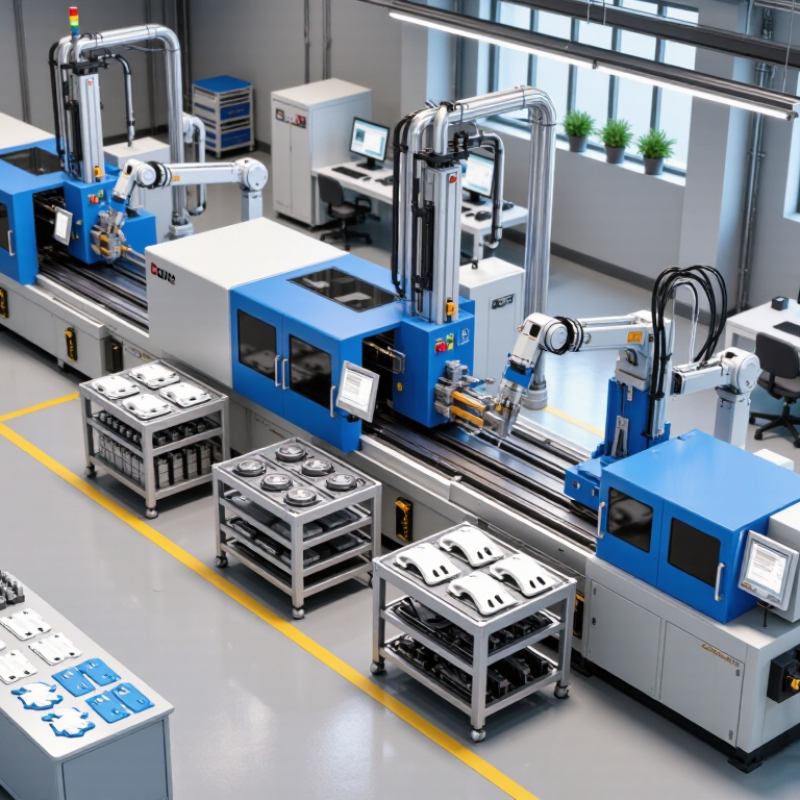
Press capacity is measured in tons of clamping force. A 15-ton press suits small components, such as clips, housings, and laboratory fittings. Large 5,000-ton presses can form substantial panels, containers, and structural parts. The correct machine depends on projected surface area, material behavior, mold size, and required production volume. Bigger is not always better.
A reliable molding program begins with practical design reviews. Engineers examine wall thickness, draft angles, gate locations, cooling channels, and expected shrinkage. They also confirm resin specifications and dimensional tolerances. Production teams should record trial results, inspection data, and process settings. Small details matter.
Real manufacturing is rarely perfect. A first mold trial may reveal warping, short shots, or uneven gloss. Experienced teams adjust temperature, speed, pressure, or cooling time before approving production. Some defects come from the mold, while others come from material moisture or poor part design. That distinction requires evidence, not guesses. A capable manufacturer explains these limits clearly and recommends a press size that balances quality, energy use, tooling access, and cost.
Top Custom Plastic Injection Molding Manufacturers - Define Custom Injection Molding and Its 15–5,000-Ton Press Capacity
| Data Dimension | 15–150 Tons | 151–500 Tons | 501–1,500 Tons | 1,501–5,000 Tons |
|---|---|---|---|---|
| Primary molding scope | Small precision parts and low-volume components | General industrial, consumer, and technical parts | Large housings, structural parts, and multi-cavity production | Very large panels, containers, automotive parts, and infrastructure components |
| Typical part size | Small parts generally weighing from fractions of a gram to approximately 100 g | Small-to-medium parts generally weighing approximately 10–1,000 g | Medium-to-large parts generally weighing approximately 250–8,000 g | Large parts that may weigh several kilograms or more, depending on material and machine design |
| Common mold formats | Single-cavity, family, insert, and small multi-cavity molds | Single-cavity and multi-cavity molds with hot-runner or cold-runner systems | Large multi-cavity molds, stack molds, and molds with slides or hydraulic actions | Large single-cavity or specialized high-volume molds with substantial steel and cooling requirements |
| Typical applications | Caps, fittings, medical components, electronic parts, and laboratory items | Enclosures, handles, appliance components, industrial fittings, and consumer products | Automotive interiors, equipment housings, pallets, bins, and large technical components | Vehicle body components, large containers, utility products, and oversized industrial parts |
| Suitable production volume | Prototype, pilot, replacement, and high-volume production | Low-to-high volume production depending on mold life and cycle time | Medium-to-high volume production for large or complex parts | High-volume production when part size requires very high clamping force |
| Clamping-force purpose | Controls mold separation during injection of relatively small shot sizes | Supports moderate projected part areas and injection pressures | Prevents flash on large projected areas and complex molds | Provides the force required to keep very large molds closed under high injection pressure |
| Materials commonly processed | PP, PE, ABS, PS, PA, POM, and selected engineering thermoplastics | PP, PE, ABS, PC, PA, POM, PBT, and reinforced thermoplastics | Commodity and engineering thermoplastics, including glass-filled grades | Large-part thermoplastics selected according to flow length, stiffness, shrinkage, and impact requirements |
| Dimensional capability | High repeatability is achievable with stable tooling, material control, and process monitoring | Suitable for tight commercial tolerances when part geometry and resin are properly controlled | Large-part tolerances must account for shrinkage, warpage, cooling balance, and mold deflection | Tolerance capability is highly design-dependent and generally requires detailed dimensional planning |
| Key design considerations | Draft angles, gate placement, thin-wall filling, ejector layout, and insert retention | Wall uniformity, ribs, bosses, weld lines, cooling layout, and mold maintenance | Flow balance, mold stiffness, cooling uniformity, venting, lifting, and part handling | Mold weight, machine platen size, structural support, resin flow, cooling, and facility logistics |
| Custom injection molding definition | A manufacturing process in which a polymer is heated until molten, injected into a customer-specific mold under pressure, cooled until solidified, and ejected as a repeatable plastic component. Custom services may include design-for-manufacturing review, mold construction, material selection, process validation, secondary operations, inspection, and packaging. | |||
| How to select press capacity | Press selection depends on projected part area, injection pressure, material behavior, shot size, mold dimensions, tie-bar spacing, mold weight, cycle requirements, and required safety margin. Tonnage should be calculated for the specific part and mold rather than selected from part weight alone. | |||
Note: The ranges and examples above are general industry classifications. Actual machine capability, part weight, tolerances, cycle time, and material compatibility vary by equipment, mold design, resin grade, and process conditions.
Related Posts
-
2026 How to Source Custom Injection Molded Parts?
-

What Is Custom Plastic Injection Molding?
-
What Is Plastic Injection Molding and How Does It Work?
-
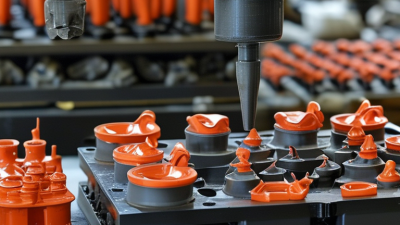
Top Injection Molding Companies for Your Sourcing Needs?
-
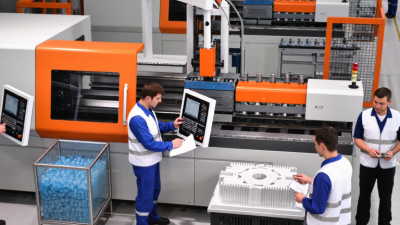
How to Choose a Custom Injection Molding Supplier in 2026?
-
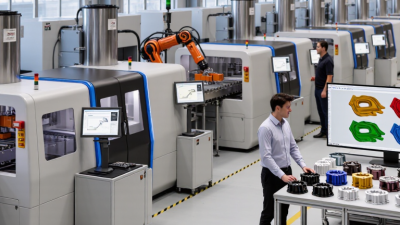
10 Best Injection Molding Companies Worldwide?
Our Promise to You

Contact IPM
Phone: 937.898.3775
Fax: 937.535.0640
Email: sale@endtheplastic.com