BLOG

How to Choose a Custom Injection Molding Supplier in 2026?

Choosing a custom injection molding supplier in 2026 is not simply a price comparison. It is a manufacturing decision with long-term consequences.

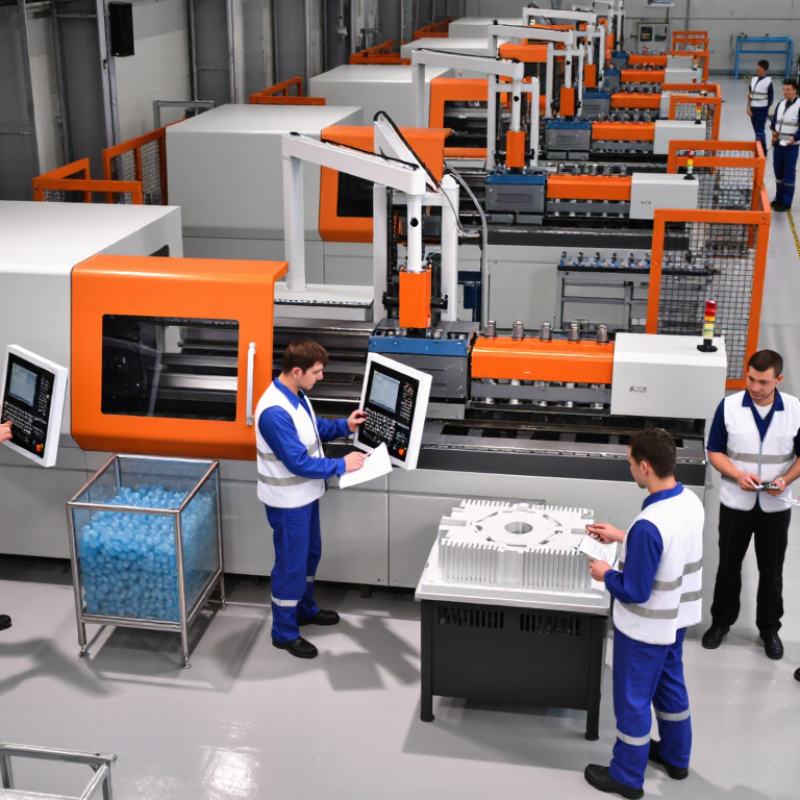
A capable supplier should understand your part’s function, resin behavior, tolerances, tooling risks, and production volume. Ask how the team reviews draft angles, wall thickness, cooling channels, and ejection forces before cutting steel. Request mold-flow analysis, sample inspection reports, process documentation, and clear ownership of design changes. A polished website proves very little. The press floor matters more.

John Bozzelli, founder of Scientific Molding, has said, “The mold is the heart of the injection molding process.” That reminder should shape every supplier conversation. An experienced partner will discuss mold life, maintenance access, cycle stability, and repeatability without hiding behind vague promises. They should also explain how operators control moisture, barrel temperature, injection speed, and holding pressure. Small variations can become visible defects across thousands of parts.

Do not choose the cheapest quote too quickly. An inexpensive tool may create expensive delays, rework, or inconsistent parts. Visit the facility, if possible. Watch how technicians measure a molded component. Notice whether questions receive precise answers or convenient guesses. No checklist is perfect. Your own assumptions may be wrong.

The strongest custom injection molding supplier combines engineering judgment, documented quality systems, responsive communication, and practical production experience. For 2026 projects, evaluate evidence rather than confidence. The right partner should help you discover risks before they reach the assembly line.
How to Choose a Custom Injection Molding Supplier in 2026?

Define Your Project Requirements and Quality Standards

How to Choose a Custom Injection Molding Supplier in 2026?

Define Your Project Requirements and Quality Standards

A reliable supplier starts with a clear project brief. Specify resin grade, annual volume, part weight, tolerances, surface finish, and expected service life. Include a simple 3D model and critical dimensions. Vague requirements create expensive assumptions. They also weaken supplier comparisons.

The 2024 Global Injection Molding Market Report estimated the worldwide market above 190 billion dollars in 2023. This scale increases supplier choice, but not supplier suitability. Ask each candidate about mold-flow analysis, process validation, inspection equipment, and corrective-action procedures. ISO Survey 2023 recorded more than one million ISO 9001 certificates worldwide. Certification helps, but it does not prove stable molding performance. Request recent capability data, sample inspection reports, and evidence of traceability. A supplier may show impressive equipment. That alone is not enough.

Tips: Define acceptance limits before requesting quotations. Separate critical and cosmetic features. Ask for Cpk data on key dimensions, when available. Confirm who owns the mold and inspection records. Visit the factory if practical. Watch the process, not only the presentation. My own preference is a small pilot run before full production. It costs more initially, but it can expose warpage, sink marks, or short shots early. No brief is perfect. Review it after the first trial.

Verify Supplier Capabilities, Equipment, and Material Expertise

How to Choose a Custom Injection Molding Supplier in 2026?

A capable supplier should match its equipment to your part, not merely display a large machine list. Ask for clamp-force ranges, shot-size limits, mold dimensions, and recent examples with similar wall thicknesses. A machine running near its limits may create inconsistent filling or unnecessary waste. Request a documented mold-trial process.

Inspect the production floor when possible. Look for material dryers, mold-temperature controllers, robotics, vision inspection, and preventive-maintenance records. Measurement tools should suit your tolerances, including calibrated gauges or coordinate measuring equipment. Digital process monitoring can reveal pressure drift, cycle changes, and operator variation. Ask how nonconforming parts are isolated and traced.

Material expertise matters just as much. The supplier should explain drying requirements, shrinkage, glass-fiber orientation, additives, and temperature limits in practical terms. Confirm that resin lots, regrind percentages, and colorants are controlled. For demanding applications, request test reports and evidence that the selected material suits the environment. Do not accept vague claims.

A capability sheet is not proof. Ask for a sample inspection report, trial data, and a conversation with the process engineer. I would also compare quoted cycle times with actual machine settings. They may not match. Even a careful audit can miss weak communication, especially after production begins. A small pilot order can expose issues before full-scale tooling and delivery commitments.

How to Choose a Custom Injection Molding Supplier in 2026?

Verify that the supplier’s equipment and process controls cover the typical melt-temperature windows of your selected materials.

Typical injection-molding melt-temperature ranges shown in °C. Actual settings vary by resin grade, part design, tooling, and processing conditions; request material data sheets and machine capability records before approval.

Evaluate Engineering Support, Prototyping, and Production Processes

How to Choose a Custom Injection Molding Supplier in 2026?

When choosing a custom injection molding supplier, examine engineering support before comparing prices. A capable team should review your CAD files, wall thickness, draft angles, ribs, and tolerance requirements. Ask how engineers identify sink marks, warping, weld lines, and difficult ejection points. Mold-flow analysis can reveal problems before steel is cut. That matters when your part includes thin walls or uneven cooling. Request clear design feedback, not vague promises.

Prototyping should connect directly with production planning. Ask whether prototypes use the intended resin, tooling approach, and inspection standards. A prototype made from a different material may create false confidence. The supplier should explain tooling changes, sample approval, dimensional reports, and pilot-run results. During production, check process monitoring, machine capability, cavity balance, and lot traceability. One attractive sample proves very little. I have seen suppliers focus heavily on appearance while ignoring repeatability. That is an uncomfortable warning, but it deserves attention.

Tips: Request one sample inspection report and one process record. Ask who approves engineering changes. Confirm response times for defects and revisions. Visit the molding area if possible. Watch how operators handle resin, molds, and finished parts. A clean facility helps, but disciplined records matter more. Do not assume every promised tolerance is practical. Ask for evidence.

Compare Costs, Lead Times, Certifications, and Supply Chain Reliability

How to Choose a Custom Injection Molding Supplier in 2026?

Cost comparison should begin beyond the quoted part price. Request separate figures for tooling, engineering changes, sampling, inspection, packaging, and freight. A low mold quote may hide expensive revisions later. Ask how the supplier calculates cycle time and material usage. I have found that transparent assumptions reveal more than a polished proposal. Still, estimates remain imperfect.

Lead times need practical verification. Ask for the timeline from design approval to first articles and stable production. Check current machine capacity, mold-making resources, and outside processing dependencies. A supplier promising ten days may be relying on unavailable equipment. Request recent delivery performance data, not only planned dates. Include a small pilot order when possible. It exposes delays early.

Certifications should match your industry and product risks. Verify certificate numbers, audit dates, scope, and manufacturing locations. Quality systems matter, but daily controls matter more. Review inspection records, corrective-action procedures, material traceability, and change approval rules. Supply chain reliability also requires evidence. Ask about resin sourcing, backup processors, safety stock, preventive maintenance, and disruption communication. A supplier should explain what happens after a power failure or transport delay. Scorecards help compare suppliers, but they can miss weak communication and slow problem ownership. Ask for references from similar production volumes, then test responsiveness with a detailed technical question.

Audit Communication, Risk Management, and Long-Term Partnership Potential

Choosing a custom injection molding supplier in 2026 requires more than comparing unit prices. Communication, risk control, and partnership potential deserve equal attention. During an audit, ask how quickly engineers answer technical questions. Request sample meeting records, drawing revisions, and escalation procedures. A reliable supplier should explain who owns each decision. Clear ownership prevents delays when tooling changes unexpectedly.

Visit the production area if possible. Check mold storage, material labeling, inspection stations, and maintenance records. Ask how the team handles resin shortages, machine downtime, and failed first articles. Strong suppliers provide practical backup plans, not polished promises. Review quality data, corrective-action reports, and traceability procedures. Small gaps may reveal larger risks. No audit is perfect. I once focused too heavily on equipment and overlooked weak production handoffs.

Long-term partnership potential appears through behavior over time. Discuss forecast changes, engineering support, payment expectations, and capacity planning before signing an agreement. The supplier should challenge unrealistic tolerances and suggest manufacturable alternatives. That shows expertise, not resistance. Run a pilot project with measurable targets, including cycle time, defect rate, response time, and delivery accuracy. Keep communication records during the trial. Notice whether problems are reported early or hidden until shipment. A supplier willing to admit mistakes can often improve faster than one claiming flawless performance. Relationship fit matters. You need consistent evidence, not impressive presentations.

How to Choose a Custom Injection Molding Supplier in 2026? — Audit Communication, Risk Management, and Long-Term Partnership Potential

Evaluation Dimension Weight Audit Evidence to Request Practical 2026 Benchmark Warning Signs Score
(0–5)
Quality Management System 20% Current quality certificate, internal audit schedule, inspection plan, nonconformance log, corrective-action records, and sample inspection reports. Documented quality procedures aligned with ISO 9001 principles; full traceability for material lots, production batches, inspection results, and approved changes. Expired certificates, undocumented rework, incomplete records, repeated defects, or corrective actions without root-cause analysis. __ / 5
Process Capability and Part Quality 15% Process-flow diagram, machine list, mold-validation report, dimensional capability study, control plan, and first-article inspection results. Critical dimensions identified before tooling; measurement equipment is calibrated; capability results are reported using consistent sampling and measurement methods. Reliance on visual inspection alone, no defined critical-to-quality characteristics, or inability to reproduce sample results. __ / 5
Communication and Responsiveness 15% Named project owner, escalation matrix, meeting cadence, quotation assumptions, engineering-question log, and change-notification procedure. Written acknowledgement within one business day for active projects; clear action owners, due dates, revision control, and documented decisions. Unanswered technical questions, inconsistent commercial and engineering information, informal approvals, or unclear escalation ownership. __ / 5
Supply-Chain and Operational Risk 15% Business-continuity plan, critical-subcontractor list, material-source strategy, capacity plan, preventive-maintenance records, and disaster-recovery procedures. At least one documented contingency for critical materials, tooling, utilities, key equipment, and logistics; risks are reviewed at defined intervals. Single-source dependency without mitigation, no backup tooling plan, undocumented subcontracting, or capacity commitments unsupported by records. __ / 5
Tooling Ownership and Lifecycle Control 10% Tooling quotation, ownership terms, preventive-maintenance schedule, spare-part policy, mold-storage conditions, and tool-transfer procedure. Ownership, permitted use, maintenance responsibility, expected tool life, repair approval, and transfer rights are written into the contract before production. Unclear ownership, no maintenance history, unrestricted tool modifications, or inability to provide tool condition and shot-count records. __ / 5
Total Cost and Commercial Transparency 10% Itemized quotation covering resin, cycle time, labor, tooling, secondary operations, packaging, testing, freight assumptions, payment terms, and price-adjustment rules. All major cost drivers and assumptions are visible; quoted lead time and capacity are linked to an agreed forecast and order quantity. Unusually low price without assumptions, hidden setup charges, ambiguous material grades, or frequent unexplained price changes. __ / 5
Regulatory, Environmental, and Material Compliance 5% Material declarations, safety data sheets, restricted-substance declarations, waste-handling records, energy data where relevant, and customer-specific compliance controls. Material identity and compliance status are traceable to each production lot; recycled content or sustainability claims are supported by verifiable documentation. Unsupported environmental claims, substituted resin without approval, missing material certificates, or weak control of regrind and additives. __ / 5
Long-Term Partnership Potential 10% Evidence of design-for-manufacturing support, quarterly business-review format, continuous-improvement records, capacity-investment plan, and customer-reference process. Supplier can support design reviews, controlled ramp-up, forecast changes, cost-reduction projects, and performance reviews using agreed metrics. Focus only on initial price, resistance to engineering feedback, no improvement plan, or unwillingness to share measurable performance data. __ / 5
Weighted Supplier Evaluation Score __ / 5
Decision Guide: 4.25–5.00 = Preferred partner; 3.50–4.24 = Approved with an improvement plan; 2.75–3.49 = Conditional approval with risk controls; Below 2.75 = Do not proceed without corrective evidence. Any critical failure involving product safety, material traceability, intellectual property protection, or business continuity should be treated as a potential disqualifier regardless of the total score.
Go to Top