
BLOG

How to Choose the Best Plastic for Molding?

Choosing plastic for molding starts with the part, not a favorite resin. A thin-walled enclosure may need stiffness and a clean finish, while a snap-fit clip must bend repeatedly without breaking. A component near a warm motor faces different demands from a storage lid exposed to cold washing cycles. The right material depends on these conditions, along with production volume, mold geometry, and budget. Small details matter. Heat, moisture, cleaning chemicals, sunlight, and repeated impacts can change performance over time. A resin that fills a polished mold easily may still warp, crack, or feel too flexible in use. That trade-off is easy to miss.

Compare candidate plastics using reliable technical data, then confirm their performance with molded samples. Polypropylene can offer low weight and useful chemical resistance, while ABS is often considered for rigid parts with a smooth finish. Nylon can handle wear, but moisture absorption may affect dimensions and fit. These are starting points, not promises. Ask suppliers for current data sheets, and test samples under realistic temperatures and loads. Check shrinkage, tolerances, surface finish, cycle time, and the cost of any required additives. One small test can expose a poor assumption. There is no single best choice. Even careful material selection can disappoint if mold design, processing conditions, or the actual service environment differs from the plan.

How to Choose the Best Plastic for Molding?

Define the Product Requirements and Molding Conditions

How to Choose the Best Plastic for Molding?

Define the Product Requirements and Molding Conditions

Before comparing plastic grades, write down what the part must endure. Will it carry a steady load, absorb a sudden impact, or touch oils and cleaning agents? Record the operating temperature, outdoor exposure, expected lifespan, and acceptable dimensions. Small details matter. A snap-fit clip and a rigid housing may use the same resin family, yet need very different impact strength and flexibility.

Scale makes careful selection worthwhile. PlasticsEurope’s Plastics—The Fast Facts 2023 reports global plastics production of 400.3 million tonnes in 2022. That figure describes a vast, varied industry, not a single “best” material. Compare candidate data sheets at the actual service temperature, and check moisture sensitivity, chemical resistance, and shrinkage. A room-temperature strength value can mislead when a part sits beside a warm motor.

Then define the molding conditions: process type, wall thickness, gate position, surface finish, tolerances, and production volume. Thin ribs may fill poorly; uneven walls can encourage warpage. Ask the molder about drying requirements, melt and mold temperatures, cycle time, and expected scrap. A tidy spreadsheet is not enough. Prototype parts should be tested under realistic loads and exposure. One assumption may still be wrong, so revisit the grade after measuring fit, strength, and dimensional change.

Identify the Plastic Molding Process

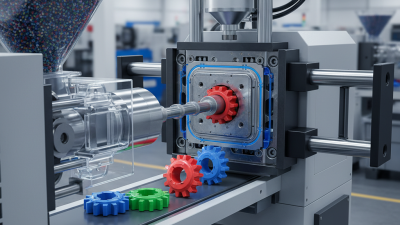
Choosing a plastic starts with identifying the molding process, not browsing resin names. Each process places different demands on flow, heat, pressure, and cooling. Injection molding forces molten resin through narrow gates into a closed tool, so flow and shrinkage can affect thin ribs and snap-fit features. Blow molding stretches a hot tube against a cavity, making flexibility and wall thickness important for hollow parts. Thermoforming heats a plastic sheet and draws it over a mold; sheet stiffness and heat response matter. Small details matter.

Tips: Ask how the part will be made before comparing grades. Share a drawing, target wall thickness, production volume, and expected environment with a molding specialist.

Then compare candidate plastics for temperature, impact, chemical exposure, and cycle time. A resin that fills a tiny rib may still warp across a broad, flat panel. The choice is rarely tidy: mold design and processing settings also affect the finished part. A datasheet is a useful starting point, not a guarantee. When possible, test a prototype with the actual geometry and process.

Compare Candidate Plastics by Performance and Properties

Compare candidate plastics against the part’s real loads, temperature, moisture, and finish—not a single “strength” number. CAMPUS polymer-property data for typical unfilled grades show why: polypropylene has a density near 0.90 g/cm³, while ABS is roughly 1.04 g/cm³. Typical tensile strength is about 30–40 MPa for polypropylene and 40–50 MPa for ABS; exact results depend on grade and test conditions. ISO 527 tensile tests and ISO 75 heat-deflection tests provide useful, comparable measures.

Heat and moisture can change the choice. Unfilled nylon 6 can reach roughly 70–85 MPa tensile strength when dry, but absorbed moisture can reduce stiffness and alter dimensions. That matters for a clip near a warm motor or a housing exposed to damp air. Polypropylene may suit lighter parts, while ABS can offer a useful balance of rigidity and impact resistance. Still, a neat data-sheet comparison can mislead if the molded wall is thin or the part has sharp corners.

Tips: Shortlist two or three candidates, then compare their tested properties at the expected temperature and moisture level. Mold small samples with the intended wall thickness. Check warping, fit, and impact performance; a resin that looks best on paper may not behave best in the finished part.

Assess Cost, Availability, and Environmental Constraints

How to Choose the Best Plastic for Molding?

Assess Cost, Availability, and Environmental Constraints

A resin’s quoted price is only part of its cost. Compare the grade, colorants, drying needs, cycle time, scrap rate, and shipping distance. A cheaper resin can become expensive if it needs longer cooling or causes frequent rejects.

Check the actual grade. Ask suppliers about lead times, minimum order quantities, and whether a substitute has been tested in your mold. Availability varies by region, and a material name alone does not guarantee equivalent performance.

Environmental constraints

Environmental constraints deserve the same early attention as price. The OECD’s Global Plastics Outlook (2022) reports that the world generated 353 million tonnes of plastic waste in 2019; only 9% was recycled. That figure is a useful warning, not a verdict on any single part.

If recycled resin is under consideration, verify its consistency, certifications, and suitability for the intended application. Recycled content can vary between batches. That matters.

Also examine product life, repairability, and end-of-life options where the part will actually be sold or used. UNEP’s Turning off the Tap report (2023) estimates that coordinated system changes could reduce plastic pollution by 80% by 2040. Material choice helps, but it cannot do the whole job.

A recyclable polymer may still be difficult to recover if the part combines bonded materials or uses hard-to-separate inserts.

I have seen selection discussions focus too much on resin price and too little on the finished part’s route after use. That balance is easy to miss.

Test and Confirm the Best Plastic for the Application

How to Choose the Best Plastic for Molding?

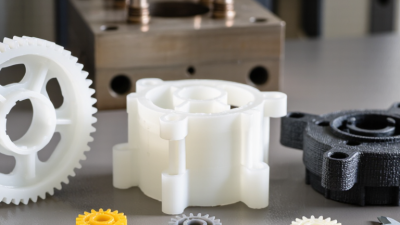
A resin data sheet is a useful starting point, not proof that a material will work. Test molded samples under conditions close to the part’s real use. Consider heat, repeated loads, moisture, and contact with cleaning fluids or other chemicals. A part used outdoors needs different checks from one inside a warm machine.

Use samples with the intended wall thickness, ribs, and gate location whenever possible. Small details matter. Measure dimensions after molding and again after conditioning or exposure. Check for warping, cracks, surface changes, and loss of strength. If the part faces chemical contact, use the actual fluid, concentration, temperature, and exposure time. A quick wipe may not reveal delayed damage.

Keep processing records, including drying conditions and mold temperature, since these can affect results. Compare several samples, not just the best-looking one. A material can pass an impact test and still creep under a steady load. That takes time. Repeat trials across separate molding runs to check consistency. Early tests are imperfect; a laboratory fixture may not reproduce real handling, and that gap deserves a second look before selecting the plastic.

Go to Top