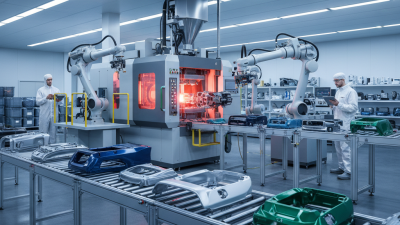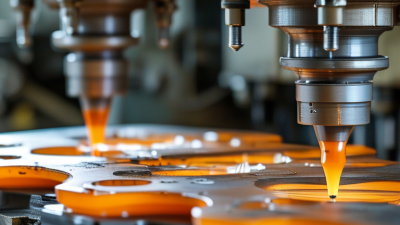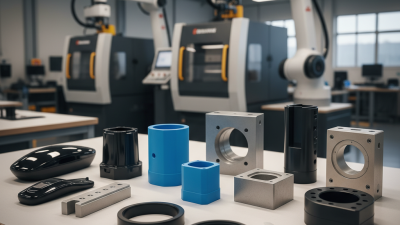
Choosing the best molding services can shape your product’s quality, cost, and market reputation. The right partner does more than produce plastic or metal parts. It understands material behavior, tooling limits, production risks, and your customers’ expectations. A capable provider should explain its process clearly, from design-for-manufacturing reviews to final inspection. Ask about equipment, industry experience, quality certifications, and documented testing procedures. Evidence matters more than confident promises.
Look closely at the details. Can the supplier maintain your required tolerances? Does it support prototype work before expensive tooling begins? How does it handle warping, surface defects, color variation, or late design changes? A reliable team will discuss these issues openly and provide practical solutions. Request recent project examples, measurable quality data, and references from similar businesses. Visit the facility when possible. A clean production floor and organized inspection area can reveal useful habits. So can poor records.
Cost deserves careful attention, but the lowest quotation may hide weak tooling, slow communication, or repeated defects. Compare total ownership costs, including maintenance, packaging, shipping, and future revisions. Also review capacity, backup plans, lead times, and ownership of molds. No supplier is perfect. Your evaluation should leave room for questions and uncomfortable findings. A promising relationship still needs written specifications, realistic milestones, and regular technical reviews. When expertise, transparency, and manufacturing discipline meet, molding services become a dependable part of your business strategy rather than a source of costly surprises.
Define Your Molding Project Requirements
A reliable molding project starts with a precise requirements sheet. Describe the part’s function, dimensions, material, annual volume, and expected service life. Include critical tolerances, wall thickness, draft angles, surface finish, color, and assembly needs. These details help suppliers assess tooling, cycle time, quality controls, and production risk.
Industry data supports careful planning. PlasticsEurope’s 2023 report recorded 400.3 million tonnes of global plastics production in 2022, showing the scale and complexity of material selection. Grand View Research also identifies automotive, packaging, medical, and consumer products as major injection-molding applications. In practical quoting work, unclear requirements often create avoidable redesigns. Teams sometimes request extremely tight tolerances without checking whether the part truly needs them. That choice can increase tooling and inspection costs.
Tips: Prepare a sample part, drawing, or 3D file. Mark only the dimensions that affect performance. State the target quantity by month and year. Ask for material data, mold-flow analysis, trial-shot procedures, and inspection records. Confirm whether recycled content or specific compliance documentation is required. Also define acceptable cosmetic defects, such as weld lines, sink marks, or minor color variation.
Do not hide uncertainty. Identify assumptions openly. A flexible requirement may be valuable, but an undefined one is risky. The 2024 ASQ Quality Progress industry guidance continues to emphasize measurable specifications and documented process controls. Use those principles when comparing molding services, not just the lowest quotation.
Choosing a molding service starts with matching the process to the part, not chasing the lowest quotation. Injection molding suits high volumes, tight tolerances, and repeatable surfaces. It requires expensive tooling, however. Compression molding can handle thermosets and fiber-reinforced compounds, especially for larger panels. Rotational molding fits hollow products with low internal stress, but cycle times are usually longer. For prototypes or small batches, additive manufacturing avoids tooling, although surface finish and material performance may differ.
Material selection should follow heat, load, chemical exposure, and expected service life. Common thermoplastics include polypropylene for lightweight chemical resistance, ABS for impact strength, and polyamide for mechanical loads. Moisture matters. Polyamide pellets may need controlled drying before processing, or dimensions can shift. PlasticsEurope reported global plastics production of 400.3 million tonnes in 2022, showing the scale of material demand and the importance of responsible selection. Recycled content may reduce impact, but it can also introduce color variation and inconsistent shrinkage.
Ask each supplier for trial data, dimensional reports, and material certificates. Compare mold-flow analysis, cycle time, scrap rate, and inspection methods. The 2024 edition of the International Energy Agency’s materials analysis notes that recycling and efficiency are increasingly important for reducing industrial resource demand. That sounds convincing, but recycled grades still need validation in the actual design. A practical test might expose a molded housing to heat, vibration, and cleaning chemicals for several weeks. Shortcuts can fail. The best service is the one that documents limits clearly, even when the answer is inconvenient.
Choosing molding services starts with evidence, not polished promises. Ask how many years the supplier has handled materials, tolerances, and mold types like yours. Request sample parts, inspection reports, and project references from comparable production volumes. A capable team should explain design-for-manufacturing choices in practical language. Look for engineers who discuss shrinkage, cooling, warpage, and tool maintenance without hiding behind jargon. That conversation often reveals real expertise. Still, experience can become habit. Ask what they would change in your design.
Quality needs measurable checkpoints. Confirm material traceability, dimensional inspection methods, first-article approval, and procedures for handling defects. Review quality certifications, but do not treat certificates as proof of daily discipline. Visit the facility if possible. Watch operators record measurements beside the press, not after the shift. Ask how corrective actions are documented and verified. Small gaps matter. A spotless sample may not represent a stable process.
Tips: Request a capacity plan showing machine sizes, available hours, staffing, maintenance windows, and backup equipment. Compare promised output with your forecast and peak demand. A supplier may make excellent prototypes yet struggle with ten thousand parts monthly. Run a pilot order before signing a long contract. Check packaging, lead times, communication speed, and contingency plans. My own mistake was focusing on unit price first; later delays cost more. Leave room for honest review.
When comparing molding services, treat the quoted price as a starting point, not the final cost. Ask whether it includes tooling, material, sampling, inspection, packaging, and shipping. A low quote can hide expensive revisions later. Request an itemized proposal with payment stages and tooling ownership clearly stated. I have seen attractive estimates change after design adjustments.
Lead time deserves the same careful review. Ask for separate dates for design approval, mold fabrication, first samples, corrections, and full production. Confirm the supplier’s monthly capacity before accepting a promise. A realistic schedule includes time for dimensional checks and transport delays. Keep a small buffer. It may feel inefficient, but missed launch dates cost more than careful planning.
Service support often reveals the real difference between providers. Choose a team that reviews draft designs, explains shrinkage risks, and records every approved change. Request sample inspection reports, material traceability, and a clear process for handling defects. Communication should be specific: named contacts, response times, and scheduled progress updates. Test this before signing by sending several technical questions. Slow or vague replies are useful evidence. Do not rely only on polished case studies. Ask for relevant production experience, references, and a sample workflow. A spreadsheet helps, but it cannot measure cooperation during a difficult correction. That part requires judgment.
The figures below are typical industry benchmark ranges for plastic injection molding projects in North America and Europe. Actual quotations vary according to part size, resin, tooling complexity, annual volume, tolerances, finishing requirements, and shipping location.
| Service Profile | Typical Tooling Cost | Typical Part Price at Volume | Tooling Lead Time | First Production Lead Time | Minimum Order Guidance | Quality and Engineering Support | Service Response Expectation | Best Fit |
|---|---|---|---|---|---|---|---|---|
| Prototype and Low-Volume Molding | $1,500–$10,000 per aluminum or soft tool | $2.00–$25.00 per part | 10–25 business days | 15–35 business days after design approval | Approximately 10–1,000 parts | Design-for-manufacturing review, basic dimensional inspection, material verification, and limited process documentation | Initial quotation commonly within 1–3 business days; project updates usually provided at major milestones | Functional prototypes, pilot runs, market testing, and products with uncertain demand |
| Standard Production Molding | $8,000–$40,000 per hardened production tool | $0.20–$8.00 per part | 25–55 business days | 35–75 business days after final approval | Approximately 1,000–100,000 parts | DFM analysis, mold-flow review when required, first-article inspection, process capability monitoring, and corrective-action support | Quotation commonly within 2–5 business days; scheduled weekly or milestone-based project reporting | Established products requiring repeatable quality and predictable unit economics |
| High-Volume Automated Molding | $30,000–$150,000+ per multi-cavity hardened tool | $0.05–$2.00 per part | 45–90 business days | 60–120 business days after design and process validation | Typically 100,000+ parts annually | Automated inspection, capability studies, preventive-maintenance planning, traceability, and production-control documentation | Dedicated program management, formal escalation procedures, and scheduled performance reviews | High-demand consumer, medical, automotive, and industrial components |
| Insert and Overmolding Specialist | $15,000–$80,000 per tool, depending on automation and insert handling | $0.75–$15.00 per part | 35–75 business days | 50–100 business days after approved samples | Approximately 5,000–100,000 parts | Insert-position control, bond or encapsulation testing, assembly validation, and process-risk analysis | Technical review usually available during design; response times depend on the complexity of the assembly process | Electrical connectors, sensor housings, handles, seals, and multi-material components |
| Precision and Tight-Tolerance Molding | $25,000–$120,000+ per high-precision tool | $0.50–$20.00 per part | 45–100 business days | 60–130 business days after metrology approval | Approximately 5,000–250,000 parts | Coordinate-measuring-machine inspection, statistical process control, material traceability, and documented tolerance studies | Formal engineering change control and technical communication are normally required | Medical, optical, micro-feature, and high-performance industrial parts |
| Full-Service Molding and Assembly | $20,000–$100,000+ for tooling and assembly fixtures | $1.00–$30.00 per finished assembly | 40–90 business days | 60–140 business days including assembly validation | Approximately 5,000–100,000 finished units | Component sourcing, molding, secondary operations, assembly, packaging, inspection plans, and supply-chain coordination | Usually includes a project manager, consolidated reporting, and a defined issue-resolution process | Businesses seeking fewer suppliers and a single accountable production partner |
Evaluation tip: Request the same part drawings, resin specification, annual volume, quality requirements, packaging details, and delivery destination from each candidate so pricing and lead-time comparisons are directly comparable.
Selecting the best molding partner starts with evidence, not attractive promises. Grand View Research estimates the global injection molded plastics market reached about USD 265 billion in 2023. It also projects continued growth through 2030. That expansion increases supplier choice, but it can hide uneven quality. Request recent project samples, process records, and measurable defect data. Ask how operators control temperature, pressure, cooling time, and material moisture. Practical details matter.
Your partner should match your product, volume, and risk level. A supplier producing simple packaging may struggle with tight-tolerance medical or automotive components. Check mold design capability, maintenance schedules, inspection equipment, and traceability systems. ISO 9001 certification can support consistent procedures, but certification alone proves little. Review audit findings and corrective-action records. Speak with production staff, not only sales representatives. Walk through the factory if possible.
Capacity deserves careful questioning. Plastics Europe reported global plastics production of 400.3 million tonnes in 2022, showing the scale of this supply chain. However, large capacity does not guarantee your order receives attention. Confirm available machines, backup equipment, tooling ownership, and realistic lead times. Discuss recycled materials and energy reporting with evidence. A perfect forecast is impossible. Your demand may change, and the mold may need revision. Choose a partner that explains problems early, documents decisions clearly, and accepts technical challenges without hiding weaknesses.
Select the Best Molding Partner for Your Business
A practical supplier scorecard should prioritize quality consistency, total landed cost, lead time, engineering support, and scalability. The weighting shown is a planning benchmark that can be adjusted according to product complexity, production volume, tolerance requirements, and delivery commitments.
All products and services provided by Innovative Plastic Molders, Inc. will meet or exceed our customer's perceived requirements and expectations. We will listen and respond to what our customers are telling us in a timely and forthright manner.

ISO 9001:2015 CERTIFIED
© Copyright 2009 – Innovative Plastic Molders, Inc.
Website by Central 8 Marketing
10451 Dog Leg Road Ste 200
Vandalia, OH 45377
Phone: 937.898.3775
Fax: 937.535.0640
Email: sale@endtheplastic.com