
Choosing a sinker EDM supplier in China is not just a price comparison. The right partner must match the part, material, tolerances, and production volume. Sinker Edm Machining is often selected for deep cavities, sharp internal details, and hardened steel that is difficult to cut conventionally. Think mold inserts, narrow ribs, and small corner radii. These features demand careful electrode design and stable machine control.
This guide examines suppliers through practical criteria: equipment capability, graphite or copper electrode experience, workpiece inspection, communication, and delivery planning. A polished website is not proof of consistent machining. Ask for relevant sample parts, inspection records, and details about how the shop controls electrode wear and removes debris from deep cavities. Small details matter. A supplier may handle a simple cavity well but struggle with complex flushing or repeat production. That distinction is easy to miss. There is no single “top” supplier for every project, and published rankings can overlook differences in part geometry or quality requirements. The comparisons ahead are intended to help buyers ask better questions, verify claims, and shortlist manufacturers whose documented capabilities fit the job. Even then, a sample run may reveal issues that a brochure cannot.
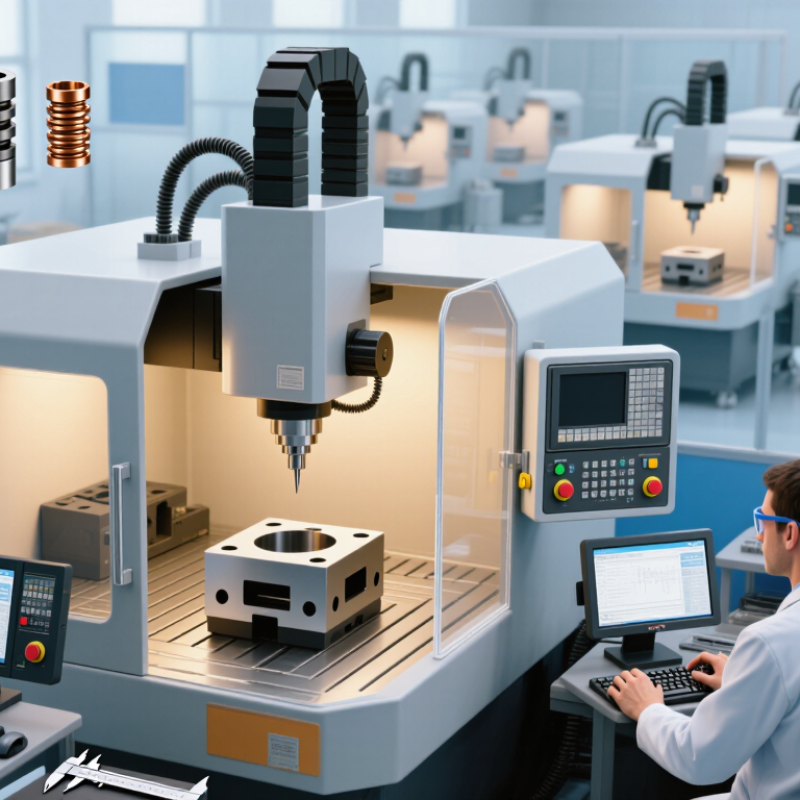
Sinker EDM removes metal through controlled electrical discharges between a shaped electrode and a conductive workpiece. The two parts sit close together in dielectric fluid, often hydrocarbon oil or deionized water. A servo system maintains a tiny spark gap. Each pulse melts or vaporizes a minute amount of material, and the fluid carries debris away. No direct contact. The electrode’s shape is gradually reproduced in the workpiece, making the process useful for deep cavities, sharp internal corners, and hardened tool steels that resist conventional cutting.
The method depends on stable flushing and carefully selected pulse energy. Higher energy can remove material faster, but may leave a rougher surface or a heat-affected layer. Lower-energy finishing passes improve detail, though they take longer. Electrode wear matters, too; copper and graphite behave differently, so tool choice affects accuracy and cost. Grand View Research’s EDM market analysis estimated the global market at roughly US$6 billion in 2023, reflecting broad industrial demand for the process. That figure describes the market, not machining performance. In practice, a quoted tolerance alone can mislead: cavity depth, corner radius, flushing access, and the requested finish all change cycle time. The process is precise, but not effortless.
Evaluating a Chinese sinker EDM supplier starts with the parts it can actually produce, not a catalog of machine specifications. Ask for examples in comparable tool steel, with deep ribs, narrow slots, or sharp internal corners. These features expose electrode wear and flushing limits quickly. Details matter. Review tolerance results alongside surface-finish readings, and confirm whether measurements came from calibrated instruments. A polished sample alone proves little.
Process control is equally important. A capable shop should explain electrode material, orbiting strategy, dielectric management, and how it compensates for wear. Request a trial cut or a documented inspection report for a representative cavity. Look for repeatability across several parts, not one unusually good result. That is not enough. Ask how operators record offsets and respond when dimensions drift; practical answers often reveal more than polished presentations.
Also assess communication and delivery discipline. Clear drawings, revision tracking, realistic lead times, and prompt technical questions can reduce avoidable rework. Check how the supplier protects workpieces during transport and handles nonconforming results. Certifications can support confidence, but they do not replace process evidence. Some uncertainty remains: a supplier may perform well on one geometry and struggle with another. Match the evaluation to the actual part, material, tolerance, and production volume.
China’s leading sinker EDM machining suppliers serve mold makers, tooling shops, and precision-part producers. Their capabilities vary, so a supplier’s name alone tells little. Ask which workpiece materials and dimensions they routinely handle. A deep cavity in hardened steel demands different planning from a shallow feature in copper. Details matter.
Experienced suppliers can explain electrode selection, wear compensation, dielectric maintenance, and flushing strategy in practical terms. These choices affect corner accuracy, surface texture, and cycle time. Request inspection records for comparable parts, not just a general tolerance sheet. A sample section or first-article report can reveal whether internal corners and narrow ribs meet the drawing. Good answers are specific. Vague promises are not.
When comparing suppliers in China, check machine capacity, engineering support, communication, and realistic delivery estimates. Confirm how they manage drawing revisions and protect critical dimensions during setup. Ask about polishing or secondary finishing if the required surface cannot be reached directly by EDM. A low quote may exclude these steps. That matters. I would also question overly perfect claims: actual results depend on geometry, electrode condition, and inspection methods, and even a capable shop may need a trial cut before confirming a difficult feature.
China’s sinker EDM suppliers vary more in process control than in machine size. Compare achievable tolerances, cavity depth, electrode wear, and flushing performance. A supplier handling fine ribs in hardened steel may suit precision mold work, while another may be better equipped for larger cavities and repeat production. Ask how operators inspect parts and document results. That matters. A polished capability sheet alone cannot show how a shop responds when a deep pocket traps debris or a thin wall distorts.
Tips: Send a drawing, material grade, target tolerance, and expected order volume. Request a sample inspection report and ask how electrode material is selected. Clear answers are more useful than broad claims.
Industry fit also matters. Mold and die makers often need detailed cavities, sharp corners, and dependable repeatability. General engineering shops may prioritize flexible batch sizes and practical lead times. Suppliers serving demanding component markets may offer tighter inspection routines, but verify those routines against your part requirements. Visit the shop when possible, or review close-up photos of comparable work. One imperfect clue: a supplier may quote quickly yet overlook an awkward internal corner. Discuss that feature before approving the process.
Choosing a sinker EDM supplier starts with the part, not the machine brochure. China Machine Tool & Tool Builders Association statistics put the sector’s 2023 operating revenue at about RMB 1.09 trillion. That figure describes a broad industry, not the quality of any individual shop. Ask for evidence. Share your alloy, cavity depth, corner radius, surface-finish target, and annual volume. Then check whether the supplier’s machine travel and electrode process suit the actual job.
Request recent inspection records, a sample cut, and a written process plan. For tight features, ask how the shop controls electrode wear, flushing, and thermal drift during long burns. Review measurement methods against relevant machine-tool accuracy standards, such as ISO 230-2, and confirm that inspection equipment is calibrated. Ask for a first-article report showing dimensions and surface roughness, not just a verbal promise. A polished sample can hide slow cycle times or unstable repeatability. I would also ask how the supplier handles a failed trial; that answer can be more revealing than a sales presentation. Finally, compare quotations by setup fees, electrode costs, lead time, and rework terms. The lowest quote may leave important details unclear.
| Evaluation Dimension | What a Qualified Supplier Should Demonstrate | Questions to Ask or Evidence to Request | Suggested Evaluation Weight |
|---|---|---|---|
| Sinker EDM experience | Relevant experience with the workpiece materials, cavity shapes, and mold or tooling applications in your project. | Request anonymized examples of comparable work, including material, feature geometry, and inspection method. | 15% |
| Accuracy and inspection | Documented inspection procedures and the ability to measure the critical dimensions specified on your drawing. | Ask for sample inspection reports and confirm how datum references, tolerances, and measurement equipment are handled. | 15% |
| Surface-finish capability | A process plan that connects the requested surface finish to the material, cavity geometry, and EDM finishing sequence. | Specify the required Ra value and measurement location; request a representative sample when finish is critical. | 10% |
| Electrode design and wear control | Experience selecting electrode materials and planning for electrode wear, flushing, and multiple machining stages. | Ask how electrode design, wear compensation, and any electrode replacement costs are included in the quotation. | 10% |
| Workpiece and feature suitability | Confirmation that the part material is electrically conductive and that the cavity depth, shape, and access are suitable for sinker EDM. | Provide the 3D model, material specification, and critical-feature list; request written confirmation of any geometry limitations. | 10% |
| Process planning and lead time | A realistic schedule covering programming, electrode preparation, machining, inspection, and any agreed finishing work. | Request a step-by-step lead-time estimate and ask which design or material changes could affect delivery. | 10% |
| Quality management and traceability | Clear handling of drawing revisions, material identification, inspection records, nonconformities, and corrective actions. | Ask for relevant quality-system documentation and a description of how production and inspection records are retained. | 10% |
| Communication and engineering support | Timely technical responses and early identification of risks involving tolerances, access, flushing, or electrode design. | Evaluate the supplier’s response to a technical inquiry and confirm who will manage engineering changes. | 8% |
| Quotation transparency | A clear breakdown of machining, electrodes, setup, inspection, packaging, and any additional charges. | Compare quotations using the same drawing revision, material, tolerance requirements, finish, and delivery terms. | 7% |
| Packaging and shipping readiness | Packaging appropriate for protecting precision machined parts during the agreed shipping method. | Confirm corrosion protection, part identification, packaging method, and responsibility for export documentation where applicable. | 5% |
Note: The weights are a suggested buyer scorecard, not supplier ratings or verified market rankings. Sinker EDM results depend on part geometry, conductive material, electrode design, process settings, and inspection method; confirm requirements against the specific drawing and sample parts.
All products and services provided by Innovative Plastic Molders, Inc. will meet or exceed our customer's perceived requirements and expectations. We will listen and respond to what our customers are telling us in a timely and forthright manner.

ISO 9001:2015 CERTIFIED
© Copyright 2009 – Innovative Plastic Molders, Inc.
Website by Central 8 Marketing
10451 Dog Leg Road Ste 200
Vandalia, OH 45377
Phone: 937.898.3775
Fax: 937.535.0640
Email: sale@endtheplastic.com

