

China Top Combined Harvester Manufacturers for Global Buyers
Global grain production is becoming more demanding, and harvesting equipment must keep pace. FAOSTAT recorded approximately 3.1 billion tonnes of cereals worldwide in 2023. That volume places constant pressure on harvesting speed, grain protection, fuel use, and field reliability.
For international buyers, a Combined Harvester is not simply a machine with cutting and threshing functions. It is a mobile production system. Buyers must examine engine output, header compatibility, cleaning performance, grain loss, operator visibility, and spare-parts access. The OECD-FAO Agricultural Outlook 2024–2033 also highlights continuing pressure to improve agricultural productivity while managing land, labor, and resource constraints. These pressures explain the growing interest in Chinese manufacturers, including Weichai Lovol, Zoomlion, Shandong Juming, and other specialized producers.
Iowa State University agricultural engineer Mark Hanna has emphasized that “proper combine adjustment is critical to harvest performance.” His point remains practical. A powerful machine can still lose grain when settings ignore crop moisture, field slope, or crop variety. Small details matter.
This guide reviews China’s leading Combined Harvester manufacturers for global buyers. It considers factory experience, product range, harvesting capacity, export support, quality systems, and after-sales service. No ranking is perfect. Supplier information can change quickly, and published specifications may not reflect actual field results. Buyers should request test records, service references, warranty terms, and local parts plans before making a final decision.
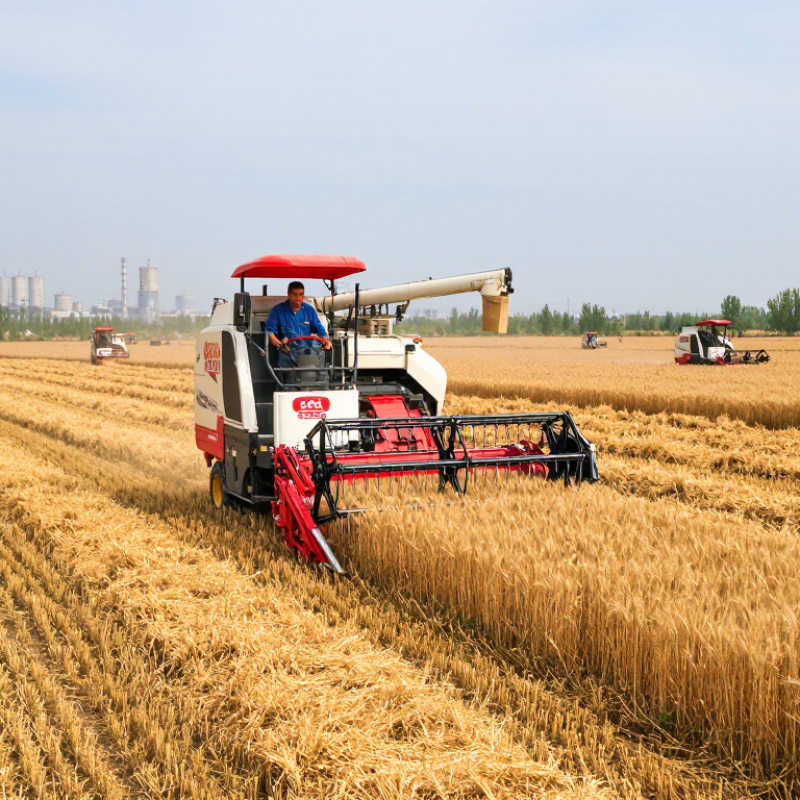
What Defines a Top Chinese Combine Harvester Manufacturer?
What Defines a Top Chinese Combine Harvester Manufacturer?
A top Chinese combine harvester manufacturer begins with dependable engineering, not attractive brochures. Global buyers should examine harvesting performance in wheat, rice, corn, and changing field conditions. Strong manufacturers test machines through long working hours, dusty environments, uneven fields, and wet crops. Their designs should protect grain quality while reducing losses and fuel consumption.
In supplier evaluations, ask for test records, factory quality procedures, and clear component specifications. A reliable manufacturer explains engine options, threshing systems, cleaning capacity, and maintenance intervals without hiding weaknesses. Product documentation should support safe operation and meet the buyer’s local requirements. After-sales service also matters. Spare parts availability, technician training, and response times often decide whether a machine remains productive after delivery. A polished brochure is not proof.
Tips: Request videos from real field trials, not only studio demonstrations. Check adjustment instructions before discussing price. Ask how quickly common wear parts can be supplied. Visit the production site when possible. Talk with existing users, but remember that one farm cannot represent every condition.
Practical customization separates capable manufacturers from simple exporters. A top supplier may adjust headers, tires, cleaning settings, or operator controls for regional crops. However, customization should remain documented and tested. Unclear modifications can create later problems. Buyers should compare total ownership costs, including training, transport, service, and seasonal downtime. I have seen purchasing teams focus too heavily on initial price. That decision can look efficient, yet become expensive during harvest. Reliability is built through evidence, communication, and repeated field performance.
China Top Combined Harvester Manufacturers for Global Buyers - What Defines a Top Chinese Combine Harvester Manufacturer?
| Evaluation Dimension | Buyer-Focused Data or Benchmark | Why It Matters to Global Buyers | Recommended Evidence to Request |
|---|---|---|---|
| Crop Adaptability | Product configurations should cover the target crops, such as wheat, rice, maize, soybean, or rapeseed, with suitable headers, sieves, concaves, and cleaning systems. | Crop-specific equipment directly affects harvesting loss, grain cleanliness, and machine uptime. | Crop application list, header specifications, field-test records, and adjustment instructions for each target crop. |
| Cutting Width | Approximately 2.5–6.0 m is a common reference range for self-propelled combines, depending on machine class and crop conditions. | A wider header can improve field productivity but may increase transport width, power demand, and logistics requirements. | Header width, transport dimensions, turning radius, lifting capacity, and road-transport configuration. |
| Grain Tank Capacity | Approximately 5–12 m³ is a practical reference range for many medium- to high-capacity self-propelled combines. | A larger tank reduces unloading frequency and helps maintain productivity in large fields. | Rated tank volume, unloading time, unloading height, unloading auger reach, and compatibility with receiving vehicles. |
| Field Productivity | Productivity should be stated in hectares per hour together with crop, yield, moisture, operating speed, working width, and effective field efficiency. | A headline capacity figure without operating conditions is not suitable for comparing machines objectively. | Independent or witnessed field-test data showing crop type, yield, moisture level, loss rate, working hours, and fuel use. |
| Harvesting Loss | As a procurement reference, buyers commonly seek total grain loss around 1–3%, subject to crop, moisture, terrain, speed, and applicable test conditions. | Lower losses protect the value of the harvested crop and demonstrate effective threshing, separation, and cleaning performance. | Test methodology, loss measurement method, crop conditions, machine settings, and signed acceptance-test results. |
| Grain Damage and Cleanliness | For marketable grain, buyers often specify grain damage and impurity limits in the purchase contract; a target near 2% or lower may be used for suitable crops and conditions. | Excessive cracking, broken grain, or impurities can reduce storage quality and selling price. | Laboratory or field samples, grain-quality reports, sieve settings, and adjustment procedures for different crops. |
| Powertrain and Fuel Efficiency | Engine output, drive type, operating speed, and fuel consumption should be reported together; fuel use is best compared in litres per hectare under the same field conditions. | Fuel is one of the largest variable operating costs for commercial harvesting contractors and farms. | Engine power rating, rated speed, fuel-consumption test data, fuel-tank capacity, and maintenance intervals. |
| Reliability and Durability | A robust specification should include reinforced high-wear areas, sealed bearings where appropriate, corrosion protection, and serviceable access points. | Harvesting is seasonal and time-sensitive; breakdowns during a short harvest window can create significant financial losses. | Component service records, endurance-test reports, wear-part replacement intervals, failure-rate data, and references from comparable operating environments. |
| Safety and Regulatory Compliance | The machine should comply with the destination market’s requirements for guarding, emergency stops, lighting, road travel, operator protection, and non-road engine emissions. | Compliance reduces import delays, operating risks, insurance issues, and liability exposure. | Applicable conformity documents, safety risk assessment, operator manual, emission certificate, and destination-country approval documents. |
| Operator Environment | Key features include a clear view of the header, adjustable seat and controls, dust reduction, ventilation or air conditioning, lighting, and accessible information displays. | Improved ergonomics support longer operating periods and help reduce adjustment errors and operator fatigue. | Cab specifications, noise and visibility information, control layout, display-language options, and operator-training materials. |
| Parts Availability | A competitive export program should define critical-parts availability, packaging standards, order procedures, and delivery targets; a practical service benchmark is 24–48 hours for technical response. | Fast access to belts, bearings, knives, sieves, chains, sensors, and hydraulic components can protect the harvest schedule. | Recommended spare-parts list, parts catalogue, stock locations, delivery-time commitments, and local-distributor plan. |
| Warranty and After-Sales Support | Export contracts commonly define a 12–24 month warranty period, subject to operating hours, maintenance, and excluded wear parts. | Clear warranty terms reduce disputes and provide assurance regarding manufacturing quality and support capability. | Warranty policy, exclusions, claim process, remote-diagnostic capability, technician-training plan, and service-level agreement. |
| Customization Capability | Useful options may include different headers, grain sieves, track or tyre configurations, engine settings, unloading systems, languages, and voltage arrangements. | Local soil, crops, road regulations, climate, and farm size vary significantly between export markets. | Configuration matrix, engineering-change process, prototype approval procedure, and lead time for customized units. |
| Total Cost of Ownership | Evaluation should combine purchase price with fuel use, maintenance, wear parts, freight, operator training, downtime risk, and resale value. | The lowest initial price does not necessarily produce the lowest cost per harvested hectare. | Five-year operating-cost model, recommended maintenance schedule, consumables list, warranty assumptions, and residual-value estimates. |
Note: The figures above are indicative procurement benchmarks rather than universal performance guarantees. Final acceptance should be based on crop-specific testing, applicable regulations, verified documentation, and contract-defined operating conditions.
Our Promise to You

Contact IPM
Phone: 937.898.3775
Fax: 937.535.0640
Email: sale@endtheplastic.com