
Acrylic Jar With Lid products occupy a practical space between visual appeal, durability, and everyday packaging performance. Their glass-like clarity helps brands display creams, balms, powders, and decorative items on crowded retail shelves. Their lighter weight can also reduce handling effort and transport pressure. However, acrylic is not automatically the most sustainable choice. Material recovery remains uneven, and many jars combine acrylic bodies with different lids, liners, or seals.
Industry research supports this broader market context. Smithers’ global packaging studies identify lightweighting, premium presentation, and material efficiency as continuing packaging priorities. Grand View Research and Mordor Intelligence also report steady growth across plastic packaging and cosmetic packaging markets. These reports do not always isolate the Acrylic Jar With Lid category. That limitation matters. Buyers should avoid treating broad plastic-packaging figures as exact jar-market measurements.
Ellen MacArthur’s circular-design guidance offers a useful standard: “A circular economy is based on the principles of designing out waste and pollution, keeping products and materials in use, and regenerating natural systems.” For jar manufacturers, this means examining resin choices, wall thickness, closure compatibility, refill potential, and labeling methods. Small details matter. A tight lid protects texture and scent. A poorly matched liner can create leakage or contamination concerns.
This guide reviews ten Acrylic Jar With Lid manufacturers worldwide. It considers production experience, customization capability, quality systems, capacity, and packaging transparency. The ranking is not absolute. Regional strengths, minimum order quantities, certifications, and communication quality can change the best choice for each buyer. Some data also remains difficult to verify publicly, so careful supplier checks are still necessary.
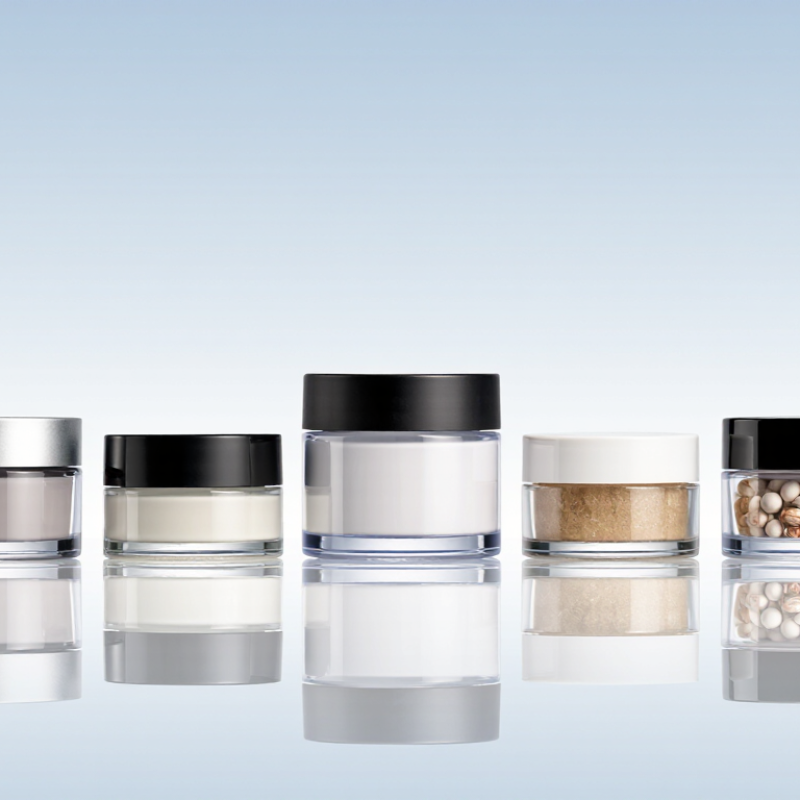
Acrylic jars with lids are rigid containers made from clear or colored acrylic plastic. They offer a glass-like appearance with lower breakage risk. Their smooth walls also support clean labeling and attractive product presentation. Common lid options include screw-on caps, snap-fit covers, and inner-lined closures. Each option affects sealing performance and user experience.
Popular types include single-wall jars, double-wall jars, and airless acrylic jars. Single-wall designs are lightweight and practical for creams, masks, balms, and powders.
Double-wall jars provide stronger visual appeal and added protection. Airless designs help reduce repeated air exposure, although their pumps require careful testing.
These containers are often used for skincare, cosmetics, personal-care products, sample kits, and selected dry goods. Food-contact use needs suitable material certification and controlled filling procedures.
Tips: Check the jar’s capacity, neck size, lid fit, and wall thickness before ordering. Acrylic is not scratch-proof. Avoid rough cleaning tools and excessive heat. Test the container with the actual formula for leakage, staining, odor retention, and color changes. A common mistake is judging quality from appearance alone. Some attractive jars feel weak after repeated opening. Manufacturing consistency matters, especially when selecting suppliers worldwide. Request samples, closure tests, and documented material information. Supplier communication can still be imperfect, so record every specification clearly.
Selecting the top ten global acrylic jar with lid manufacturers requires more than a polished catalog. Our evaluation begins with verified production capacity, mold precision, closure performance, and documented quality controls. Each manufacturer should provide batch records, material specifications, and migration-test evidence for intended applications. Independent sampling also matters. A factory may describe a jar as “leak-proof,” yet torque and drop tests can reveal inconsistent sealing.
The scoring model weighs product quality at 30%, regulatory documentation at 20%, manufacturing capacity at 20%, delivery reliability at 15%, and sustainability evidence at 15%. These factors reflect wider packaging concerns. The OECD’s Global Plastics Outlook reported 353 million tonnes of plastic waste in 2019, nearly double the 2000 level. UNEP’s 2023 Turning off the Tap report also found that plastic pollution could be reduced by 80% by 2040 through reuse, recycling, and better product design. Therefore, manufacturers receive stronger consideration when they disclose material composition, reduce unnecessary components, and support realistic end-of-life pathways.
Global capability still needs practical proof. We review export records, lead-time performance, quality audits, and pilot orders across different lid sizes. It is not flawless. A supplier can pass an audit and still miss a seasonal deadline. Sustainability claims can also sound impressive while lacking third-party verification. The final ten are selected through evidence, repeated communication, and physical samples, not visibility alone.
| No. | Selection Dimension | Weight | What Is Reviewed | Selection Benchmark | Maximum Points |
|---|---|---|---|---|---|
| 1 | Acrylic Material Capability | 15% | Documented experience with PMMA or acrylic resin, including material grades, clarity requirements, wall-thickness control, and compatibility with cosmetic or packaging applications. | Clear evidence of repeatable acrylic injection-molding or machining capability and documented material specifications. | 15 |
| 2 | Product and Lid Engineering | 12% | Jar geometry, lid fit, thread or snap-fit design, sealing performance, hinge or closure durability, and compatibility between jar and lid components. | Production-ready drawings, dimensional tolerances, closure testing, and documented design-for-manufacturing procedures. | 12 |
| 3 | Manufacturing Quality System | 12% | Quality-management certification, incoming inspection, in-process controls, final inspection, corrective-action procedures, and traceability. | A documented quality system, preferably supported by current ISO 9001 certification or an equivalent independently audited system. | 12 |
| 4 | Production Capacity and Scalability | 11% | Available molding or machining equipment, production-line capacity, tooling resources, multi-shift capability, and ability to support repeat orders. | Capacity that can support samples, pilot orders, and stable large-volume production without compromising lead-time performance. | 11 |
| 5 | Customization and Decoration | 10% | Custom sizes, colors, transparency levels, surface finishes, silk screening, hot stamping, labeling, frosting, metallization, and other decoration services. | In-house or controlled partner capabilities for at least three customization or decoration processes. | 10 |
| 6 | Safety and Regulatory Documentation | 10% | Material declarations, safety data, restricted-substance controls, product test reports, and documentation relevant to the intended end use. | Traceable documentation for the selected resin, colorants, coatings, adhesives, and other components used in the jar system. | 10 |
| 7 | Tooling and Sample Development | 8% | Mold-development process, prototype support, 3D data handling, sample approval workflow, mold maintenance, and engineering change control. | Clear prototype-to-production workflow with documented sample approval and revision procedures. | 8 |
| 8 | Lead Time and Delivery Reliability | 8% | Published or contract-based production lead times, order planning, inventory coordination, export documentation, and shipment performance. | Consistent communication of production milestones and a documented process for handling delays or quality deviations. | 8 |
| 9 | Sustainability and Resource Management | 7% | Use of recycled content where technically suitable, scrap-reduction programs, energy management, packaging reduction, and responsible waste handling. | Verifiable environmental practices supported by records, certifications, public policies, or customer audit results. | 7 |
| 10 | Commercial Transparency and Service | 7% | Quotation clarity, minimum-order information, payment terms, communication speed, after-sales support, warranty handling, and technical responsiveness. | Transparent commercial terms, responsive technical communication, and a defined process for resolving customer complaints. | 7 |
| Overall Selection Model | 100% | Manufacturers are ranked by verified evidence across product capability, quality, capacity, compliance, service, and supply-chain performance. | 100 | ||
Acrylic jar production is distributed across several manufacturing regions, each serving different packaging needs. Asia-Pacific supplies large volumes for skincare, cosmetics, food, and household products. Its producers often provide broad mold choices, fast sampling, and competitive pricing. However, quality can vary between factories, even within the same industrial area.
European manufacturers commonly emphasize clean molding, precise lids, recyclable material options, and documented quality systems. North American producers often support shorter supply routes and customized packaging programs. Latin American factories serve regional markets with flexible order quantities, while Middle Eastern and African suppliers are developing capacity near growing consumer hubs. These boundaries are not fixed. A perfect regional ranking would be unrealistic. Logistics, resin availability, tooling skills, and inspection practices can change the final result.
Tips: Compare suppliers by jar weight, wall thickness, lid fit, and production tolerance. Request recent samples, not only catalog images. Test the jar under heat, stacking pressure, and repeated opening. Ask for material specifications and batch inspection records. A clear quote should separate tooling, decoration, freight, and testing costs. I have seen attractive samples fail during transport because the lid seal was too loose. Small details matter. Regional proximity may reduce delivery time, but it does not automatically guarantee better performance. Supplier audits and trial orders remain useful safeguards.
Acrylic jar manufacturers differ in more than appearance. The strongest suppliers usually work with clear PMMA acrylic, which offers glass-like visibility with lower breakage risk. Some also provide recycled acrylic options, although color consistency can vary between batches. Experienced manufacturers explain resin grades, wall thickness, and surface treatments before production begins. That detail matters when a jar must protect creams, powders, or decorative products from dust and moisture. Designs range from simple screw-top jars to double-wall containers with inner lids. Smooth threads, clean edges, and balanced caps often show better tooling control. Still, a polished sample can hide production weaknesses. Real evaluation should include several batches, not one perfect prototype.
Tips: Ask for material certificates, dimensional drawings, and closure samples. Check whether the lid opens smoothly after repeated use. Request photos of injection machines, trimming areas, and inspection stations. A reliable supplier should describe its tolerance range, mold maintenance, and defect-handling process without vague promises. Small details count. For example, a two-millimeter rim difference may affect sealing and label alignment.
Production strength also depends on flexibility. Large factories may offer automated molding, color matching, and high-volume output. Smaller specialists can respond faster to unusual shapes or short development runs. The best choice depends on order size, customization, delivery control, and quality records. Sustainability claims deserve careful review. Acrylic is durable, but recycling systems differ widely by region. Manufacturers should explain packaging reduction, scrap handling, and energy practices with measurable information. Not every factory publishes enough data. That gap deserves attention.
Acrylic jars look simple, yet reliable sourcing requires measurable standards. Clear walls should remain free from bubbles, haze, black specks, and uneven polishing. Check the resin grade, wall thickness, neck dimensions, and lid thread against approved drawings. A lid that closes smoothly matters more than attractive photos. It should resist leakage after repeated opening and closing. Good suppliers provide inspection records, batch identification, and material documentation. Ask how defects are classified and recorded. Vague answers deserve caution.
Before placing volume orders, request production samples, not only hand-finished samples. Measure diameter, height, capacity, and closure torque with basic tools. Fill jars, invert them for 24 hours, and inspect the rim and liner. Perform drop checks at a controlled height, then examine cracks, whitening, and lid distortion. Expose samples to the intended product for compatibility testing. Acrylic can react differently with oils, alcohol, fragrances, or acidic formulas. Ask for evidence. This step is often skipped. That is a costly mistake.
Price is not enough. Compare tooling charges, minimum order quantities, lead times, packaging protection, and replacement policies. Confirm whether color, printing, and lid changes require new molds. A capable supplier should explain process limits, corrective actions, and realistic tolerances. Audit the quality system when possible, including incoming inspection and final sampling. I would not trust a perfect sample alone. Production consistency is harder. Leave room for review after the first shipment, because initial assumptions may be wrong. Reliable communication and traceable approvals reduce surprises, although no supplier gets everything right every time.
The chart presents a normalized 100-point procurement framework for evaluating acrylic jar suppliers. It focuses on commonly applied packaging standards and practical buying factors rather than company or brand performance.
Higher scores indicate greater importance during supplier qualification. Relevant references may include ISO 9001 quality systems, food-contact requirements such as FDA 21 CFR and EU Regulation 10/2011 where applicable, migration testing, dimensional control, and leak-performance checks.
All products and services provided by Innovative Plastic Molders, Inc. will meet or exceed our customer's perceived requirements and expectations. We will listen and respond to what our customers are telling us in a timely and forthright manner.

ISO 9001:2015 CERTIFIED
© Copyright 2009 – Innovative Plastic Molders, Inc.
Website by Central 8 Marketing
10451 Dog Leg Road Ste 200
Vandalia, OH 45377
Phone: 937.898.3775
Fax: 937.535.0640
Email: sale@endtheplastic.com

