
China Top 10 Custom Plastic Manufacturers in 2026
China remains a major base for precision molding, injection production, and large-scale plastic manufacturing. This guide, “China Top 10 Custom Plastic Manufacturers in 2026,” examines suppliers serving international buyers. It focuses on practical evidence, not impressive claims alone. Each company is considered through capabilities, material knowledge, quality systems, production capacity, and communication reliability. The review also considers tooling support, prototype services, surface finishing, and inspection procedures.
A dependable custom plastic partner should explain resin selection clearly. It should also provide measurable tolerances, sample approval steps, and traceable quality records. Factory visits, technical drawings, and production samples can reveal details that websites often miss. Some manufacturers may offer excellent molding equipment but weak project communication. Others may communicate well while lacking experience with complex molds. That difference matters.
No ranking can suit every purchasing goal. A medical component, automotive clip, and retail enclosure require different controls. This list is therefore a research starting point, not a final purchasing decision. Company capabilities can change during 2026. Certification status, lead times, pricing, and export experience should be verified directly. Buyers should request recent samples, audit documents, material certificates, and realistic quotations before signing agreements.
The selected manufacturers reflect observable experience and professional manufacturing practices. However, the review is not perfect. Public information may omit factory limitations or recent improvements. Careful due diligence remains essential. Use this guide to compare suppliers with clearer expectations, fewer assumptions, and stronger attention to long-term reliability.
What Custom Plastic Manufacturing Means in China
What Custom Plastic Manufacturing Means in China
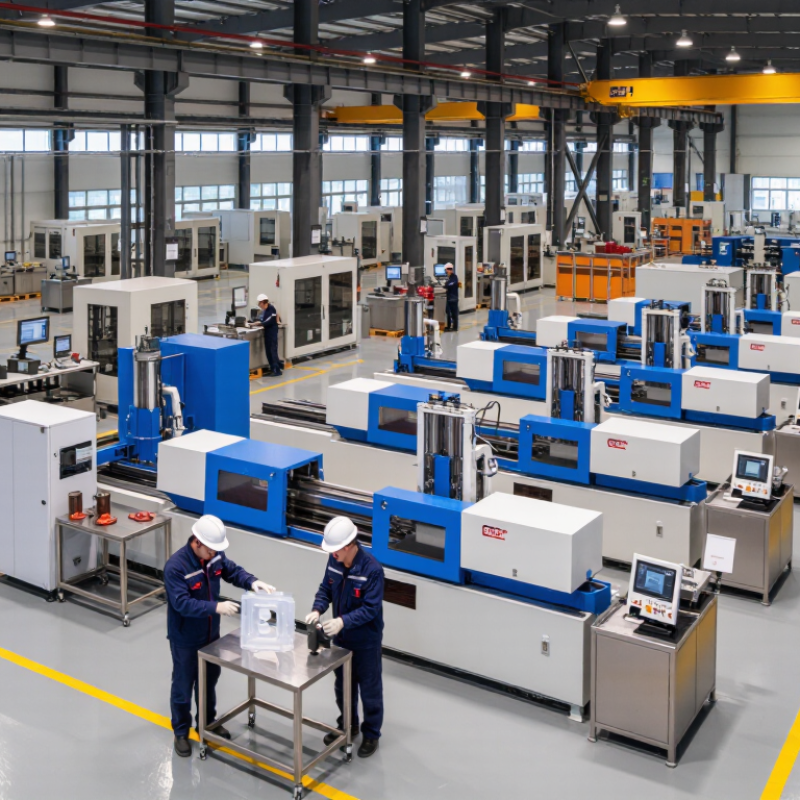
Custom plastic manufacturing in China means converting a product concept into a repeatable, tested component. The work often begins with design-for-manufacturing feedback. Engineers review wall thickness, draft angles, shrinkage, tolerances, and material flow before tooling starts. PlasticsEurope’s Plastics—the Fast Facts 2024 reports that China produced about 33% of global plastics in 2023. That scale supports broad material access, specialized tooling, and competitive production capacity.
It is not simply injection molding. A capable manufacturer may manage resin selection, mold design, CNC machining, molding, secondary assembly, inspection, and packaging. Production evidence matters. Buyers should request dimensional reports, material certificates, mold-trial records, and batch traceability. ISO 9001-based procedures can improve consistency, but certification alone cannot prove technical competence. The real test is controlled output.
Small details matter.
The OECD’s Global Plastics Outlook projects that global plastic waste could nearly triple by 2060 without stronger intervention. This pressure is changing custom projects in China. Engineers increasingly assess recycled content, part weight, repairability, and end-of-life handling. However, recycled materials can vary in color, moisture, strength, and processing behavior. That uncertainty deserves honest testing, not attractive promises. A lower-cost mold may also create higher long-term waste through flashing, warpage, or short service life. For a 2026 supplier comparison, practical experience should sit beside audited data, pilot runs, clear communication, and willingness to document mistakes.
China Top 10 Custom Plastic Manufacturers in 2026 - What Custom Plastic Manufacturing Means in China
| No. | Custom Manufacturing Capability | Common Thermoplastics | Typical Production Volume | Typical Starting Tolerance | Typical Applications | Key China Manufacturing Advantage |
|---|---|---|---|---|---|---|
| 1 | Plastic Injection Molding | PP, ABS, PC, PA, POM, TPE, TPU | Medium to very high volume | Approximately ±0.10 mm to ±0.30 mm, depending on size, material, and tooling | Automotive components, electronics housings, appliances, medical parts | Broad supplier capacity, competitive tooling, and scalable mass production |
| 2 | CNC Plastic Machining | POM, PEEK, PTFE, nylon, acrylic, polycarbonate | Prototype to low and medium volume | Approximately ±0.05 mm to ±0.20 mm, subject to material and geometry | Engineering prototypes, fixtures, bushings, precision covers | Fast digital production with flexible material and geometry options |
| 3 | Plastic Extrusion | PVC, PE, PP, ABS, TPE, TPU | Continuous production and high volume | Profile-dependent; tighter control requires calibrated tooling and process monitoring | Tubes, seals, channels, trims, cable insulation, sheet products | Efficient long-length production and extensive profile-tooling support |
| 4 | Blow Molding | HDPE, LDPE, PP, PET, PVC | Medium to high volume | Wall-thickness and dimensional control depend strongly on mold design and parison control | Bottles, containers, tanks, ducts, and hollow industrial parts | Cost-effective production of lightweight hollow products |
| 5 | Thermoforming | ABS, HIPS, PETG, PVC, PP, acrylic | Prototype to medium and high volume | Approximately ±0.25 mm to ±1.00 mm, depending on sheet, depth, and trimming method | Trays, machine covers, packaging, interior panels, display components | Lower tooling cost for large, thin-wall, and visually demanding parts |
| 6 | Rotational Molding | LLDPE, HDPE, PVC plastisol, nylon | Low to medium volume | Generally looser than injection molding; shrinkage and wall variation must be designed for | Storage tanks, cases, bins, kayaks, playground and outdoor products | Suitable for large hollow parts with relatively low-cost tooling |
| 7 | Compression Molding | Thermoset compounds, silicone, rubber, composite molding compounds | Low to high volume | Part and material dependent; flash control and mold accuracy are important | Electrical insulators, seals, gaskets, reinforced structural components | Practical for durable materials, thick sections, and composite parts |
| 8 | Insert Molding | PP, PA, PBT, PC, ABS, engineering polymers | Medium to high volume | Depends on the molded polymer, insert tolerance, and positioning method | Threaded components, electrical terminals, fasteners, metal-plastic assemblies | Combines multiple assembly steps into one repeatable molding operation |
| 9 | Overmolding and Two-Shot Molding | TPE, TPU, silicone, ABS, PC, PP, PA | Medium to high volume | Material compatibility, bonding, shrinkage, and mold alignment determine results | Soft-touch grips, seals, wearable products, automotive and consumer components | Enables integrated multi-material parts and reduced downstream assembly |
| 10 | Industrial Plastic 3D Printing | PA12, PA11, TPU, photopolymer resins, ABS-like and high-temperature polymers | Prototype, bridge production, and highly customized low volume | Technology-dependent; post-processing and build orientation affect accuracy | Rapid prototypes, jigs, fixtures, complex internal channels, customized products | Short development cycles without dedicated production tooling |
Note: The values shown are general industry planning ranges rather than guarantees. Actual tolerances, material availability, tooling life, lead time, certifications, and production capacity depend on the selected supplier, part geometry, resin grade, mold design, inspection method, and order quantity.
Related Posts
-

How to Choose the Best Plastic Inc Company for Your Business Needs?
-
What is Plastic Inc and How Can It Help Your Business?
-
Why Choose Plastic Inc for Global Sourcing?
-
What Are the Main Types of Plastic Production Processes?
-

Top Plastic Companies to Source from in 2026?
-

How to Find Reliable Custom Plastic Manufacturers in 2026?
Our Promise to You

Contact IPM
Phone: 937.898.3775
Fax: 937.535.0640
Email: sale@endtheplastic.com