

Choosing an optical sorter is not just a matter of comparing detection speeds or asking for the lowest quote. Optical Sorting Systems must match the material, production rate, and quality standards of a specific facility. A machine that performs well with clean, evenly sized pieces may struggle when feedstock is dusty, damp, or mixed in shape. Those conditions are easy to overlook during a polished demonstration.
Start with the actual material. Ask suppliers to test representative samples, including the awkward pieces that operators see on ordinary shifts. Check which sensors identify the target, how the system handles borderline items, and whether settings can be adjusted without lengthy downtime. Watch the reject stream, too. A sorter can remove contaminants quickly and still discard valuable product. That trade-off deserves attention.
Then compare practical details: belt width, lighting, air-jet response, software controls, cleaning access, and service support. Ask for measured results under conditions close to your own, not only a best-case figure. Strong claims should come with clear test methods and documented assumptions. A useful comparison also considers installation, operator training, spare parts, and energy use over time. Small details matter.
There is no universal “best” system. In some plants, the most advanced sensor may add cost without solving the main problem. In others, a modest difference in accuracy can protect a valuable product stream. We have to admit that sample tests cannot reproduce every production shift. Use them as evidence, not a guarantee. These seven tips will help you ask sharper questions, judge performance realistically, and choose a system that fits the work—not just the brochure.
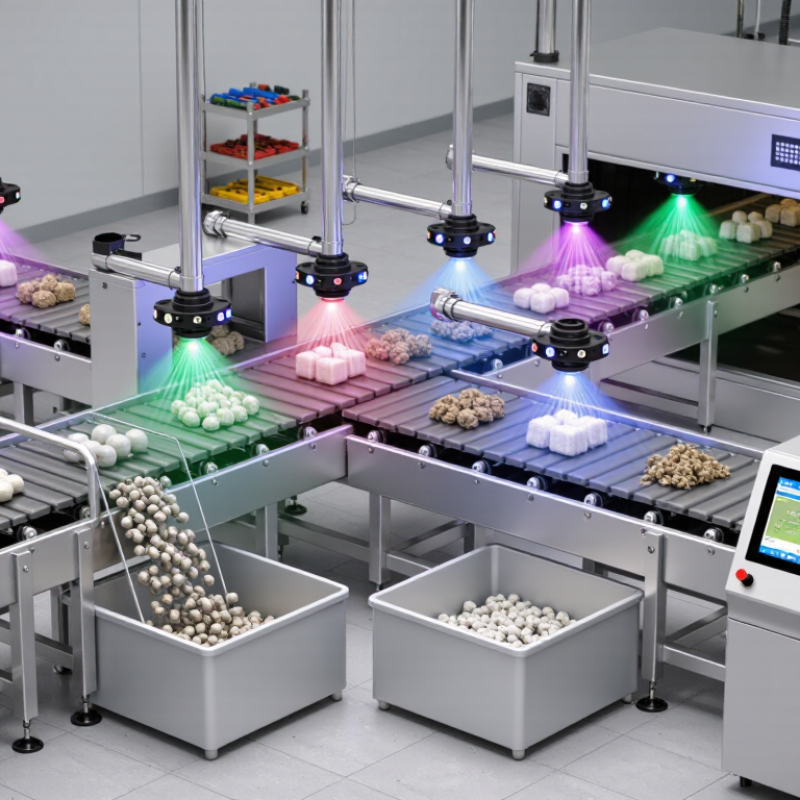
Optical sorting systems inspect material as it moves along a conveyor. Their core function is to detect differences and separate items according to selected traits, such as color, shape, or material response. A camera captures each item under controlled lighting. Sensors then compare the signals with set thresholds. Small details matter.
Some systems use near-infrared sensing to distinguish materials that look alike to the eye. This works only when the sensor, lighting, and target material are suitable. Dust on a lens or uneven feed can reduce detection quality. A clean lens helps, but it cannot fix every process problem.
After detection, the system tracks each item and triggers an air jet or mechanical diverter at the right point. Timing is critical. A weak or mistimed pulse may leave an unwanted piece in the accepted stream, while an overly strong one can remove good material. Operators should check sample results, belt speed, and reject rates during commissioning. Results may vary as feed conditions change, so one test run is rarely enough. That uncertainty deserves attention.
Before comparing optical sorting systems, describe the material as it actually arrives. Record its composition, size range, surface condition, and moisture level. A dry, evenly sized stream can behave very differently from a damp mix with fines and overlapping pieces. Note seasonal changes too. They matter.
Define what a successful sort means in measurable terms. For example, a plastics facility might target a stated purity level while limiting good material lost in the reject stream. A color-based sort may need different settings from one that separates materials by spectral response. Ask suppliers to test representative samples, including difficult batches. One clean sample is not enough. Keep the test conditions and results, since small changes in feed quality can shift performance.
Throughput should mean the rate you need to sustain, not a brief peak figure. Estimate hourly volume, operating shifts, and likely surges, then check whether feeding, singulation, and downstream handling can keep pace. If pieces arrive in clumps, a fast sensor alone will not fix the bottleneck. We sometimes focus too much on the machine’s rated capacity; that assumption deserves a second look. Leave room for maintenance and changing feed conditions, and confirm how performance is measured during trials.
Optical sorters do not all “see” the same things. Near-infrared sensors can distinguish many polymers by their spectral signatures, while color cameras classify visible shades and shapes. X-ray systems can help identify differences in density. Choose detection technology around your actual feed, including dark, wet, dusty, or overlapping pieces. Small details matter. A clean test sample can flatter any machine.
Measure both purity and recovery: a system may remove more contaminants while accidentally rejecting saleable material. Ask for trials using representative samples, then compare results at your intended line speed. Record false rejects, missed contaminants, and performance after the optics become dusty.
Eurostat reported that the EU generated 83.4 million tonnes of packaging waste in 2022, with 65.4% recycled (Packaging Waste Statistics, 2024). That scale makes reliable separation important, but the figures do not establish any sorter’s accuracy.
For food applications, UNEP estimated 1.05 billion tonnes of food waste in 2022 (Food Waste Index Report 2024); this is context, not a measure of sorting performance.
Test it wet. And test it dirty. Perfect conditions are rare, and real-world results can still surprise you.
Match rated capacity to your real peak flow, not just the daily average. Ask for throughput figures using material similar in size, moisture, and contamination to yours.
Request a sample test. A clean showroom sample may sort differently from dusty product on a busy line. Check both recovery and reject rates.
Map the system into your existing line before purchase. Confirm conveyor speed, available floor space, power, and data connections.
Clarify what integration includes, such as controls, guarding, installation, and operator training. Small interface details can cause frustrating delays.
Compare maintenance needs, including belt access, lens cleaning, and how quickly routine inspections can be done. Ask how often parts typically need replacement.
Check support response times and the availability of remote troubleshooting and local technicians.
Review spare-parts lead times and training options for new staff. A detailed service plan matters. So does a clear handover. Keep a written list of assumptions, since capacity estimates and site conditions do not always align perfectly. That gap deserves a second look.
Optical sorting decisions should start with total cost, not the purchase price. Include installation, compressed air, power, software updates, operator training, and planned downtime. The U.S. EPA’s 2018 materials-management data report records 292.4 million tons of municipal waste generated and a 32.1% combined recycling and composting rate. That scale makes recovery valuable, but it does not prove a sorter will pay back at your site.
Testing needs a representative feed stream: wet flakes, dusty grain, mixed colors, or whatever actually reaches the line. Ask suppliers to test several shifts’ worth of material, not just hand-picked samples. Record purity, recovery, throughput, false rejects, and results as feed quality changes.
Inspect lens-cleaning needs, belt wear, spare-part lead times, and service response times. Ask for performance records from comparable materials and operating hours, while treating projections cautiously. Dust builds up. Feed changes. Even strong trial results can fade when maintenance slips, so budget for scheduled checks and verify results over time. A few weeks of testing may not reveal seasonal variation. That gap deserves attention.
All products and services provided by Innovative Plastic Molders, Inc. will meet or exceed our customer's perceived requirements and expectations. We will listen and respond to what our customers are telling us in a timely and forthright manner.

ISO 9001:2015 CERTIFIED
© Copyright 2009 – Innovative Plastic Molders, Inc.
Website by Central 8 Marketing
10451 Dog Leg Road Ste 200
Vandalia, OH 45377
Phone: 937.898.3775
Fax: 937.535.0640
Email: sale@endtheplastic.com

