

Silicone Windshield Wipers are becoming a practical alternative to conventional rubber blades. Their silicone wiping edge resists ultraviolet radiation, ozone, heat, and freezing temperatures. It also leaves a thin water-repellent film across the glass. In light rain, droplets can bead and move away faster. That sounds simple. It is not always perfect.
Fortune Business Insights reports steady growth in the global automotive windshield wiper market, driven by vehicle production, replacement demand, and stricter safety expectations. Grand View Research also identifies durability and performance as important replacement-market factors. However, neither report proves that every silicone blade outperforms every rubber blade. Design quality still matters. Poor pressure distribution can leave narrow, visible streaks near the driver’s eye line.
Automotive visibility specialist John Nielsen has repeatedly stressed that “visibility is critical to safe driving” in AAA maintenance guidance. This principle explains the real purpose of Silicone Windshield Wipers. Their value is not merely longer service life. They must maintain even contact, clear road spray, and operate quietly across changing weather.
A good blade feels almost invisible. That is the goal.
This guide explains the materials, beam structure, hydrophobic coating, installation details, and performance limits behind Silicone Windshield Wipers. It also examines a point many product pages overlook: silicone can reduce chatter, but it cannot correct damaged glass, weak wiper arms, or incorrect blade pressure. Real-world results depend on the entire wiping system.
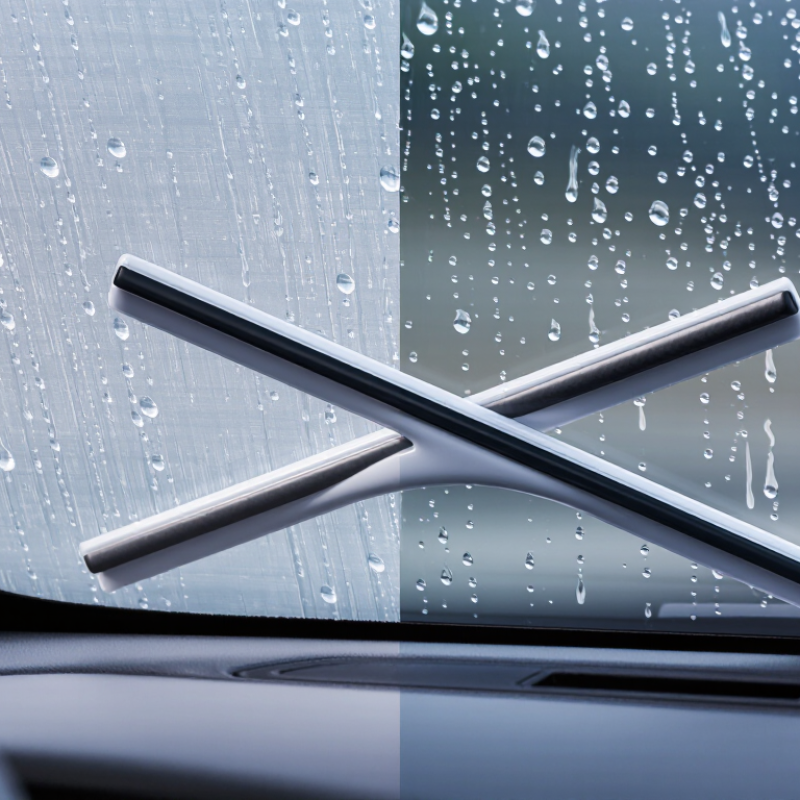
Silicone windshield wipers are flexible cleaning blades made from silicone rubber rather than conventional natural or synthetic rubber. Their long, narrow edge presses against the glass and removes rain, dust, and road film as the wiper arm moves. Silicone tolerates ultraviolet exposure, heat, and cold relatively well. It also tends to leave a thin, water-repellent silicone layer on the windshield during use.
That layer can make droplets gather and slide away faster. The effect is most noticeable during steady rain, when ordinary wipers may leave a pale haze or repeated streaks. In a garage check, the difference often appears under angled light, not from the driver’s seat. The result depends on clean glass, correct blade pressure, and proper installation. Silicone alone cannot repair scratches or remove oily contamination. Small detail, big consequence.
The Federal Highway Administration reports that weather affects about 21% of U.S. vehicle crashes each year. Its road-weather data also links roughly 74% of weather-related crashes with wet pavement. These figures explain why blade material matters, but they do not prove that silicone wipers prevent collisions. They mainly support better visibility. I would not call silicone blades maintenance-free. Fine grit can still damage the edge, and a worn blade can chatter across the glass. Inspection remains necessary, especially after winter driving or long exposure to sunlight.
Silicone windshield wipers use a silicone-rubber wiping edge to remove water, snow, and road film from the glass. Silicone remains flexible across a broad temperature range and can leave a water-repellent silicone film behind, helping rainwater bead and run off more easily.
The chart shows typical continuous-use temperature ranges for elastomer materials commonly used in windshield-wiper blades. Actual performance varies with formulation, blade design, sunlight exposure, glass condition, and operating time.
Silicone windshield wipers use a flexible silicone rubber element instead of conventional natural or synthetic rubber. Their design begins with the wiping edge. Engineers shape a narrow, angled lip that bends during each sweep, maintaining contact with curved glass. A reinforced spine then distributes pressure through several contact points. This helps the blade follow the windshield rather than skip across it.
Silicone also resists ultraviolet exposure, ozone, and temperature changes better than many standard rubber compounds. However, material quality matters. A poorly molded edge can still chatter or leave a thin film.
SAE J903 outlines performance requirements for passenger-car windshield wiper systems, including wiping effectiveness and durability. The U.S. Federal Highway Administration reports that rain contributes to about 21% of weather-related crashes in the United States. Clear contact is not a cosmetic detail; it supports real driving visibility. Still, that statistic does not prove silicone alone prevents crashes. The design and installation must work together.
Tips: Check the blade edge for nicks, hard spots, or uneven wear. Clean the glass with a suitable automotive cleaner before fitting new blades. Test them with washer fluid, not on dry glass. In practice, I have found that silicone blades may leave a faint transfer layer during early use. It usually fades, but it deserves attention. Replace a blade when streaks remain after cleaning, even if the frame looks intact.
A silicone windshield wiper uses a flexible silicone blade to move water across glass. Its working edge bends slightly under spring pressure. This bend helps the blade follow the windshield’s curved surface. The edge matters.
As the wiper arm travels, the silicone lip presses against the glass. It gathers rain into a narrow moving sheet. The blade then pushes that water toward the windshield’s sides and lower channels. A clean, continuous edge leaves fewer droplets behind. Silicone also resists hardening in many temperature changes, so it can remain flexible during cold mornings and hot parking conditions. However, material alone cannot guarantee a clear view.
Dust, road film, wax residue, and tiny sand particles can interrupt contact. I have found that a quick glass wash often improves wiping more than replacing a nearly new blade. The blade should also be inspected for cuts, lifted sections, or a rough edge. Small damage can create repeating lines across the driver’s view. Not always obvious.
Silicone blades may spread a thin water-repellent layer during use, depending on their design and treatment. This can help rain bead and move away more easily, especially at driving speed. Yet the effect may weaken after strong cleaners or heavy contamination. A careful user should test the wipers after installation, listen for chatter, and check the glass from several angles. If water remains in broad patches, the issue may involve weak arm pressure, a bent arm, or uneven glass contamination rather than the silicone itself.
What Are Silicone Windshield Wipers and How Do They Work?
Silicone windshield wipers use flexible silicone rubber instead of conventional natural rubber. Their edges press against the glass and move water, dust, and light snow away. During repeated use, some silicone blades leave a thin water-repellent layer on the windshield. Rain may then form smaller droplets and slide away more easily at driving speed.
The difference is visible. In practical windshield checks, silicone blades often stay flexible under strong sunlight and changing temperatures. Silicone also resists ozone and ultraviolet exposure better than many ordinary rubber compounds. This can reduce cracking and hardening over time. A smoother edge may also create less chatter across clean glass. That matters during heavy rain.
However, silicone wipers are not a perfect upgrade. They usually cost more, and poor blade design can still cause streaks. Dirt, oily road film, and dried washer fluid remain serious problems. A silicone edge cannot repair scratched glass. It may also squeak on a nearly dry windshield, especially when the glass is contaminated. In freezing weather, ice can damage any wiper material if the blade is lifted carelessly. My assessment is cautious: silicone offers useful durability and water-shedding performance, but installation quality matters greatly. The blade must match the windshield curve, and the glass needs regular cleaning. Some drivers may notice little improvement. Others may value clearer rain visibility over a longer service period.
| Category | Data Dimension | Fact-Based Description | Practical Effect |
|---|---|---|---|
| Product Definition | Basic Description | A silicone windshield wiper uses a flexible silicone wiping element instead of the more commonly used natural or synthetic rubber element. | Designed to remove water and road film from automotive glass. |
| Construction | Main Components | Typical assemblies include a silicone wiping edge, a supporting frame or beam structure, connector hardware, and tensioning components. | The vehicle must use a compatible wiper length and connector type. |
| How It Works | Wiping Action | The wiper arm applies pressure while the blade moves across the windshield. The flexible wiping edge conforms to the glass and pushes water away during each stroke. | Effective contact depends on correct blade pressure, alignment, and glass condition. |
| How It Works | Water-Shedding Film | Some silicone blades leave a small amount of silicone-based residue during initial use. This may create a temporary water-shedding effect on the glass, although the result varies by product and windshield condition. | Rainwater may bead more readily in some applications. |
| Material Performance | Temperature Resistance | Silicone generally remains flexible across a broad temperature range and is less prone to hardening from cold exposure than many conventional rubber compounds. | Cold-weather wiping performance may remain more consistent. |
| Material Performance | Ultraviolet and Ozone Exposure | Silicone is naturally resistant to ultraviolet radiation and ozone, two environmental factors that can accelerate cracking and deterioration in some rubber materials. | The wiping element may retain flexibility for longer under strong sunlight. |
| Cleaning Performance | Water Removal | A properly installed silicone blade can remove rainwater effectively. Performance still depends on the blade profile, contact pressure, windshield curvature, and the cleanliness of the glass. | Material type alone does not guarantee streak-free wiping. |
| Durability | Wear Factors | Silicone can resist environmental aging, but the blade can still wear from abrasive dust, ice, dried insects, road grit, washer-fluid residue, and repeated friction. | Regular inspection remains necessary regardless of material. |
| Key Benefit | Resistance to Drying and Cracking | Silicone is less likely than many rubber compounds to become brittle or crack solely from prolonged exposure to sunlight, ozone, and temperature changes. | Potentially longer usable performance in harsh climates. |
| Key Benefit | Cold-Weather Flexibility | Silicone typically maintains flexibility at low temperatures better than lower-grade rubber formulations, although severe ice accumulation can damage any wiper blade. | Reduced risk of a hardened blade during cold starts. |
| Key Benefit | Potential Service-Life Advantage | The service life may be extended when the blade is used on clean glass and protected from scraping heavy ice. Actual life varies with climate, mileage, storage, and maintenance. | Replacement intervals may be less frequent, but no universal lifespan applies. |
| Key Limitation | Higher Purchase Cost | Silicone wiper blades often cost more initially than basic rubber-blade alternatives because of material and manufacturing differences. | The upfront price may be higher even when long-term value is favorable. |
| Key Limitation | Possible Initial Smearing | A new silicone blade may leave a light haze or uneven film during its first uses, particularly if the windshield contains oil, wax, silicone residue, or other contamination. | Cleaning the glass and operating the washer system may be required. |
| Key Limitation | Ice and Abrasive Damage | Silicone is not immune to tearing or edge damage. Running a blade over bonded ice, sand, or heavy debris can damage the wiping edge and reduce contact quality. | Clear ice manually before using the wipers whenever possible. |
| Compatibility | Blade Size | The replacement blade must match the vehicle manufacturer’s specified length. A blade that is too long or too short can leave unwiped areas or interfere with the windshield edge. | Check the vehicle specification before purchase. |
| Compatibility | Arm Connector | Common arm connections include hook-style, side-pin, bayonet, and other vehicle-specific fittings. The connector must lock securely onto the wiper arm. | Incorrect fit can cause vibration, detachment, or incomplete wiping. |
| Maintenance | Cleaning Method | Wipe the blade edge with a clean, damp, lint-free cloth and wash the windshield with an automotive glass cleaner or clean water. Avoid harsh solvents unless approved for the blade material. | Removing grit and residue helps preserve smooth contact. |
| Maintenance | Inspection Signs | Common replacement indicators include streaks, skipped areas, chatter, splitting, a torn edge, uneven wiping, or visible deformation. | Replace the blade when cleaning no longer restores performance. |
| Best Use Cases | Climate and Driving Conditions | Silicone blades may be useful in areas with strong sunlight, frequent temperature changes, cold weather, or heavy seasonal rain. | Material durability can be valuable in demanding environments. |
| Overall Assessment | Value Consideration | Silicone wipers offer potential advantages in environmental resistance and flexibility, but performance depends equally on blade design, vehicle compatibility, windshield cleanliness, and installation quality. | Choose based on total operating conditions rather than material alone. |
Silicone windshield wipers use flexible silicone rubber to move rain, dust, and light snow from the glass. Their edges create a steady contact line across curved windshields. Many silicone blades also leave a thin water-repellent film during use. This can improve visibility during repeated rainfall. However, performance still depends on correct fit and clean glass.
Select blades by matching the vehicle’s exact length and connector type. Measure the old blade, or check the vehicle manual. A slightly wrong size can leave wet arcs near the driver’s view. Beam-style blades usually follow curved glass more evenly. Frame-style blades may suit some older windshield designs. Look for a firm silicone edge without cuts, rough spots, or uneven molding. Climate matters too. In freezing areas, choose a design that resists ice buildup. In dusty regions, prioritize an edge that cleans easily.
Keep the windshield and blade edge clean. Rinse away grit before wiping, then use a soft cloth with mild glass cleaner. Do not run dry blades across dusty glass. Lift the blades during heavy frost, but never force them free from ice. Inspect the edge every few weeks. Replace it when streaks, chatter, splitting, or missed areas continue after cleaning.
I once blamed the blade for poor wiping, but oily glass was the real cause.
Silicone can last well, yet it is not permanent. Heat, sunlight, and road chemicals slowly reduce flexibility. A careful inspection remains more reliable than a fixed replacement schedule.
All products and services provided by Innovative Plastic Molders, Inc. will meet or exceed our customer's perceived requirements and expectations. We will listen and respond to what our customers are telling us in a timely and forthright manner.

ISO 9001:2015 CERTIFIED
© Copyright 2009 – Innovative Plastic Molders, Inc.
Website by Central 8 Marketing
10451 Dog Leg Road Ste 200
Vandalia, OH 45377
Phone: 937.898.3775
Fax: 937.535.0640
Email: sale@endtheplastic.com

