BLOG

How to Find the Best China Injection Tooling Supplier?

Choosing the best China injection tooling supplier requires more than comparing prices. The right partner protects your design, schedule, and production consistency.

Injection molding educator John Bozzelli puts it plainly: “The mold is the heart of the injection molding process.” That principle should guide every supplier evaluation. A low quotation means little if the tool produces flash, uneven walls, or short shots after 20,000 cycles.

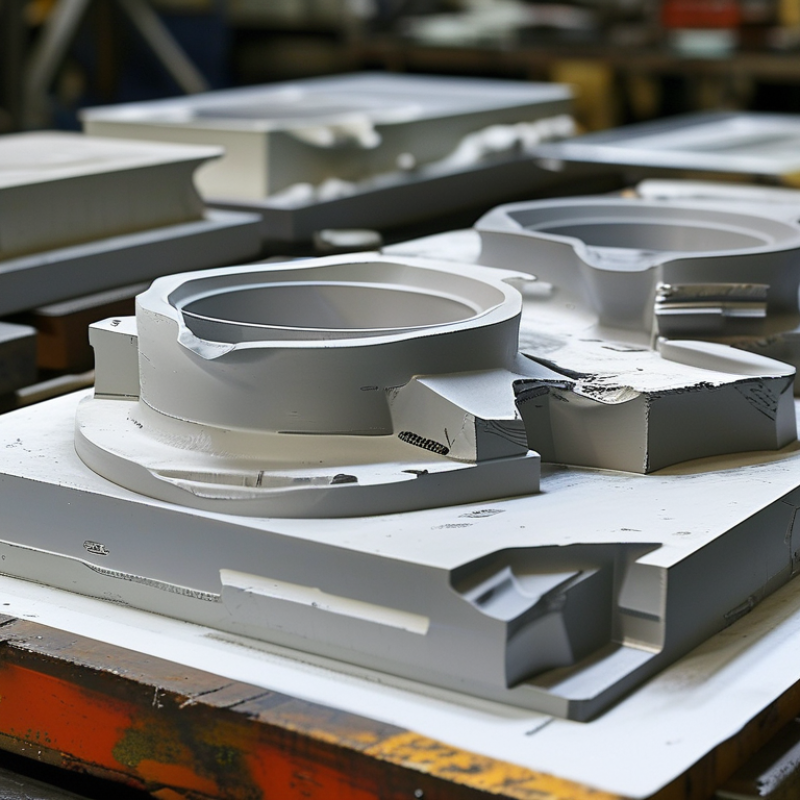
Look for documented experience with your material, part geometry, and expected volume. Ask for photographs of comparable molds, not only polished factory images. Request a clear steel specification, cavity layout, cooling strategy, tolerance plan, and maintenance schedule. Serious suppliers explain these details without hiding behind vague promises.

A reliable supplier also welcomes design-for-manufacturing feedback. They should identify risky draft angles, thin ribs, weld-line locations, and difficult ejection points before cutting steel. Ask how they handle mold-flow analysis, trial shots, dimensional reports, and corrective actions. These records reveal technical discipline.

Factory visits can add useful evidence. Watch how technicians measure electrodes, inspect inserts, and record trial results. A clean workshop is helpful, but process control matters more.

Do not treat ISO certification as proof of perfect tooling. It supports reliability, but it cannot replace technical questions or reference checks. I have seen attractive samples hide weak cooling channels and hurried polishing.

The best choice may not be the cheapest. It is the supplier that communicates clearly, documents decisions, and accepts accountability when the first trial is imperfect. That honesty is valuable. Often, it prevents expensive surprises later.
How to Find the Best China Injection Tooling Supplier?

Define Your Injection Tooling Requirements and Quality Standards

Before comparing suppliers, define what the injection tooling must achieve. Start with the part drawing, resin grade, annual volume, cycle target, and acceptable cosmetic limits. Write it down. Include critical dimensions, shutoff surfaces, vent depth, cooling balance, steel grade, hardness, and expected shot life.

PlasticsEurope’s Plastics—The Fast Facts 2024 reports global plastics production reached 413.8 million tonnes in 2023. That scale increases pressure on repeatable tooling and stable production. Material choice matters. The OECD Global Plastics Outlook projects global plastic waste could nearly triple, from 353 million tonnes in 2019 to 1,014 million tonnes by 2060. Therefore, specify recycled-content compatibility, drying conditions, and repair access when relevant.

Translate quality expectations into measurable acceptance criteria. Require mold-flow analysis, dimensional inspection, steel certificates, trial-shot records, and a documented corrective-action process. ISO 20457 provides useful guidance for plastics moulded parts and dimensional tolerances. Use it with product-specific requirements, not as a substitute for engineering judgment.

During supplier audits, inspect sample molds and ask how cavity balance is verified. Do not guess. A perfect specification is rarely possible. In practice, a first draft may miss cooling restrictions or real production variation. Leave controlled room for revision, but record every change. Small details, such as unclear datum references, can create expensive disputes after machining begins.

Research Supplier Capabilities, Experience, and Manufacturing Equipment

Finding the best China injection tooling supplier begins with a close review of its real capabilities. A polished website is not proof. Ask for recent project examples, material specifications, and measurable results. Experienced suppliers should explain mold flow, shrinkage, cooling design, and parting lines in clear language. They should also identify risks before production starts.

Walk through the manufacturing equipment list. Look for precision CNC machines, wire cutting, EDM systems, surface grinders, and coordinate measuring machines. Ask about machine accuracy, maintenance records, and calibration dates. A reliable supplier can show inspection reports, trial-shot records, and dimensional data from actual molds. Factory cleanliness matters too. Metal dust around finishing areas may reveal weak process control.

Experience is visible in the questions a supplier asks. They should request resin details, annual volume, tolerances, surface requirements, and expected mold life. During a mold trial, check flash, weld lines, ejection marks, and cycle stability. Do not judge quality from one successful sample. Repeatability matters more. I have seen attractive samples fail after several hundred cycles because cooling channels were poorly balanced. That possibility deserves attention. Suppliers may also underestimate maintenance needs, so request a clear schedule for cleaning, polishing, component replacement, and spare parts. Honest communication is valuable, even when the answer is inconvenient.

How to Find the Best China Injection Tooling Supplier?

A practical supplier review should examine manufacturing equipment, tooling experience, quality systems, engineering support, production capacity, and communication. The chart below uses a 100-point reference benchmark to show the relative importance of each evaluation dimension.

Reference benchmark: higher-weighted dimensions generally have a stronger impact on mold accuracy, durability, repeatability, and project reliability. Review each supplier against the same criteria before requesting quotations.

Verify Tooling Quality Through Certifications, Samples, and Factory Audits

How to Find the Best China Injection Tooling Supplier?

A certificate is only a starting point. The ISO Survey 2023 recorded more than 1.26 million ISO 9001 certificates worldwide. However, certification confirms management controls, not every mold’s dimensional accuracy. Ask for the certificate scope, issuing body, expiry date, and audited production site. Then request inspection records for steel hardness, cavity dimensions, surface finish, and mold trials. Small details matter.

Samples should match your intended resin, wall thickness, and tolerance range. Request first-shot parts, not only polished showroom pieces. Measure them with a coordinate measuring machine, and compare the report with your drawing.

The 2023 Grand View Research report estimated the global injection-molded plastics market at over 350 billion dollars, showing the scale of this supply chain. Large capacity does not guarantee careful tooling. Look inside.

A factory audit should follow the mold’s actual route. Check steel storage, CNC calibration labels, electrode records, fitting benches, spare inserts, and trial-shot logs. Speak with the process engineer, not only the sales contact. Review corrective-action records, including failed trials and repeated repairs. A supplier refusing imperfect samples deserves caution. I would also verify production planning against your timeline, because a beautiful sample can hide weak maintenance discipline. This step is often rushed. It should not be.

Compare Pricing, Lead Times, Communication, and After-Sales Support

How to Find the Best China Injection Tooling Supplier?

Price comparisons must use the same technical scope. Check steel grade, cavity count, hot-runner design, tolerances, sampling rounds, freight, and taxes. A low quote can hide weaker steel or limited mold trials. I once focused too heavily on machining cost. That was a mistake. Request a line-by-line quotation, not a single total. The 2022 ISO Survey recorded more than 1.2 million ISO 9001 certificates worldwide, but certification alone cannot prove tooling ability. Ask for inspection records, dimensional reports, and similar project evidence. A supplier should explain why a mold needs 35 days, not simply promise 25.

Separate lead time into design, steel preparation, machining, assembly, and trial correction. These details expose unrealistic schedules. The World Bank’s 2023 Logistics Performance Index evaluates 139 economies through customs, infrastructure, tracking, and timeliness. Use the same logic with suppliers. Require weekly progress photos, a shared engineering change log, and clear escalation contacts. Communication matters when a core insert needs adjustment at 8 p.m. China time. After-sales support should cover mold maintenance, spare inserts, repair response, and trial-related corrections. Put these terms in writing. Also ask who pays for verified defects. A supplier may communicate politely yet respond slowly after approval. That risk is easy to underestimate. During final evaluation, score price, delivery, communication, and support separately. A simple spreadsheet often reveals that the cheapest supplier is not the lowest-risk choice.

How to Find the Best China Injection Tooling Supplier? — Compare Pricing, Lead Times, Communication, and After-Sales Support

Practical comparison of common China injection-tooling supplier profiles. Pricing and lead-time figures are indicative market ranges for standard plastic injection molds and should be confirmed against the part design, steel grade, mold life, cavity count, surface finish, and production requirements.

Supplier Profile Typical Mold Scope Indicative Tooling Price Typical Lead Time Communication & Project Control Engineering & Validation After-Sales Support Typical Payment Structure Best Fit Overall Value
Cost-Focused General Tooling Workshop 1–2 cavity molds Simple geometry Moderate tolerance US$2,500–8,000 25–40 days Email and messaging support during working hours; progress updates are often weekly. Response time commonly ranges from 1 business day to 3 business days. Basic DFM review and mold-flow advice may be available. T1 sampling is normally included, while detailed validation documentation may be limited. Commonly includes 6–12 months of workmanship support or a defined shot-count warranty. Spare parts and modifications may be charged separately. 30% deposit; balance before shipment or after first trial approval. Simple consumer products, prototypes, and cost-sensitive projects. ★★★☆☆
Mid-Market Export-Oriented Supplier 2–8 cavity molds Automotive & consumer parts Standard tolerances US$6,000–25,000 30–55 days Dedicated project contact, scheduled video meetings, drawing revision control, and weekly milestone reporting are typically available. Response time is commonly within 1 business day. Formal DFM feedback, mold-flow analysis for higher-risk parts, T1/T2 sampling, dimensional reports, and basic process recommendations are commonly provided. Often offers 12 months of mold maintenance support, repair guidance, modification assistance, and replacement of workmanship-related components under agreed warranty terms. 30% deposit; 40% after mold design or steel confirmation; 30% after acceptance or before shipment. Most overseas buyers seeking a balance of cost, reliability, and project communication. ★★★★☆
Precision Tooling Specialist Tight-tolerance components Complex slides High cosmetic requirements US$15,000–60,000 45–75 days Engineering-led communication with controlled change requests, detailed meeting records, inspection checkpoints, and rapid escalation for technical issues. Advanced DFM, mold-flow simulation, steel certification, CMM inspection, capability studies, texture approval, T1/T2/T3 trials, and structured corrective-action reports may be included. Strong technical support, preventive-maintenance schedules, repair records, and remote troubleshooting are typically available. On-site support may be quoted separately. 30% deposit; milestone payments tied to design approval, steel cutting, sampling, and final acceptance. Medical, optical, electronic, cosmetic, and other high-precision applications. ★★★★★
High-Volume Production Tooling Supplier 8–64 cavity molds Hot-runner systems Long production life US$30,000–150,000+ 60–120 days Uses formal project schedules, gated approvals, engineering-change procedures, and production-readiness reviews. Communication is usually structured around weekly or biweekly milestones. Mold-flow analysis, balance studies, hot-runner coordination, automated ejection reviews, capability data, multi-stage sampling, and production validation are commonly expected. Maintenance planning, wear-part lists, preventive-service instructions, technical training, and long-term spare-parts support are normally available under a service agreement. Milestone-based payments, often 20%–30% upfront with the balance linked to design, trials, and acceptance. Large-volume programs where uptime, repeatability, and total ownership cost matter most. ★★★★★
Integrated Tooling and Injection-Molding Supplier Mold plus production Pilot runs Assembly options US$8,000–50,000+ 35–75 days One project team can coordinate tooling, sampling, process setup, and production planning. Communication quality depends strongly on the assigned program manager. DFM, trial molding, process-window development, part inspection, packaging trials, and production feedback can be handled within one supply chain. Mold maintenance, process troubleshooting, engineering changes, and replacement-part coordination are generally easier because tooling and production remain with the same supplier. Typically 30% deposit with remaining payments linked to mold completion and production approval. Buyers wanting a single accountable partner from tooling through mass production. ★★★★☆
Engineering-Focused Rapid-Development Supplier Prototype molds Bridge tooling Low-volume programs US$3,000–18,000 15–35 days Fast quotation and design feedback are common. Communication is usually frequent during development, although documentation may be less comprehensive than with a high-volume tooling specialist. Quick DFM reviews, prototype sampling, basic dimensional checks, and design-for-manufacturing changes are typically prioritized over full production validation. Modifications during development are usually handled quickly. Long-term maintenance and high-shot-life warranties may be limited or separately priced. 40%–50% deposit; balance after sampling, modification, or shipment. Start-ups, product launches, engineering validation, and short time-to-market projects. ★★★★☆

Buyer checklist: Compare the complete quotation rather than the mold price alone. Confirm steel grade, expected mold life, cavity count, hot-runner brand or specification, included sampling rounds, dimensional-report scope, Incoterms, warranty duration, spare-parts responsibility, response-time commitments, and ownership of mold files and tooling.

Select the Supplier That Offers the Best Overall Value and Reliability

Finding the best China injection tooling supplier is not about choosing the lowest quotation. It means securing dependable value through design, machining, trials, and after-sales support. In practical sourcing work, compare the full cost, not only the tooling price. Include engineering changes, sampling, freight, maintenance, and possible rework. A cheap mold can become expensive when late corrections delay production. Reliability starts with technical evidence. Ask for recent project records, machine capabilities, inspection methods, and clear delivery milestones. Specific answers matter.

A capable supplier should review your part before machining begins. Look for advice on draft angles, wall thickness, cooling layout, ejection, and weld lines. Request a documented DFM review. During a factory assessment, inspect the toolroom, assembly area, and measurement equipment. Check steel certificates and hardness records. Ask how cavity dimensions are verified. CMM reports and trial-shot data are more useful than polished promises. Confirm who controls design files and revision changes. Small misunderstandings can damage a good project.

Overall value also depends on communication. A reliable team reports risks early, even when the news is uncomfortable. Set response times, approval points, spare-part rules, and warranty terms in writing. Production trials should include measured samples, not casual photos. I once underestimated the cost of minor texture changes, and the schedule suffered. That mistake changed my supplier checklist. Still, no evaluation is perfect. A strong audit may miss weak subcontractor control or rushed final testing. Leave room for questions, independent inspection, and realistic contingency time. Good value appears in the details.

Go to Top