

BLOG

What Is a Dual Channel Syringe Pump?

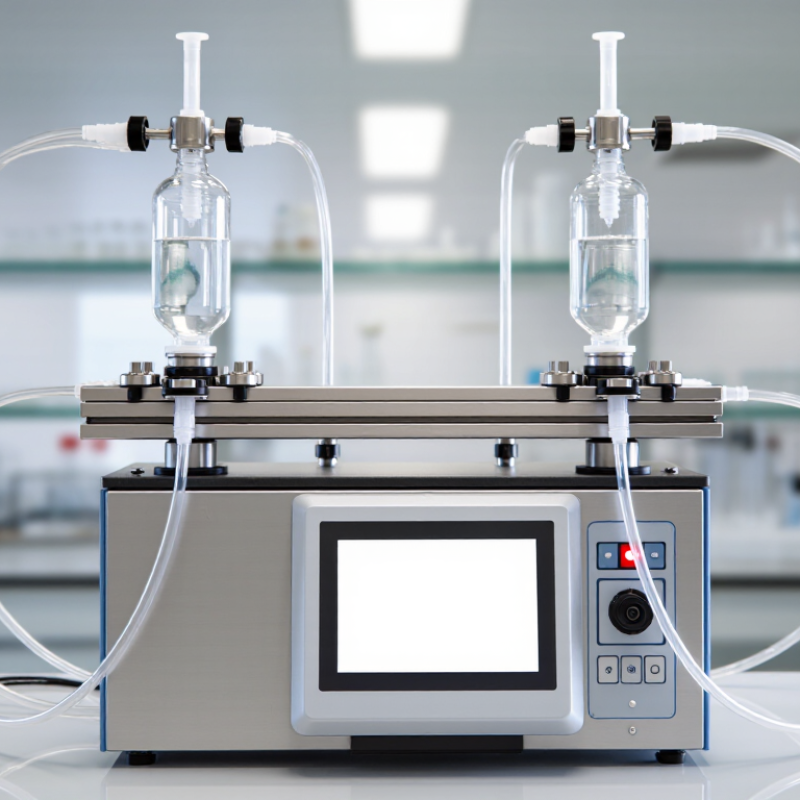
A Dual Channel Syringe Pump drives fluid through two syringe lines using one instrument. Depending on its design, it may control each channel independently or coordinate their flow. This makes it useful for paired reagents, parallel experiments, and repeatable mixing. Picture two syringes mounted side by side, each connected to its own narrow tube. Small differences in syringe size, tubing, or setup can still change the delivered volume. The second channel does not automatically make a result twice as reliable.

Microfluidics expert George M. Whitesides described the field this way: “Microfluidics deals with the behavior, precise control, and manipulation of fluids that are geometrically constrained to a small, typically submillimeter, scale.” His 2006 Nature review provides useful context for understanding the careful fluid control these pumps support. In practice, users should check flow-rate range, syringe compatibility, channel independence, and calibration needs before choosing a pump. They should also inspect connections for leaks and watch for trapped air; a tiny bubble can disrupt a steady-looking stream. It seems simple. It isn’t always. A pump’s display shows a setting, not proof that the exact volume reached the outlet. This distinction is easy to overlook, and it deserves a careful check.
What Is a Dual Channel Syringe Pump?

Definition: Two Syringes Run Through Independently Controlled Channels

A dual-channel syringe pump runs two syringes through separate, independently controlled channels. Each channel has its own drive mechanism and settings, allowing different flow rates, start times, or stop times. One syringe can deliver a slow stream while the other briefly supplies a faster one. Small detail, big difference. This helps when two liquids need timed delivery into a shared mixing chamber.

Before operation, the user fits each syringe into its holder, secures the plungers, and enters the syringe size and target rate for each channel. The pump uses syringe dimensions to translate motor movement into a stated flow rate. If the wrong size is selected, the displayed rate may not match the liquid leaving the tip. That is easy to overlook. Tubing, liquid viscosity, and back pressure can also affect delivery, so check the outlet rather than trusting the screen alone.

Independent control does not mean unlimited flexibility. Channels may have different flow ranges, and syringe compatibility and setup instructions still matter. For repeatable work, record the syringe type, settings, and observed output, then verify performance at the intended rate. It is tempting to trust the display; I treat it as a setting, not proof of delivered volume. Similar settings do not guarantee identical output, since tubing or plunger fit can create small differences over time.

Key Components: Drives, Syringe Holders, Sensors, and Controls

A dual-channel syringe pump has two drive assemblies, allowing separate syringes to deliver fluid at the same time. Each drive typically uses a motor and lead screw to push a plunger forward. The screw’s movement sets the delivery rate, but friction and loose fittings can affect real-world performance. Small parts matter.

Each syringe holder should support the barrel without squeezing it, while a clamp or carriage secures the plunger. Correct alignment helps prevent side-loading, uneven movement, and leaks. Sensors can detect a missing syringe, an end-of-travel condition, or excessive force. Their coverage varies by design, so operators should check which faults the pump actually detects. A sensor is not a substitute for inspection.

The control system sets each channel’s rate and volume, displays status, and signals alarms. Clear channel labels are useful when two fluids run side by side. Grand View Research’s Infusion Pump Market report estimated the global market at about USD 13 billion in 2023 and forecast 7.6% annual growth through 2030. That market figure shows demand, not pump accuracy. For selection, compare documented flow-rate performance, alarm behavior, and syringe compatibility under the intended conditions. I would still verify delivery with a measured test; specifications alone can feel reassuring, but they do not reveal every setup problem.

What Is a Dual Channel Syringe Pump?

Illustrative programmed flow-rate profile: The values show example setpoints, not universal pump specifications. Each channel can be programmed independently; actual delivery depends on the pump, syringe, and setup.

Key components: Drives move each syringe plunger; syringe holders secure the syringes; sensors may monitor position or pressure, depending on the model; and controls set flow rates and coordinate channel operation.

Operating Principle: Flow Rate = Syringe Area × Plunger Speed

What Is a Dual Channel Syringe Pump?
Operating Principle: Flow Rate = Syringe Area × Plunger Speed

A dual-channel syringe pump moves liquid from two syringes, often at independently set rates. For each channel, flow rate equals the syringe’s internal cross-sectional area multiplied by plunger speed. The area of a round syringe is π × radius². A wider barrel therefore delivers more liquid at the same plunger speed. Small diameter differences matter.

Consider a syringe with an inner diameter of 10 mm. Its plunger advances 2 mm per minute, displacing about 0.157 mL per minute. That is the ideal rate. In practice, check the syringe’s actual internal diameter, not just its labeled capacity. Barrel flexibility, trapped air, and line resistance can affect delivery. A display value is not a direct measurement of fluid at the outlet.

Treat each channel as its own calculation. If both outlets feed one line, their rates may add, but only when the plumbing allows both streams to combine smoothly. It is easy to overlook a loose connection or a slightly tilted syringe. Verify the setup with a timed collection and a suitable balance when rate accuracy matters. The check takes time. It can also reveal assumptions that the equation alone misses.

What Is a Dual Channel Syringe Pump? - Operating Principle: Flow Rate = Syringe Area × Plunger Speed
Dimension Description or Calculation Example / Practical Note
Pump configuration A dual channel syringe pump has two independently driven syringe positions, allowing two fluid streams to be delivered at the same time. The channels can generally be set to different flow rates; actual capabilities depend on the pump design and syringe setup.
Operating principle Volumetric flow rate, Q = A × v, where A is the syringe barrel’s internal cross-sectional area and v is plunger speed. For a circular barrel, A = π × (d ÷ 2)², where d is the internal diameter.
Unit conversion If A is in mm² and v is in mm/min, Q is in mm³/min. Divide by 1,000 to convert mm³/min to mL/min. 1 mL = 1,000 mm³.
Illustrative calculation — Channel A Internal diameter: 10 mm; area: 78.54 mm²; plunger speed: 1.00 mm/min. Q = 78.54 × 1.00 = 78.54 mm³/min = 0.0785 mL/min.
Illustrative calculation — Channel B Internal diameter: 5 mm; area: 19.63 mm²; plunger speed: 2.00 mm/min. Q = 19.63 × 2.00 = 39.27 mm³/min = 0.0393 mL/min.
Effect of syringe diameter At the same plunger speed, a larger internal diameter produces a higher theoretical flow rate because its cross-sectional area is larger. Doubling the internal diameter makes the area—and theoretical flow rate at the same speed—four times larger.
Two-channel flow total The channel rates are separate when each syringe feeds a different line. They can be added only when calculating a combined flow into a shared downstream path. For the examples above, a shared outlet would receive a theoretical total of about 0.1178 mL/min.
Accuracy considerations Calculated flow is theoretical and depends on the correct syringe internal diameter and consistent plunger movement. Syringe dimensions, fluid properties, compliance, leakage, and setup can affect delivered flow. Use the syringe’s specified dimensions and verify performance for critical applications.

Performance Measures: Flow Accuracy, Rate Range, and Channel Capacity

A dual channel syringe pump delivers fluid through two separately controlled syringes. Its performance depends on more than the number shown on the display. Flow accuracy describes how closely delivered volume matches the target over a defined interval. Check whether the specification reports percentage error, absolute error, or both. Small differences matter.

A pump may list a broad rate range, but usable performance can narrow at very low rates. Plunger movement, syringe diameter, fluid viscosity, tubing compliance, and downstream pressure all affect delivery. For example, a slow infusion through long, flexible tubing may take time to stabilize after a rate change. Verify rates using the intended syringe and fluid, then measure collected output over a practical test period. One test is not enough.

Channel capacity includes syringe compatibility, maximum volume, and whether both channels can operate at their chosen rates simultaneously. Some systems share mechanical or electrical limits, so confirm combined-load specifications rather than assuming each channel performs independently. Also check whether one channel can pause without disturbing the other. Record the syringe size, rate, test duration, and measured volume; otherwise, results are hard to compare. A tidy display can still hide setup effects. This sounds fussy, but repeatability depends on it.

Safety Standard: IEC 60601-2-24:2012 Covers Infusion-Pump Safety

A dual-channel syringe pump uses two drive mechanisms to deliver fluids from separate syringes. Each channel can have its own rate and volume settings, allowing two infusions to run at once. That convenience also creates safety demands. One channel may be paused while the other continues.

IEC 60601-2-24:2012 sets particular safety and essential-performance requirements for infusion pumps and controllers. It provides a framework for assessing hazards linked to fluid delivery, alarms, and device operation. Testing may examine flow accuracy and how the pump responds to conditions such as an occluded line. Small errors matter. A slow delivery change can affect treatment, especially when the prescribed volume is low.

Compliance is important, but it is not a promise that every setup will behave identically. Syringe size, tubing, back pressure, and setup technique can influence delivery. Two channels add another practical concern: staff must confirm which syringe and line belong to each setting. That step can feel routine, yet it is easy to rush. The standard supports safer design and evaluation; clinical checks and the device’s instructions still matter. A certificate alone cannot replace careful setup.

Go to Top
