

China’s Portable Multi Gas Detector industry has expanded rapidly across mining, petrochemical, confined-space, and emergency-response applications. This guide introduces ten Chinese manufacturers with relevant production experience, technical capabilities, and international market reach. It focuses on practical purchasing evidence, not attractive claims alone.
A reliable detector must identify hazards such as oxygen deficiency, combustible gases, hydrogen sulfide, and carbon monoxide. Sensor stability matters. So do alarm visibility, battery endurance, sampling response, enclosure protection, and calibration support. Field users often work beside tanks, pipelines, or poorly ventilated chambers. A clear display and loud alarm can become critical within seconds. Certification, traceable calibration, and documented quality procedures also deserve careful review. Product brochures cannot replace hands-on verification.
Process-safety expert Trevor Kletz famously said, “If you think safety is expensive, try ignorance.” His warning remains relevant to every Portable Multi Gas Detector purchase. The manufacturers discussed here are considered through an E-E-A-T-informed lens: operating experience, engineering competence, industry reputation, and dependable evidence. We examine detector design, sensor options, manufacturing consistency, service networks, and application support. Some companies may excel in customization, while others offer stronger global distribution or after-sales training. No ranking is perfect. Supplier information changes, and product performance depends on maintenance and user training. That limitation matters. Buyers should confirm current certificates, test samples, warranty terms, and local service availability before making a final decision. A detector is not merely a handheld instrument. It is a final barrier between invisible gas hazards and human exposure.
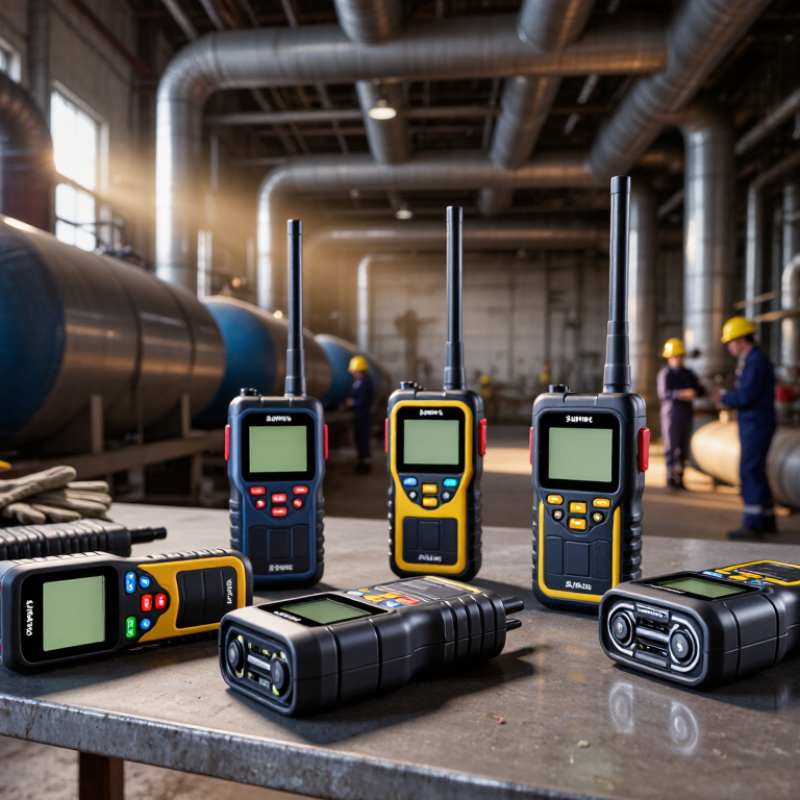
Portable Multi-Gas Detectors are compact instruments used to measure several atmospheric hazards at once. In China, they support workers in factories, tunnels, utility rooms, storage areas, and wastewater facilities. A typical device may monitor oxygen, combustible gases, carbon monoxide, hydrogen sulfide, or other selected gases. It provides readings through a screen, alarm, vibration, and sound.
It is compact. Its role is practical: warn workers before unsafe exposure or oxygen deficiency becomes difficult to recognize. During field inspections, technicians often attach the detector near the breathing zone, not inside a toolbox or vehicle. This placement produces more meaningful readings. Accuracy needs discipline. Sensors require suitable calibration, functional checks, battery care, and inspection before each shift. Dust, humidity, temperature changes, and sensor aging can influence results. Small errors matter.
China’s portable detector market includes many manufacturers, but product quality should be judged through evidence. Buyers can review test records, sensor specifications, alarm settings, data storage, service response, and training support. Clear manuals also reveal professional maturity. A low price may look attractive, yet unreliable calibration support can create higher operational risk.
No instrument is perfect. That assumption can fail when users ignore maintenance or treat an alarm as a simple number. Experienced teams combine detector readings with ventilation checks, work permits, and site procedures. The device is an important decision aid, not a replacement for trained judgment.
China Top 10 Portable Multi Gas Detector Manufacturers
Leading Chinese manufacturers focus on practical detection, not impressive specifications alone. Their portable instruments commonly monitor oxygen, combustible gases, and toxic gases in one compact unit. Reliable models use replaceable sensor modules, clear visual alarms, loud buzzers, and vibration alerts. Many include data logging, self-testing, rechargeable batteries, and protective housings for dusty work areas. An IP-rated enclosure helps, but it does not make a detector indestructible. Field experience shows that sensor response, battery life, and calibration stability matter more than a long feature list. No detector is perfect.
Tips: Check the sensor range, alarm thresholds, charging time, and operating temperature. Ask for calibration records and testing procedures. Confirm whether replacement sensors and batteries are available locally. A bright screen helps underground. Simple controls reduce mistakes when workers wear gloves.
Manufacturers with stronger technical capability often provide factory calibration, quality inspection, and application support for industrial sites. Look for equipment tested against recognized safety requirements and supplied with understandable manuals. Wireless transmission can support remote monitoring, while event records help investigate exposure incidents. However, connectivity may increase maintenance needs and drain batteries faster. Buyers should compare actual test results, warranty terms, and service response times. A detector that performs well in a laboratory may behave differently in cold weather, high humidity, or crowded work zones. That difference deserves attention.
| Rank | Manufacturer Profile | Typical Gas Channels | Sensor Technology | Typical Measuring Ranges | Ingress Protection | Alarm Functions | Battery and Runtime | Common Compliance Options | Typical Applications |
|---|---|---|---|---|---|---|---|---|---|
| 1 | Manufacturer Profile 01 | Combustible gas, O2, CO, H2S | Catalytic-bead combustible sensor with electrochemical oxygen and toxic-gas sensors | Combustible gas: 0–100% LEL; O2: 0–30% vol; CO: 0–1,000 ppm; H2S: 0–100 ppm | IP65 or higher | Audible, visual, and vibration alarms; low battery; sensor fault; over-range warning | Rechargeable lithium battery; commonly 8–16 hours of operation | Industrial safety and hazardous-area certification packages may be available | Confined-space entry, sewer inspection, utilities, and general industrial maintenance |
| 2 | Manufacturer Profile 02 | Combustible gas, O2, CO, H2S, SO2 | Electrochemical toxic-gas sensors with catalytic or infrared combustible-gas sensing | Combustible gas: 0–100% LEL; O2: 0–30% vol; CO: 0–2,000 ppm; H2S: 0–100 ppm; SO2: 0–20 ppm | IP65–IP67 | Two-level gas alarms, peak reading, time-weighted exposure alarm, data logging | Rechargeable battery; approximately 10–18 hours depending on pump and sensor load | Options may include IECEx-, ATEX-, or equivalent regional approvals | Petrochemical facilities, chemical handling, refineries, and emergency response |
| 3 | Manufacturer Profile 03 | LEL, O2, CO, H2S with optional NH3 or Cl2 | Compact electrochemical sensor platform with optional pump sampling | LEL: 0–100% LEL; O2: 0–30% vol; CO: 0–1,000 ppm; H2S: 0–100 ppm; NH3: commonly 0–100 ppm | IP65 | High-intensity LED, buzzer, vibration, calibration-due reminder, and sensor-life warning | Replaceable or rechargeable battery options; commonly 8–12 hours | Product configurations may support regional explosion-protection requirements | Construction, municipal services, underground work, and workplace inspections |
| 4 | Manufacturer Profile 04 | Combustible gas, O2, CO, H2S, VOCs | Infrared or catalytic LEL sensor combined with electrochemical and photoionization options | LEL: 0–100% LEL; O2: 0–30% vol; CO: 0–2,000 ppm; H2S: 0–100 ppm; VOC: commonly 0–2,000 ppm | IP67 | Visual, audible, and vibration alarms; STEL/TWA monitoring; real-time and peak display | High-capacity rechargeable battery; often 12–20 hours | Calibration and bump-test records; hazardous-location approval may be offered | Oil and gas, VOC screening, tank cleaning, and industrial hygiene |
| 5 | Manufacturer Profile 05 | O2, CO, H2S, SO2, NO2 | Multi-channel electrochemical sensor array for toxic-gas monitoring | O2: 0–30% vol; CO: 0–1,000 ppm; H2S: 0–100 ppm; SO2: 0–20 ppm; NO2: commonly 0–20 ppm | IP65–IP66 | Adjustable low and high alarms, STEL/TWA alarms, fault indication, and calibration reminder | Rechargeable lithium battery; typically 8–15 hours | Factory calibration certificates and region-specific safety approvals may be available | Metal processing, combustion monitoring, wastewater treatment, and chemical plants |
| 6 | Manufacturer Profile 06 | LEL, O2, CO, H2S, CH4 or CO2 | Diffusion and pump-assisted configurations using catalytic, infrared, and electrochemical sensors | LEL: 0–100% LEL; O2: 0–30% vol; CO: 0–1,000 ppm; H2S: 0–100 ppm; CO2: commonly 0–5% vol | IP66 | Alarm latching, event recording, audible/visual/vibration alerts, and optional remote connectivity | Rechargeable battery; commonly 10–16 hours with diffusion sampling | Optional docking, calibration, and data-management accessories | Mining, tunneling, biogas facilities, wastewater plants, and confined spaces |
| 7 | Manufacturer Profile 07 | Combustible gas, O2, CO, H2S, HCN | Electrochemical toxic-gas sensors with a catalytic or infrared LEL channel | Combustible gas: 0–100% LEL; O2: 0–30% vol; CO: 0–2,000 ppm; H2S: 0–100 ppm; HCN: commonly 0–50 ppm | IP65 or higher | Three-way alarm system, peak hold, zero adjustment, calibration lockout, and low-flow warning | Rechargeable battery; approximately 8–14 hours | Options may include hazardous-area, EMC, and electrical-safety testing | Fire services, emergency rescue, chemical response, and industrial shutdown work |
| 8 | Manufacturer Profile 08 | LEL, O2, CO, H2S, VOCs or refrigerant gases | Modular sensor design with electrochemical, infrared, and photoionization options | LEL: 0–100% LEL; O2: 0–30% vol; CO: 0–1,000 ppm; H2S: 0–100 ppm; VOC: commonly 0–2,000 ppm | IP67 | High/low alarms, STEL/TWA exposure alarms, data logging, and replaceable sensor notifications | Rechargeable battery; often 12–18 hours | Calibration software, test stations, and optional explosion-protection certification | Leak detection, refrigeration service, petrochemical maintenance, and environmental surveys |
| 9 | Manufacturer Profile 09 | Combustible gas, O2, CO, H2S, Cl2 | Low-power electrochemical array with catalytic-bead combustible-gas detection | Combustible gas: 0–100% LEL; O2: 0–30% vol; CO: 0–1,000 ppm; H2S: 0–100 ppm; Cl2: commonly 0–20 ppm | IP65 | Audible alarm, red LED, vibration alert, calibration status, and sensor malfunction warning | Rechargeable or replaceable battery; commonly 8–16 hours | Portable monitoring and workplace-safety certification packages may be available | Water treatment, public utilities, laboratories, maintenance, and facility management |
| 10 | Manufacturer Profile 10 | LEL, O2, CO, H2S with optional CO2, NH3, or SO2 | Configurable sensor platform supporting diffusion and internal-pump sampling | LEL: 0–100% LEL; O2: 0–30% vol; CO: 0–2,000 ppm; H2S: 0–100 ppm; CO2: commonly 0–5% vol | IP66–IP67 | Adjustable alarm thresholds, STEL/TWA, peak capture, data export, and automatic self-test | Rechargeable lithium battery; typically 10–18 hours | Optional docking station, calibration management, and hazardous-location approvals | Industrial inspection, energy production, confined-space rescue, and process safety |
China’s portable multi-gas detector market includes ten specialist manufacturers with different product strengths. One focuses on compact four-gas units for confined spaces. Another develops rugged detectors for coal mines and underground tunnels. A third emphasizes petrochemical monitoring, with sensors for oxygen, combustible gases, and toxic vapors.
A fourth manufacturer supplies wireless detectors for remote worker supervision. A fifth builds intrinsically safe instruments for hazardous industrial zones. One specializes in fast-response hydrogen sulfide and carbon monoxide detection.
Another provides customized OEM designs, including colored housings and multilingual interfaces. A further supplier concentrates on environmental sampling and data logging. The ninth develops lightweight personal monitors for emergency teams. The tenth supports calibration stations, replacement sensors, and long-term maintenance.
Field experience shows that sensor stability matters more than a crowded feature list. Battery life, alarm volume, screen visibility, and glove-friendly buttons can affect real decisions. Certification documents should be checked against the target workplace and local requirements. Some suppliers advertise wide detection ranges, but actual performance depends on temperature, humidity, and calibration habits. That deserves caution.
A useful comparison should examine response time, cross-sensitivity data, enclosure protection, software support, and service capacity. Factory testing is valuable, yet independent verification remains sensible before large-scale deployment. Cheap equipment may reduce purchase costs, but neglected sensor replacement can create hidden expenses. Product selection is rarely perfect. Careful trials reveal weaknesses early.
Standards separate a credible detector from a polished sample. IEC 60079-29-1 defines performance requirements for flammable gas detection. The GB/T 3836 series supports explosion-protection evaluation in China. IECEx or ATEX certification adds stronger evidence for international projects, but certificates must match the exact model, sensor type, and enclosure.
A 2024 MarketsandMarkets report estimates the global gas detector market will grow from about USD 3.2 billion in 2024 to USD 4.4 billion by 2029. Growth increases choice, but not necessarily quality. Procurement teams should inspect calibration records, test-gas traceability, alarm accuracy, battery endurance, and sensor replacement intervals. ISO 9001 shows process control. It does not prove detector performance. Calibration should link to ISO/IEC 17025 laboratories where possible.
Field evaluation needs practical testing. Apply methane, carbon monoxide, hydrogen sulfide, and oxygen-deficiency conditions under controlled procedures. Check response time, alarm volume, vibration resistance, IP protection, and readings after a one-meter drop. Small details matter. A weak clip can turn a certified instrument into a useless one. Bump testing before each shift is often recommended, yet workplace records are frequently incomplete. That gap deserves honest attention. A supplier may present excellent documents, while after-sales calibration support remains unclear. China’s top ten manufacturers should therefore be compared through repeatable tests, transparent certificates, and real maintenance evidence, not price or product photographs alone.
Choosing a suitable Chinese multi-gas detector manufacturer requires more than comparing prices. During factory evaluations, I check sensor origins, calibration procedures, enclosure quality, and production records. A reliable supplier should explain detection ranges, alarm limits, battery performance, and expected sensor life clearly. Request recent test reports, quality certificates, and traceable calibration records. A neat brochure is not proof.
Tips: Ask for a working sample before placing a large order. Test it near controlled gas sources, check alarm response time, and inspect the display under bright sunlight. Confirm whether the device supports bump testing, data logging, remote monitoring, and replaceable sensors. Also review the warranty, repair process, spare-part supply, and technical response time. Small details matter.
Chinese manufacturers may offer flexible customization, but unclear specifications can create problems later. Confirm language options, charging standards, packaging, and delivery inspections in writing. Ask whether production samples match mass-produced units. I have seen attractive prototypes fail during repeated vibration tests, so factory verification is essential. Independent laboratory testing adds confidence, although it increases cost and time. No supplier is perfect; even experienced buyers should question unusually low prices and promises of instant certification.
All products and services provided by Innovative Plastic Molders, Inc. will meet or exceed our customer's perceived requirements and expectations. We will listen and respond to what our customers are telling us in a timely and forthright manner.

ISO 9001:2015 CERTIFIED
© Copyright 2009 – Innovative Plastic Molders, Inc.
Website by Central 8 Marketing
10451 Dog Leg Road Ste 200
Vandalia, OH 45377
Phone: 937.898.3775
Fax: 937.535.0640
Email: sale@endtheplastic.com

