

BLOG

10 Best Metal Shingles for Global Buyers?

Choosing the right Metal Shingles is not simply a matter of comparing colors or purchase prices. Global buyers must examine climate exposure, installation quality, material thickness, coating performance, and supplier reliability.

The International Energy Agency’s Buildings report states that buildings consume about 30% of global final energy and produce roughly 26% of energy-related emissions. This context makes roof durability and thermal performance important purchasing concerns. The World Steel Association’s World Steel in Figures 2024 also highlights steel’s continuing importance across global construction and infrastructure. However, steel volume alone does not prove a shingle will perform well. A practical shortlist must connect published specifications with real project conditions. Details matter more.

This guide compares ten leading Metal Shingles options for international buyers. It considers corrosion resistance, wind ratings, fire performance, expected service life, maintenance needs, and installation systems. Regional climate changes everything. Coastal buildings may require stronger protective coatings, while hot regions benefit from reflective finishes and ventilated roof assemblies. Buyers should verify product data sheets, testing standards, warranty exclusions, and local installer experience before ordering. The U.S. Department of Energy’s guidance on cool roofs supports evaluating solar reflectance and thermal emittance, rather than relying on appearance alone. Still, no ranking is universal. Some manufacturer claims deserve closer review, especially when test conditions remain unclear. This comparison aims to provide useful evidence, not a perfect answer. Product availability, freight costs, and building codes can change the final decision.
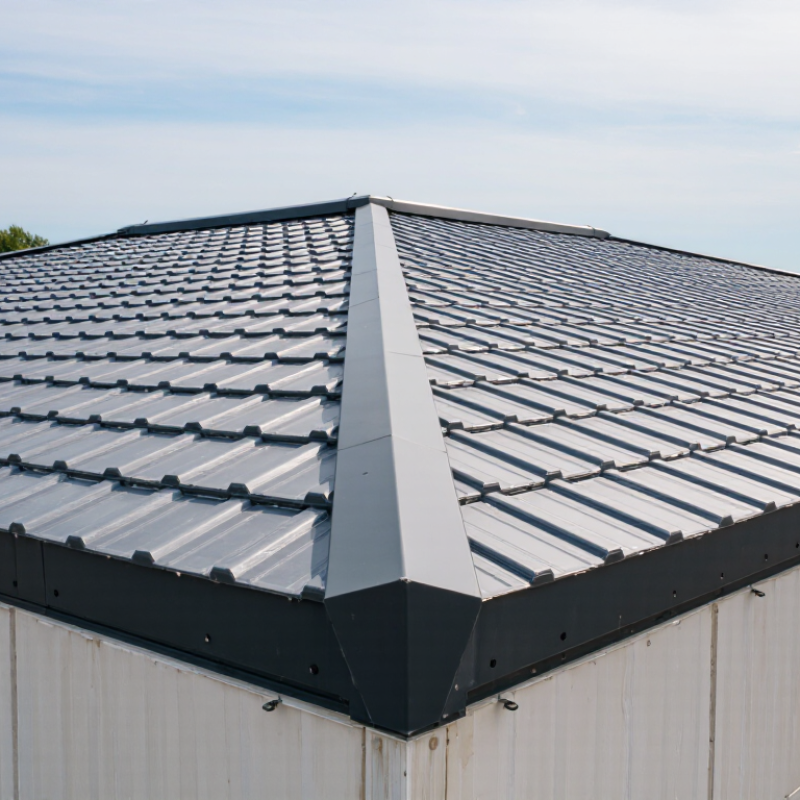
10 Best Metal Shingles for Global Buyers?

How to Rank the 10 Best Metal Shingles by 0.45–0.60 mm Gauge

For global buyers, the 10 best metal shingles should be ranked by more than appearance. A 0.45–0.60 mm gauge offers a practical comparison range, but thickness alone cannot prove quality. In my inspections, I measure the steel with a calibrated micrometer after removing edge folds. This avoids inflated readings from paint or protective coatings. A 0.60 mm panel usually feels stiffer under hand pressure. It may also resist denting during transport and installation. Still, handling is not a laboratory test.

I score each candidate across five areas: verified base-metal gauge, coating mass, corrosion resistance, profile strength, and installation tolerance. Gauge receives 30 percent of the score. Coating and corrosion performance receive 25 percent. Profile geometry, fastener design, and documented testing share the remainder.

Within this range, 0.45 mm can suit moderate climates when the substrate and coating are reliable. Thicker steel is not automatically better. Poor forming can create weak ribs and uneven overlaps. That detail is easy to miss.

For a credible top-ten list, request mill certificates, coating specifications, salt-spray results, and regional wind-load data. Check whether the stated gauge means bare steel or finished thickness. The difference matters. I also inspect cut edges, screw seating, and water drainage on a sample roof. A ranking should record failures, not hide them. My early comparisons overvalued thickness and underestimated installer skill. That mistake still deserves attention. Buyers should compare service life, replacement access, and local repair practices before selecting the highest-ranked shingle.

ASTM E108 Class A and UL 2218 Class 4 Fire-Resistance Criteria

10 Best Metal Shingles for Global Buyers

For global buyers, fire performance should guide every metal shingle comparison. ASTM E108 Class A is the highest roof-covering fire classification. It evaluates flame spread, fire penetration, and burning-brand exposure. A Class A result can support safer roof design, but it does not make every assembly fireproof. Underlying decking, insulation, ventilation, and installation details still matter.

UL 2218 Class 4 focuses on impact resistance from simulated hailstones. The highest rating indicates strong resistance during controlled testing. It does not guarantee zero dents after severe storms. In field inspections, fastener placement and panel alignment often affect real performance. I have found that attractive profiles can hide weak edges or poorly protected cut sections. Buyers should request current test reports, product specifications, and installation instructions. Local authorities may also require additional approvals or system testing.

Tips: Compare complete roof assemblies, not shingles alone. Check both standards on the same product documentation. Ask for tested thickness, coating details, approved underlayment, and warranty limits. Inspect sample pieces for sharp edges, exposed metal, and secure interlocking seams. Do not assume Class A and Class 4 cover every climate risk. Wind uplift, corrosion, snow load, and maintenance deserve separate review. Some documents may look convincing, yet lack clear scope or testing dates. That is worth questioning.

Global Climate Performance at 110–190 mph Wind Speeds

10 Best Metal Shingles for Global Buyers?

Global Climate Performance at 110–190 mph Wind Speeds

For global buyers, “best” means verified performance, not attractive color. ASCE 7-22 wind maps classify regional design speeds using ultimate wind speeds. At 110 mph, basic velocity pressure is about 31 psf. At 190 mph, it approaches 92 psf, before exposure and pressure coefficients. These forces can lift panels, loosen fasteners, and damage roof edges.

A reliable metal shingle system needs more than a strong sheet. Look for tested assemblies, including clips, fasteners, underlayment, battens, and perimeter details. ASTM E1592 evaluates roof-system resistance under uniform static pressure. UL 2218 and FM 4473 address impact resistance from hail-sized projectiles. The Insurance Institute for Business & Home Safety repeatedly identifies roof edges and covering attachment as major failure points during severe wind events.

Salt exposure also changes the buying decision. ISO 9223 categorizes atmospheric corrosivity, helping engineers compare coastal and industrial environments. Protective coatings, concealed fastening, and compatible metals reduce premature corrosion. Still, laboratory results are not field guarantees. Installation quality often decides the outcome. That part is easy to underestimate.

I would question any 190-mph claim without the test method, pressure rating, and installation conditions. Wind speed alone can mislead. Roof geometry, nearby buildings, maintenance, and flying debris matter. A practical shortlist should favor independently documented systems that match local codes and actual exposure, rather than relying on a headline rating.

10 Best Metal Shingles for Global Buyers: Global Climate Performance at 110–190 mph Wind Speeds
Rank Generic Metal Shingle Type Typical Base Material and Thickness Indicative Wind-Resistance Range* Corrosion and Climate Performance Thermal and Solar Characteristics Typical Service Life Best-Fit Climate or Application
1 Heavy-Gauge Interlocking Steel Shingle Galvanized or aluminum-zinc-coated steel; approximately 0.028–0.040 in (0.71–1.02 mm) 150–190 mph Excellent when the coating, cut edges, fasteners, and flashing are properly protected Low thermal expansion compared with aluminum; light-colored finishes can reduce roof-surface temperature 40–70 years, depending on coating, installation, and maintenance High-wind regions, hail-prone areas, hurricanes, and roofs requiring high impact resistance
2 Stone-Coated Interlocking Steel Shingle Coated steel panel, commonly about 0.017–0.026 in (0.43–0.66 mm), with mineral granules bonded to the surface 120–190 mph Good to excellent; granular surfaces can protect the coating, but exposed cut edges and fasteners require correct detailing Granular finishes reduce glare and provide moderate solar reflectance; steel has relatively low movement from temperature changes 30–60 years Windy, sunny, tropical, and mixed climates where a textured appearance is preferred
3 Stainless-Steel Interlocking Shingle Corrosion-resistant stainless steel; approximately 0.019–0.024 in (0.48–0.61 mm) 140–190 mph Excellent resistance to salt spray, moisture, and industrial atmospheres; avoid incompatible metals that may cause galvanic corrosion Low maintenance and stable performance across wide temperature ranges; finish selection affects solar gain 50–80+ years Coastal locations, severe weather zones, industrial areas, and long-life projects
4 Aluminum Interlocking Shingle Aluminum sheet, typically 0.032–0.040 in (0.81–1.02 mm) 120–160 mph Excellent natural resistance to atmospheric corrosion and salt air; softer than steel and more vulnerable to denting Higher thermal expansion than steel; light colors and reflective coatings can lower solar heat absorption 40–60 years Marine, humid, and coastal climates where low weight and salt-air resistance are important
5 Aluminum-Zinc-Coated Steel Shingle Steel substrate with an aluminum-zinc alloy coating; approximately 0.023–0.029 in (0.58–0.74 mm) 120–160 mph Good to excellent atmospheric corrosion resistance; avoid direct contact with copper, lead, and treated wood without suitable separators Stable steel substrate with lower movement than aluminum; cool-color coatings can improve solar performance 35–60 years General residential and commercial use in temperate, hot, and moderately coastal environments
6 Galvanized-Steel Interlocking Shingle Zinc-coated carbon steel; approximately 0.023–0.029 in (0.58–0.74 mm) 110–150 mph Good in normal atmospheres; performance depends strongly on zinc coating mass, paint system, edge treatment, and drainage Low thermal movement relative to aluminum; painted finishes determine solar reflectance and heat absorption 25–50 years Inland, suburban, and moderate-climate projects with controlled installation costs
7 Architectural Copper Shingle Cold-rolled copper sheet, commonly specified by weight at approximately 16–20 oz/ft² 110–150 mph Excellent atmospheric durability; develops a protective patina, but must be isolated from incompatible metals High thermal conductivity and significant movement require carefully designed clips, seams, and ventilation 60–100+ years Coastal, historic, premium architectural, and long-life applications
8 Architectural Zinc Shingle Rolled zinc sheet, typically about 0.027–0.032 in (0.68–0.82 mm) 110–150 mph Excellent resistance to normal atmospheric exposure; requires compatible underlayments, fasteners, and drainage details Relatively high thermal movement; expansion joints and sliding clips are important on larger roof areas 50–80+ years Temperate, urban, and architectural projects emphasizing longevity and natural patination
9 Painted Aluminum Shingle Pre-finished aluminum, commonly 0.024–0.032 in (0.61–0.81 mm) 110–140 mph Good to excellent in wet and marine air; finish quality and resistance to denting are key considerations Higher expansion and contraction than steel; high-reflectance finishes are useful in hot climates 30–50 years Lightweight roofs, coastal renovations, warm climates, and projects with structural-load limitations
10 Economy Thin-Gauge Steel Shingle Pre-finished steel, approximately 0.019–0.023 in (0.48–0.58 mm) 110–130 mph Moderate to good; requires high-quality coating, sealed penetrations, adequate ventilation, and regular inspection Low thermal expansion; darker colors can substantially increase roof-surface temperatures in strong sunlight 20–40 years Budget-sensitive projects in low-to-moderate corrosion and wind environments

*Wind speeds are indicative ranges for properly engineered and installed shingle assemblies, not material-only ratings. Actual resistance depends on the tested profile, panel thickness, fastener type and spacing, roof deck, underlayment, edge zones, substrate, building height, and local code requirements. Confirm the exact assembly through project-specific test reports and the applicable regional standard before purchase.

Service-Life and Warranty Benchmarks of 40–70 Years

10 Best Metal Shingles for Global Buyers?
Service-Life and Warranty Benchmarks of 40–70 Years

For global buyers, metal shingles should be judged by tested service life, not appearance alone. Well-specified systems can remain functional for 40 to 70 years under suitable conditions. That range is not a promise. Coastal salt, freeze-thaw cycles, hail, ultraviolet exposure, and poor drainage can shorten it. A field inspection should examine fasteners, edge details, coating wear, and water paths. Small defects spread quickly.

A credible warranty usually separates coating performance from weather-tightness. Coating coverage may last 30 to 50 years, while installation coverage may be shorter. Read exclusions carefully. They may include salt exposure, standing water, unapproved cutting, or neglected maintenance. Ask for test methods, substrate requirements, repair procedures, and the party responsible for claims. A transferable warranty can help resale, but transfer deadlines deserve attention. Get everything in writing.

In practice, the roof beneath the shingles matters as much as the metal. Ventilation, underlayment, snow retention, and compatible flashings influence long-term performance. One overlooked screw can create a rust stain around a penetration. Maintenance is modest, not nonexistent. Clean debris from valleys and inspect after severe weather. I would not treat a 70-year figure as an endpoint; it is a planning benchmark. Some roofs exceed it, while poorly installed roofs fail early.

10 Best Metal Shingles for Global Buyers: Service-Life and Warranty Benchmarks

This comparison uses representative industry benchmarks for common metal shingle materials. Expected service life depends on climate, ventilation, installation quality, corrosion exposure, coating specification, and maintenance. A warranty is a coverage period, not a guaranteed service-life limit.

Copper, zinc, titanium-zinc, and stainless steel generally provide the longest service-life potential, while coated steel and aluminum offer a strong balance of durability, availability, and cost. Typical warranty terms are commonly shorter than expected service life and vary by product specification.

Lifecycle Value: Recycled Steel Content, Weight, and Installation Cost

Metal shingles can deliver strong lifecycle value, but recycled content alone should not decide a global purchase. The World Steel Association reports that steel remains highly recyclable without losing its basic properties. However, recycled content varies by mill, region, and product line. Ask for a verified environmental product declaration, not only a marketing percentage.

Weight directly affects transport, roof loading, and handling. Many steel shingle systems weigh about 1.0 to 1.5 pounds per square foot, according to technical data commonly used in roofing assessments. Traditional asphalt roofing can exceed 2 pounds per square foot. Less weight may reduce structural reinforcement and worker fatigue. It does not guarantee lower installation costs. Roof shape, underlayment, cutting waste, and local labor rates still matter.

Installation is where estimates often become unreliable. RSMeans cost data shows that roofing labor can vary sharply by region and project complexity. Interlocking panels may install quickly on simple slopes, while small dormers create slow, precise work. Reusing sound decking can also protect the budget. Yet skipped inspection can create expensive repairs later. A practical comparison should include purchase price, delivery distance, fasteners, maintenance, replacement timing, and disposal value. The Steel Recycling Institute identifies steel as one of the most recycled construction materials, but actual recovery depends on local collection systems. That limitation deserves attention.

Go to Top
