

In 2026, global buyers need more than a familiar automation brand. They need dependable sensing performance across different machines, climates, and production standards. This guide examines the top Pepperl+Fuchs inductive sensors for factories, system integrators, and equipment manufacturers seeking stable detection.
The keyword pepperl-fuchs Inductive sensor covers a broad product range. Buyers may compare sensing distance, flush or non-flush installation, housing material, IP protection, connector design, and switching frequency. A compact M12 sensor can detect a steel target beside a conveyor. A larger M30 model may provide greater sensing distance near heavy tooling. These details matter.
Dr. Gunther Kegel, a respected automation industry expert and former Pepperl+Fuchs CEO, said, “Industry 4.0 is not a revolution, but an evolution.” That view remains useful in 2026. Reliable upgrades often begin with one sensor, not an entire production line.
This article also considers IO-Link communication, temperature resistance, target materials, and maintenance access. These factors influence the real cost of ownership. Datasheets help, but installation conditions tell the fuller story. A sensor rated for IP67 may still perform poorly if cables face constant bending or chemical exposure. Small oversights become expensive.
Not every popular model suits every application. Some buyers may choose a longer sensing range and overlook repeatability. Others may focus on price and underestimate replacement time. That is where careful comparison becomes valuable. The following outline offers a practical, evidence-led starting point for selecting Pepperl+Fuchs inductive sensors in global industrial environments.
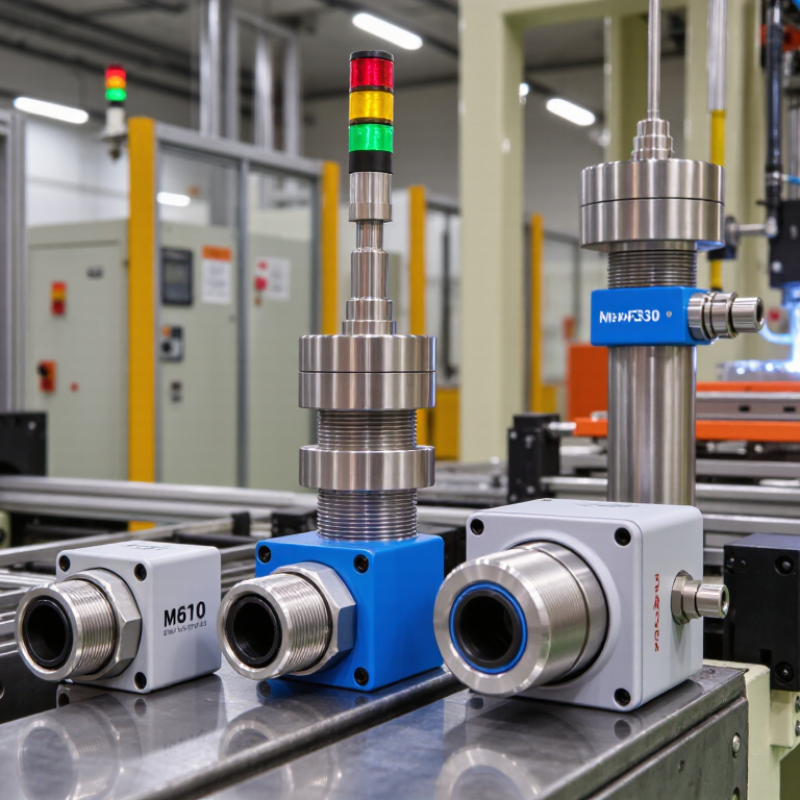
Inductive sensors detect metal without physical contact. They generate an electromagnetic field near a sensing face. When steel, aluminum, or brass enters that field, the sensor changes its output. This design avoids mechanical wear, oil contamination, and repeated switch failure. In factory trials, the most practical choice often depends on target material, distance, and mounting space. A flush sensor suits tight metal fixtures, while a non-flush model provides greater sensing distance. Shielding matters more than many buyers expect.
Common types include proximity switches, analog distance sensors, ring sensors, and high-temperature models. PNP and NPN outputs support different control architectures. IO-Link versions can transmit diagnostic data, identification, and measured distance. Grand View Research estimates the global industrial sensors market will expand at about 9% annually from 2024 to 2030. That growth reflects stronger demand for connected production equipment, not just replacement components. Still, connectivity cannot repair poor installation. Misaligned targets, welding noise, and excessive cable bending remain common field problems.
Applications range from conveyor counting to robotic gripper confirmation and machine-tool position control. The International Federation of Robotics reported 541,302 industrial robots installed worldwide in 2023, a 10% annual increase. Each automated axis may require several reliable detection points. Food-processing lines often need sealed housings and smooth surfaces. Metalworking environments need resistance to vibration, coolant, and chips. Buyers should verify IP rating, switching frequency, hysteresis, temperature range, and tested sensing distance. Datasheets are useful, but real targets can behave differently. A short production trial is still wise.
Choosing an inductive sensor should start with the application, not a catalogue ranking. Compare sensing distance, target material, housing, output, supply voltage, IP rating, and response frequency. Sensing distance changes with steel, aluminum, and brass. An 8 mm rating may deliver less range on aluminum. Request corrected distances, repeatability data, and hysteresis values before approval. These details reveal real performance.
Global buyers should also verify switching current, residual voltage, polarity, connector standards, operating temperature, and EMC resistance. Flush mounting saves space, but its sensing range may be shorter. In commissioning work, a sensor can pass a factory test and fail after vibration or temperature changes. Check the actual target at cold and hot conditions. Allowing only a tiny alignment margin is risky. I have found that maximum range alone is a poor selection method.
Tips: Test the sensor with the real target, not only a steel reference plate. Compare datasheets line by line. Record false triggers during speed changes. Confirm cable length and replacement availability in the destination market. A sample test is valuable. It may expose assumptions early.
For global buyers, the strongest 2026 inductive sensor series cover varied installation and sensing needs. Cylindrical series suit standard machine mounting, from compact M8 units to robust M30 models. Rectangular series help when space is limited or mounting surfaces are uneven. Flush versions support close metal installation, while non-flush designs offer longer sensing distances. Stainless steel housings improve resistance near washdown zones and metal dust.
High-performance series may include analog output, IO-Link communication, or extended-temperature options. These features support condition monitoring, faster setup, and easier maintenance. However, more functions do not always mean better value. A sensor with unnecessary data features can increase configuration time and training demands. Buyers should verify sensing distance, target material, switching frequency, connector type, and enclosure rating before comparing prices. A paper specification can still fail on a vibrating conveyor.
Tips: Test the sensor with the actual target, not only a steel sample. Check whether aluminum, copper, or dark metal changes detection stability. Leave practical clearance around the sensing face. Confirm cable bending space before final installation. For international projects, request consistent technical documents and regional support terms. Small gaps in documentation can create large delays during commissioning.
For global buyers in 2026, inductive sensor selection should begin with the real detection task. Rated range is only a reference point. Steel, aluminum, and brass can produce different sensing distances. A small target may reduce the usable range sharply. Allow a practical safety margin instead of designing at the catalog limit.
Environment changes the decision. In a washdown line, choose strong sealing, corrosion-resistant housing, and a connector that tolerates repeated cleaning. Near welding equipment, check temperature limits, cable durability, and resistance to electrical interference. Dust, oil mist, and metal chips also deserve attention. I have seen reliable sensors fail early because the cable bent against a sharp bracket. Small details matter.
Installation affects stability. Flush mounting suits tight metal fixtures, while non-flush designs may provide longer range but need more clearance. Check the target’s approach direction and switching frequency before ordering. Keep sensing faces aligned, and verify the actual gap during commissioning. A simple steel test piece can expose an optimistic assumption. It is not glamorous. It is useful. For international projects, compare metric dimensions, connector standards, supply voltage, and available documentation. A clear test record, including temperature and target material, makes replacement easier and supports dependable purchasing decisions.
Selection guide by nominal detection range, installation method, and typical environmental protection.
Reference values show commonly specified nominal sensing distances for cylindrical inductive sensors. Flush mounting generally provides a shorter range, while non-flush mounting can provide a longer range but requires additional clearance around the sensing face. IP ratings indicate enclosure protection according to IEC 60529; IP69K is commonly selected for high-pressure, high-temperature washdown applications.
Global buyers need more than a proximity sensor with a competitive price. Compliance, integration, and support often determine whether a project starts smoothly or stalls during commissioning.
Compliance should be checked before supplier approval. Ask for current technical datasheets, declarations, test records, and applicable conformity information. Confirm the sensor’s IP rating, operating temperature, electrical limits, and material details. Requirements may differ across target markets. A document copied from an older model can create confusion. That is an easy mistake to miss.
Integration demands equal attention. Verify sensing distance, flush or non-flush mounting, target material, connector type, and switching output. PNP, NPN, normally open, and normally closed options are not interchangeable in every control cabinet. Check the PLC input diagram before ordering hundreds of units. A small mismatch can stop a production line. Mechanical drawings also matter, especially around tight conveyor frames and stainless-steel brackets.
Reliable support should include sample testing, wiring guidance, dimensional files, and clear replacement advice. Response time matters when a sensor fails beside an operating machine. Regional stock and multilingual documentation can reduce delays for global teams. Buyers should also confirm warranty terms and spare-part availability in writing. Cheap units may still cost more after repeated adjustments, emergency freight, and technician hours. Careful validation takes longer, but rushed selection usually leaves unanswered questions.
All products and services provided by Innovative Plastic Molders, Inc. will meet or exceed our customer's perceived requirements and expectations. We will listen and respond to what our customers are telling us in a timely and forthright manner.

ISO 9001:2015 CERTIFIED
© Copyright 2009 – Innovative Plastic Molders, Inc.
Website by Central 8 Marketing
10451 Dog Leg Road Ste 200
Vandalia, OH 45377
Phone: 937.898.3775
Fax: 937.535.0640
Email: sale@endtheplastic.com

