

Choosing the 2026 Best Stainless Steel Water Tanks for Global Buyers requires more than comparing prices or polished surfaces. Ss Steel Water Tanks must be judged through material quality, welding accuracy, water safety, insulation, delivery support, and long-term maintenance. A bright exterior can hide weak seams.
Stainless-steel water-storage engineer Dr. Laura Chen offers a practical warning: “A polished surface does not guarantee a hygienic tank.” Her observation matters because internal welds, surface passivation, and drainage design directly affect service life. Buyers should verify the steel grade, commonly 304 or 316, and request documented test results. They should also examine the tank’s roof design, foundation requirements, inlet fittings, and cleaning access. Small details matter.
Regional conditions can change the best choice. Coastal buyers may need stronger corrosion resistance. Cold-climate projects may require thicker insulation and freeze protection. Large commercial systems need structural calculations, reliable valves, and accessible replacement parts. Food, drinking-water, agricultural, and industrial applications should not share the same assumptions.
This guide compares leading Ss Steel Water Tanks for international projects in 2026. It considers factory experience, quality-control procedures, customization, certifications, shipping practicality, and after-sales service. Yet no ranking is perfect. Supplier claims still require verification. A lower-cost tank may become expensive after repeated repairs, difficult installation, or delayed spare parts. Buyers should inspect the evidence, not just the brochure. The best decision is rarely the flashiest one.
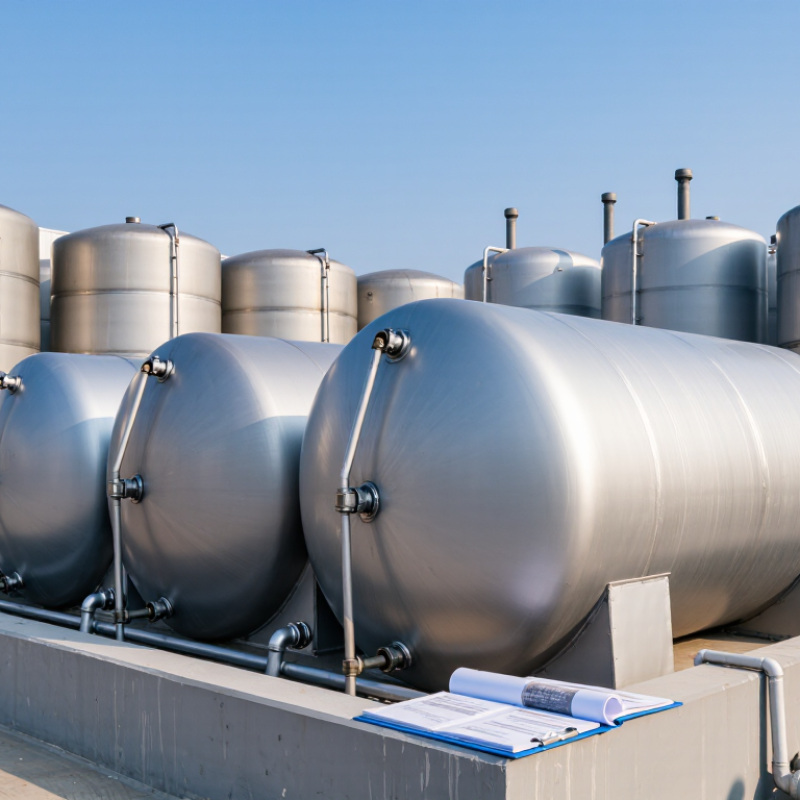
2026 Best Stainless Steel Water Tanks for Global Buyers?
What Are Stainless Steel Water Tanks and How Do They Work?
A stainless steel water tank stores treated water in a welded, corrosion-resistant vessel. Its shell usually uses 304 or 316 stainless steel. The correct grade depends on chloride levels, temperature, and cleaning chemicals. Stainless steel does not make unsafe water safe. Treatment still matters.
Water enters through an inlet and leaves through an outlet or pump connection. A vent balances internal pressure during filling and withdrawal. An overflow pipe protects the tank from flooding. Level sensors, drain valves, insulation, and access covers support daily operation. In practice, poor weld finishing can create rough areas that collect deposits. Passivation and careful cleaning remain essential.
The WHO Guidelines for Drinking-water Quality emphasize risk management across the entire supply system. The 2024 WHO/UNICEF Joint Monitoring Programme reported that 2.2 billion people lacked safely managed drinking water in 2022. Reliable storage therefore matters, especially where supply is intermittent. Materials touching potable water should meet recognized requirements, such as NSF/ANSI/CAN 61 or applicable local standards. AWWA and EN specifications also guide design, inspection, and testing. This part is often underestimated. A tank may look excellent, yet weak foundations, stagnant corners, or missing ventilation can reduce performance. Global buyers should verify water chemistry, load calculations, weld quality, cleaning access, and certification before purchase.
Choosing a stainless steel water tank starts with the stored water and site conditions. Grade 304 suits many clean-water applications and moderate indoor environments. Grade 316 offers stronger resistance to chlorides, coastal air, and chemical exposure. Grade 316L reduces carbon-related weld corrosion and supports demanding fabrication work. Duplex stainless steel can provide higher strength, but it requires controlled welding expertise.
Tank design matters as much as the alloy. Vertical welded tanks suit large fixed installations, while horizontal tanks fit low-clearance sites. Sectional tanks are easier to transport and assemble near buildings. Look for smooth internal surfaces, sanitary welds, secure manways, and properly sized vents. Baffles can reduce water movement during filling, especially in tall tanks. Insulation helps control temperature, but poor sealing may trap moisture outside the shell.
Construction quality decides long-term reliability. Check material certificates, weld procedures, passivation records, and hydrostatic test results. Inspect the base ring, lifting points, overflow route, and support structure. A thicker wall is not automatically better; poor drainage can still cause trouble. In field evaluations, small details often reveal weak planning. A tank may meet its drawing, yet its access hatch may be awkward for cleaning. Allow space for inspection, repair, and future equipment changes. Seismic, wind, temperature, and local water-quality requirements also deserve documented engineering review.
Choosing the right stainless steel water tank for global applications requires more than comparing capacity and price. Start with water chemistry, climate, installation space, and local compliance requirements. Potable water may need 304 stainless steel, while coastal or high-chloride areas may require 316L. Ask for material certificates, weld inspection records, and testing evidence. These details show whether the tank is genuinely suitable, not merely attractive in a brochure.
A practical review should include tank thickness, internal supports, roof design, access openings, insulation, and drainage. In hot regions, sunlight can raise water temperatures quickly. In cold regions, freezing protection becomes essential. I have seen projects fail because the foundation was treated as an afterthought. Check soil strength, seismic exposure, transport limits, and assembly access before ordering. A slightly smaller tank may be safer when roads, cranes, or doorways are restricted.
Tips: Confirm inlet and outlet sizes with the actual pipe layout. Request drawings in metric units and verify every measurement. Compare cleaning access, replacement parts, and maintenance instructions. Do not trust a generic “international standard” claim without identifying the exact standard. A perfect specification rarely exists. Leave room for honest revision after a site inspection, because real conditions often differ from the original plan.
| Application | Recommended Tank Configuration | Typical Capacity Range | Preferred Stainless Steel Grade | Key Design Features | Typical Installation Environment | Important Selection Considerations |
|---|---|---|---|---|---|---|
| Household drinking water | Vertical atmospheric storage tank with a closed, hygienic top | 500–5,000 L | 304 stainless steel for normal inland conditions; 316 or 316L where chloride exposure is significant | Food-contact internal surface, sanitary outlet, inspection opening, screened vent and drain connection | Residential buildings, villas and small facilities | Confirm local potable-water requirements, available floor area, inlet and outlet elevations, and cleaning access |
| Apartment and commercial building water storage | Modular sectional tank or multiple vertical tanks connected in parallel | 5,000–100,000 L | 304 or 316/316L according to water chemistry and site exposure | Bolted or welded construction, level indicator, overflow, drain, access manway and isolation valves | Apartment blocks, offices, hotels and shopping facilities | Use a duty-and-standby arrangement when uninterrupted supply is required; verify structural loading and maintenance access |
| Rainwater harvesting | Above-ground vertical tank or horizontal tank connected to a filtration system | 1,000–50,000 L | 304 stainless steel is commonly suitable; 316/316L may be selected in coastal or polluted environments | Leaf screen, first-flush diverter, covered inlet, overflow protection and sediment-drain connection | Residential, agricultural and commercial properties | Calculate storage from roof area, rainfall pattern, demand and intended non-potable use; do not assume untreated rainwater is potable |
| Industrial process water | Vertical atmospheric tank, horizontal tank or engineered process vessel | 5,000–500,000 L | 304L for general water service; 316L for higher chloride, chemical or corrosion exposure | Welded sanitary or industrial connections, sampling point, level sensor, manway and optional mixing or recirculation | Manufacturing plants, utilities and processing facilities | Review water chemistry, temperature, cleaning chemicals, corrosion allowance, operating volume and applicable pressure design requirements |
| Fire protection reserve water | Large vertical atmospheric storage tank designed for fire-water service | 50,000–2,000,000 L or project-specific | 304 stainless steel or 316/316L where environmental exposure requires higher corrosion resistance | Dedicated fire-water outlet, vortex breaker, overflow, drain, level monitoring and access ladder or platform | Warehouses, factories, logistics centers and high-occupancy facilities | Capacity and construction must follow the applicable fire-protection code and the requirements of the local authority or insurer |
| Hot-water storage | Insulated vertical tank with heating interface and temperature controls | 300–20,000 L | 304L for general hot-water service; 316L for aggressive water or demanding hygiene applications | Thermal insulation, external cladding, temperature gauge, pressure-relief protection and suitable heating connection | Hotels, hospitals, residential buildings and industrial facilities | Specify operating temperature, pressure, heat source, thermal-loss target and anti-scald controls; pressure-vessel design may be required |
| Water treatment and filtration systems | Vertical contact tank, buffer tank or backwash-water tank | 1,000–100,000 L | 304L for treated low-corrosivity water; 316L for chloride-rich or chemically treated water | Multiple nozzles, sampling ports, internal distributors, level control and easy-clean access | Municipal, commercial and industrial treatment plants | Check compatibility with disinfectants, pH, chlorides, cleaning agents, flow rate and required retention time |
| Coastal and marine installations | Closed vertical or modular tank with enhanced external protection | 1,000–200,000 L | 316 or 316L generally preferred for improved resistance to chloride-bearing environments | Low-crevice detailing, protected welds, secure fittings, sealed openings and suitable external finish | Coastal buildings, islands, ports and offshore-support facilities | 316/316L improves corrosion resistance but does not eliminate the need for proper fabrication, cleaning and environmental protection |
| Cold and high-altitude regions | Insulated vertical tank or indoor modular tank with freeze protection | 1,000–100,000 L | 304L or 316L according to water chemistry and exposure | Insulation, weatherproof cladding, heat tracing where necessary, protected valves and low-point drainage | Mountainous areas, northern climates and unheated facilities | Assess minimum ambient temperature, wind and snow loads, freezing risk, insulation thickness and emergency drainage provisions |
| Transportable or temporary water supply | Compact skid-mounted tank, horizontal tank or container-compatible module | 500–20,000 L | 304 stainless steel for general use; 316/316L for saline or corrosive surroundings | Forklift pockets or lifting lugs, impact protection, quick-connect fittings and secure transport restraints | Construction sites, emergency response and temporary camps | Confirm transport regulations, loaded weight, center of gravity, tie-down points and whether the tank is approved for potable water |
International buyers should judge a stainless steel water tank by compliance, not polished appearance. The shell may look excellent, yet the material certificate can reveal a different story. Request mill test certificates for every steel batch. Check the grade, heat number, thickness, and chemical composition.
For potable water, materials should meet the destination market’s contact requirements. NSF/ANSI/CAN 61, WRAS, ACS, or equivalent approvals may apply. Requirements vary by country. ISO 9001 supports quality management, but it does not automatically certify a tank for drinking water. That distinction is often missed.
Welding needs close attention. Ask for weld procedures, operator qualifications, visual inspection records, and leak-test results. Electropolishing or passivation records can help confirm surface treatment. A rough internal weld may collect residue, even when the exterior looks perfect. Some buyers request pressure testing without checking whether the tank is designed for pressure service. That can create unnecessary risk.
Export documentation should match the contract and destination rules. Prepare the commercial invoice, packing list, certificate of origin, material certificates, inspection report, and correct HS classification. Wooden crates may require compliant treatment and marking. Confirm connection standards, drain positions, insulation, and lifting points before production. A drawing approved too quickly can cause expensive site changes. Even experienced teams occasionally overlook local water-contact rules. That deserves a final technical review.
For global buyers, a stainless steel water tank is more than a polished container. Installation quality often decides whether its service life matches the specification. Inspect welds, fittings, and internal surfaces before delivery. A level concrete base matters. Keep the tank away from corrosive fumes, standing water, and heat sources. Use compatible gaskets and stainless fasteners to reduce galvanic corrosion. A qualified local installer should verify pipe support, overflow routing, and access clearance. Do not hide the inspection port behind permanent structures. That mistake is expensive.
Maintenance should follow water quality, not a convenient calendar. In clean municipal water, quarterly checks may be adequate. Well water, sediment, or coastal air can demand monthly inspection. Drain and rinse the tank when deposits appear. Check valves, seals, and anchor points after severe weather. Small gasket failures can become major leaks when inspections are postponed. This risk is often underestimated. Plan access early.
A well-fabricated tank can serve for decades, but lifespan is never guaranteed. Material grade, weld quality, water chemistry, and cleaning discipline all matter. Total ownership cost includes the tank, shipping, taxes, foundation work, lifting equipment, installation labor, filters, replacement seals, inspections, and eventual removal. The cheapest quotation may become costly after difficult delivery or frequent repairs. Request material records, weld inspection details, warranty terms, and maintenance requirements. Also compare local service capability. A technically excellent tank is less useful when replacement parts take months to arrive. My cost reviews sometimes overlook downtime. That omission deserves correction.
Estimated 20-year total ownership cost for a 10,000-liter above-ground water tank. Stainless steel generally offers longer service life and lower replacement risk, while final costs depend on local labor, freight, water chemistry, and installation conditions.
Planning estimates in USD for a 10,000-liter tank, excluding land preparation, freight, taxes, pumps, and water-treatment equipment. Expected service life: 304 stainless steel 25–30 years, 316 stainless steel 30–40 years, HDPE 15–25 years, and coated carbon steel 10–15 years. Replacement allowance is included when a tank may require replacement within the 20-year evaluation period.
All products and services provided by Innovative Plastic Molders, Inc. will meet or exceed our customer's perceived requirements and expectations. We will listen and respond to what our customers are telling us in a timely and forthright manner.

ISO 9001:2015 CERTIFIED
© Copyright 2009 – Innovative Plastic Molders, Inc.
Website by Central 8 Marketing
10451 Dog Leg Road Ste 200
Vandalia, OH 45377
Phone: 937.898.3775
Fax: 937.535.0640
Email: sale@endtheplastic.com

