

Choosing the right Enclosure Boxes in 2026 is a practical risk decision, not a catalog exercise. A cabinet beside a coastal pump faces salt and moisture; one on a factory floor may meet dust, vibration, and frequent access. Small mismatches can mean corrosion, heat buildup, or difficult maintenance. The best choice depends on the site, equipment, and service plan.
Market growth makes careful comparison more important. Grand View Research estimated the global electrical enclosure market at USD 6.71 billion in 2023 and projected a 6.8% compound annual growth rate from 2024 to 2030. That forecast signals expanding demand, not a guarantee that every product suits every application. Buyers should check material, dimensions, thermal management, ingress-protection claims, and documentation against their actual requirements. A polished product page is not enough.
NEMA president and CEO Debra Phillips has emphasized the importance of resilient electrical infrastructure. For enclosure buyers, the practical takeaway is to specify protection around real operating conditions, rather than appearance or price alone. This guide compares leading options for global buyers, including customization, lead times, certifications, and supplier support. Some trade-offs remain easy to overlook: a heavier enclosure may add shipping cost, while a compact one can leave too little room for wiring and future service. That deserves a second look.
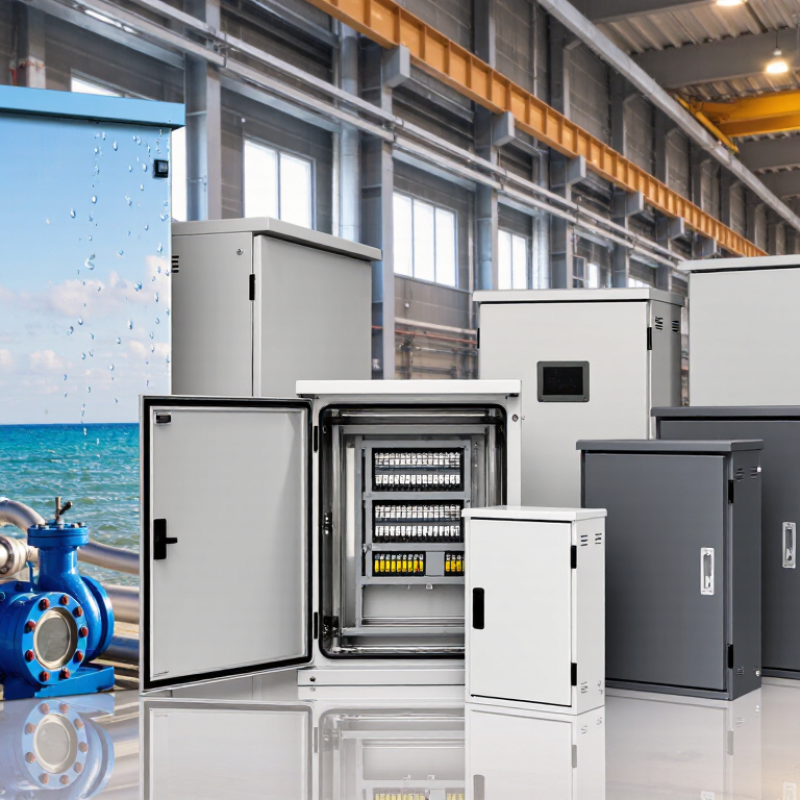
An enclosure box is a housing that holds electrical, control, or communication equipment. It helps shield components from dust, splashes, accidental contact, and physical knocks. The level of protection depends on its design, materials, seals, and installation. Details matter. A gasket can be effective, yet a poorly fitted cable entry may leave a path for moisture.
Enclosures may be made from plastic, coated steel, or stainless steel. Each suits different conditions, but no material works everywhere. Outdoor units may face sunlight, rain, salt air, or wide temperature swings. A stated ingress rating describes performance under specific test conditions; it does not automatically confirm resistance to corrosion, heat, or impact. Check the rating and test scope against the actual site.
Protection also means allowing equipment to operate safely. A sealed box can trap heat, so installers should consider internal temperatures, ventilation needs, and component load. Mounting position matters too: water can collect around an entry or run along a cable. I have seen neat-looking installations miss this small detail. An enclosure is not a cure-all. Review clearances, cable glands, seals, and maintenance access before choosing a size. The right box protects equipment while keeping inspection and servicing practical.
Choosing an enclosure starts with the environment, not the color or shape. ABS is lightweight and practical for many indoor installations. Polycarbonate offers good impact resistance, while stainless steel can suit harsh, corrosive settings. Each choice has trade-offs. Metal may need suitable grounding; plastics can age under prolonged sunlight. No material is best everywhere.
Tips: Check the IP rating against the actual exposure. IP ratings describe tested protection from dust and water, not resistance to chemicals, UV, or corrosion. Ask for test documentation, and confirm cable entries and door seals match the rated design.
Design details matter during installation and maintenance. A hinged door, clear labeling area, and removable mounting plate can save time when wiring is tight. Leave room for cables and heat-producing components. A box that fits on paper may feel cramped once connectors are installed. For outdoor use, consider drainage, shade, and temperature swings. Condensation can form even inside a sealed enclosure when conditions change. Global buyers should compare specifications carefully, since similar-looking ratings or materials may not perform alike across climates. Some selections still involve compromise; revisit the site conditions before ordering.
Choosing an enclosure box starts with the conditions around it, not its appearance. Note whether it will sit indoors, face rain, collect dust, or experience frequent vibration. A unit near a washdown area needs different protection from one inside a dry control room. Check the enclosure’s stated protection rating against the actual exposure; a rating alone does not confirm suitability for every installation.
Next, measure the equipment and leave room for wiring, connectors, and future access. A box that fits the components tightly can make installation and maintenance frustrating. Small details count. Consider cable-entry positions, mounting points, door clearance, and whether heat can escape safely. Plastic may help reduce weight and resist some forms of corrosion, while metal can offer greater rigidity. Neither material is best in every setting.
Think about the full service life, too. Will technicians need to inspect terminals often? Could condensation or temperature changes affect the contents? These questions help narrow the choice before purchase. If the environment is uncertain, test a sample in realistic conditions and confirm the rating documentation. It may feel overly cautious, but replacing a poorly matched enclosure later can cost more than checking the details now.
| Enclosure type | Typical application | Key advantages | Points to check | Protection target to consider* | Buyer checklist |
|---|---|---|---|---|---|
| Polycarbonate | Outdoor controls, instrumentation, and installations where impact resistance and low weight are useful. | Non-metallic; electrical insulation; impact-resistant grades are available. | Confirm UV suitability, temperature range, chemical compatibility, and whether the specific model has the required tested rating. | Select an IP or NEMA rating based on actual exposure; outdoor models may be available with dust and water protection. | Check cover seal, mounting method, cable-entry locations, and permitted operating temperature. |
| ABS plastic | Indoor, general-purpose housings for light-duty electronics and control components. | Lightweight and electrically insulating; often practical for indoor applications. | Check UV exposure, heat, impact requirements, and resistance to the chemicals used at the site. | A suitable indoor IP rating may be sufficient where dust or occasional splashes are the main concerns. | Verify internal clearance, wall thickness, lid fastening, and the enclosure’s stated environment limits. |
| Painted carbon steel | Indoor industrial panels and equipment in relatively controlled environments. | Rigid metal construction; can support grounding and bonding when designed and installed correctly. | Coating damage and corrosive or wet environments can increase corrosion risk; inspect finish and seams. | Choose a rating based on dust, dripping water, washdown, and other site conditions. | Confirm mounting, grounding provisions, door access, and any required corrosion protection. |
| Stainless steel | Food-processing, marine, chemical, and outdoor locations where corrosion resistance is important. | Durable metal construction; certain grades and finishes offer improved corrosion resistance. | Performance depends on alloy, finish, contaminants, and cleaning chemicals; stainless steel is not immune to corrosion. | A NEMA 4X model may be appropriate for specified indoor or outdoor corrosion and water-exposure conditions; confirm its certification. | Specify alloy, finish, gasket material, washdown conditions, and compatible cable glands. |
| Fiberglass-reinforced polyester | Corrosive industrial environments, utility installations, and locations needing a non-metallic enclosure. | Non-metallic construction; many formulations provide good resistance to corrosion and weathering. | Check UV rating, temperature limits, fire-performance requirements, and compatibility with site chemicals. | Specify a tested rating for the intended dust, water, and outdoor exposure conditions. | Check wall-mount hardware, lid retention, drilled-entry sealing, and maintenance access. |
| Die-cast aluminum | Compact electronics, sensors, and equipment where a rigid metal housing is needed. | Rigid construction; aluminum can conduct and dissipate heat, depending on the enclosure design and installation. | Check coating, gasket, corrosion exposure, grounding design, and heat dissipation under actual operating conditions. | Select a model with a tested rating suitable for the installation; metal material alone does not establish ingress protection. | Confirm internal dimensions, cover screws, cable-entry position, and any required surface treatment. |
Choosing enclosure boxes for global markets starts with the operating environment, not a catalog photo. A rating is useful only when it matches the tested configuration. IEC 60529 defines IP protection against dust and water, while NEMA enclosure types use a different classification system. They are not direct equivalents. Check cable glands, doors, seals, and mounting orientation; small changes can affect protection. A coastal cabinet may need corrosion resistance, while a washdown site demands suitable ingress protection. Details matter.
Ask suppliers for current test reports, certificates, and the exact model numbers they cover. Confirm whether documents apply to the complete enclosure or selected components only. Check temperature limits, impact performance, and material declarations against project requirements. Standards and certification needs vary by destination and end use, so ask a qualified local compliance professional to review uncertain cases. Certification logos alone are not enough. Paperwork can lag behind product revisions.
During sourcing, compare wall thickness, gasket material, hinge construction, lock options, and replacement-part availability. Request samples and inspect the seams after repeated opening; optimistic assumptions can fail here. Ask for documented change control and traceable batch information. Lead time, shipping dimensions, and spare seals may affect total cost more than unit price. Leave room for doubt: one successful sample cannot prove every production run will perform identically. Verify again.
Compare common IEC 60529 IP ratings. The two bars show the rating’s first digit (solid-particle protection) and second digit (water protection); they are classification levels, not performance scores.
Buyer note: IP54 indicates dust protection and resistance to splashing water; IP65 and IP66 specify dust-tight enclosures tested against different water-jet conditions; IP67 and IP68 cover immersion under defined test conditions. IPX8 conditions are agreed between the manufacturer and user, and an IPX8 rating does not automatically include IPX7. An IP rating is not, by itself, a market certification. Check the test report, intended installation conditions, materials, temperature range, and applicable conformity requirements for each destination market.
2026 Best Enclosure Boxes for Global Buyers?
Factory control panels often use steel or aluminum enclosures. Steel handles knocks well and suits indoor machinery rooms. Aluminum weighs less and can help shed heat. For coastal or washdown areas, stainless steel may resist corrosion better, but it costs more. Heat changes the choice. A sealed box can trap warmth, so check component temperatures and ventilation needs before selecting its size.
Polycarbonate enclosures are lightweight and resist many common impacts, making them practical for sensors, telecom equipment, and small outdoor controls. Fiberglass options can suit corrosive industrial settings, though drilling and mounting need care. Food-processing sites may favor smooth surfaces and designs that are easier to clean.
Details matter. Material alone does not determine protection: gaskets, hinges, cable entries, and installation all affect the finished assembly. Buyers should compare the enclosure’s stated ingress rating with the actual exposure, such as dust, rain, or hose spray.
There is no universal winner. A larger box may simplify wiring, yet it can take up valuable space; the right choice depends on equipment, environment, and maintenance access.
All products and services provided by Innovative Plastic Molders, Inc. will meet or exceed our customer's perceived requirements and expectations. We will listen and respond to what our customers are telling us in a timely and forthright manner.

ISO 9001:2015 CERTIFIED
© Copyright 2009 – Innovative Plastic Molders, Inc.
Website by Central 8 Marketing
10451 Dog Leg Road Ste 200
Vandalia, OH 45377
Phone: 937.898.3775
Fax: 937.535.0640
Email: sale@endtheplastic.com

