10 Best Aluminum Extrusion Profile Manufacturers
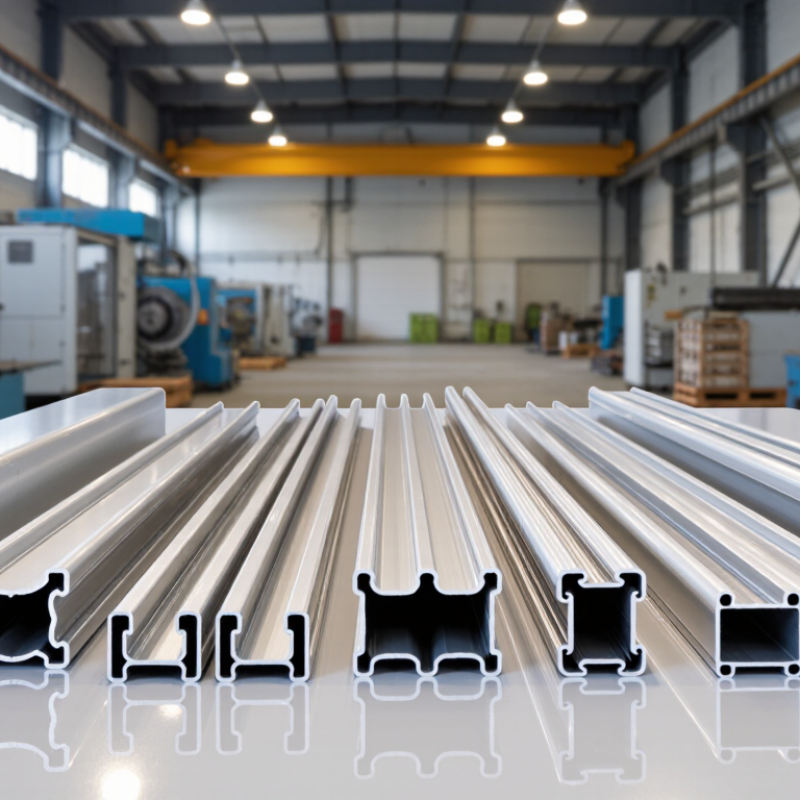
Aluminum Extrusion Profile products sit inside everyday structures: window frames, vehicle rails, solar-panel supports, and heat sinks. Their light weight and design flexibility make them useful across construction, transport, and electronics. Yet a catalogue image tells little about die accuracy, alloy consistency, or how a supplier handles a difficult tolerance.
Grand View Research estimated the global aluminum extrusion market at USD 87.8 billion in 2022 and projected a 7.5% compound annual growth rate from 2023 to 2030. This is a market forecast, not a guarantee of demand for every profile or manufacturer. Still, it helps explain why buyers are comparing suppliers across regions and applications. Details matter.
This guide to 10 leading manufacturers considers more than company size. It looks at extrusion capacity, alloy options, custom die development, finishing services, quality controls, and experience serving demanding industries. These factors can affect whether a profile arrives ready for assembly or needs costly adjustments. A ranking cannot capture every plant-level difference. Availability, lead times, and technical support may vary by location, so buyers should verify current capabilities directly. Even a reputable name is not automatically the right fit. The best choice depends on the drawing, performance requirements, order volume, and the supplier’s ability to deliver consistently.
Aluminum Extrusion Basics: 6063 and 6061 Alloy Profile Applications
Aluminum extrusion turns heated alloy billets into continuous shapes through a precision die. For profile selection, 6063 and 6061 are common choices, but they solve different problems. Alloy, temper, wall thickness, and finishing all affect the finished part. Small design details matter.
6063 is often used for window frames, handrails, lighting channels, and display systems. It flows well through detailed dies and usually provides a smooth surface for anodizing. A narrow groove or crisp corner can be easier to produce in 6063 than in a higher-strength alloy. That matters. Still, thin walls may distort during fabrication, so the profile should be reviewed with the intended load and assembly method in mind.
6061 is generally selected when strength and machinability are priorities. T6 profiles can suit equipment frames, supports, and components that require drilling or machining. Its higher strength can come with trade-offs: complex shapes may be harder to extrude, and the surface finish may differ from 6063. Neither alloy is automatically “better.” A useful specification identifies the application, load, finish, and tolerances; otherwise, a profile can meet its drawing yet disappoint in service. One detail is easy to miss: temper and heat treatment can change properties, so confirm them with the supplier’s material documentation.
Manufacturing Standards: ASTM B221 and ISO 9001 Quality Systems
10 Best Aluminum Extrusion Profile Manufacturers
When comparing aluminum extrusion profile manufacturers, ASTM B221 provides a useful reference for extruded bars, profiles, rods, and tubes. It specifies requirements that vary by alloy and temper, including mechanical properties and dimensional tolerances. Details matter. A profile’s alloy designation should match the intended use, while its temper affects strength and formability. Ask for material test reports and check that they identify the supplied alloy, temper, and applicable specification. For critical dimensions, compare inspection results with the drawing, not just a general claim of compliance.
ISO 9001 addresses the manufacturer’s quality management system, rather than certifying each profile as flawless. A well-maintained system can support process controls, documented inspections, corrective actions, and material traceability. Look for evidence in production records and how the supplier handles out-of-tolerance parts. A certificate helps, but it is not the whole story. One limitation is easy to overlook: neither standard can define every application-specific risk. I would still ask how the manufacturer controls die wear, surface defects, and dimensional variation across production runs. The answer should be specific, not merely reassuring.
Supplier Evaluation: Press Capacity, Profile Tolerances, and Finishing
When comparing aluminum extrusion profile manufacturers, press tonnage is only a starting point. The International Aluminium Institute reported 70.6 million tonnes of global primary aluminum production in 2023, underscoring the scale of the supply chain—not the capability of any single press. Ask suppliers for press force, billet diameter, maximum profile dimensions, and alloy-specific limits. A large press may still struggle with thin walls, narrow slots, or long, delicate sections. Numbers need context.
Tolerance claims should match the drawing, alloy, temper, and applicable extrusion standard. Request inspection records for critical dimensions, not just a general “precision” promise. Check straightness, twist, wall thickness, and cut length on actual production samples. One detail is easy to miss: measurement methods can change the result. I would verify the inspection setup before approving a tolerance.
Finishing needs equal scrutiny. Specify anodizing thickness or coating thickness, color range, gloss, and acceptance criteria; then review sample panels under consistent lighting. European Aluminium’s 2018 Environmental Profile Report notes that recycled aluminum can require about 95% less energy than primary metal, but recycled content alone says little about finish consistency. Ask how batches are tracked and how surface defects are recorded. Real parts can vary. That deserves a candid discussion.
10 Best Aluminum Extrusion Profile Manufacturers: Capabilities and Markets
The strongest aluminum extrusion manufacturers are distinguished by process control, not press size alone. Grand View Research valued the global aluminum extrusion market at about USD 88.9 billion in 2023 and projected 5.4% annual growth through 2030. That outlook reflects demand across construction, transportation, electrical equipment, and consumer products. Buyers should compare alloy and temper options, die-design support, dimensional tolerances, and finishing capacity. Small differences matter. A window-frame profile, for example, may need tight straightness control and a durable coating, while a vehicle component may require machining and repeatable mechanical properties.
Market reach also depends on the ability to serve distinct applications. Building suppliers need consistent architectural profiles and reliable color matching. Transport customers often prioritize lightweight sections, strength, and production traceability. Electrical manufacturers may need conductive alloys and precise dimensions. The International Aluminium Institute reports that recycling aluminum uses about 5% of the energy required for primary production, making recycled-content capability relevant to procurement decisions. Still, recycled feedstock quality and alloy control deserve careful checks.
A useful shortlist of ten manufacturers should therefore compare end-to-end capabilities: billet sourcing, extrusion presses, heat treatment, finishing, fabrication, and quality documentation. Ask for sample inspection records and tolerances tied to the actual drawing. A polished catalog proves little. Published market forecasts are helpful, but they do not verify delivery performance or defect rates; request customer references where possible. No supplier fits every market equally well.
Choosing a Manufacturer: Compare Alloy, Certification, Lead Time, and Cost
Compare alloy before comparing prices. A 6063 profile may suit a clean window frame, while a 6061 component may need greater strength. Confirm the temper, dimensional tolerances, and surface-finish requirements in writing. Ask for mill test certificates that identify the alloy and mechanical properties. Small details matter. A supplier’s ISO 9001 certificate can indicate a documented quality system, but it does not replace inspection data for your specific order.
Lead time deserves the same scrutiny as cost. The International Aluminium Institute’s 2022 outlook projected global aluminium demand would rise about 40%, reaching 119 million tonnes by 2030. The USGS Mineral Commodity Summaries 2025 estimated U.S. primary aluminium output at 670,000 metric tonnes in 2024. These figures do not predict one factory’s schedule, but they make capacity and material sourcing worth checking. Request a dated production plan, sample approval timing, and a clear account of shipping time. Ask what happens if a die needs adjustment.
Compare the full delivered cost, not just the price per kilogram. Include tooling, finishing, packaging, freight, and any minimum-order charges. A low quote can become expensive when scrap rises or tolerances are missed. I still find lead-time promises easy to trust too quickly. Ask for recent delivery performance, and get assumptions stated plainly.